Microsoft ends support for Internet Explorer on June 16, 2022.
We recommend using one of the browsers listed below.
- Microsoft Edge(Latest version)
- Mozilla Firefox(Latest version)
- Google Chrome(Latest version)
- Apple Safari(Latest version)
Please contact your browser provider for download and installation instructions.



September 15, 2026
[Report] Mirai School at "NTT Dream Kids 2026": A Hands-On Workshop Event Where Children Experience the Technology of the Future
Now that smartphones and the internet are a part of everyday life, “communication” is something familiar to children. Yet there are few opportunities for them to learn how it actually works, or how the communication technologies of the future will change the way we live. NTT Dream Kids 2026 is a hands-on event where children learn how optical communication works through experiments and experience NTT’s cutting-edge technologies, all while thinking about the future of communication and well-being. Through one surprise and discovery after another, the children imagined “a future where people can connect with one another in richer and more meaningful ways” and drew their own picture of what that future might look like. In this article, we report on the program held at the Tokyo venue.
Table of Contents
1) NTT Dream Kids 2026: Experience the Technology of the Future
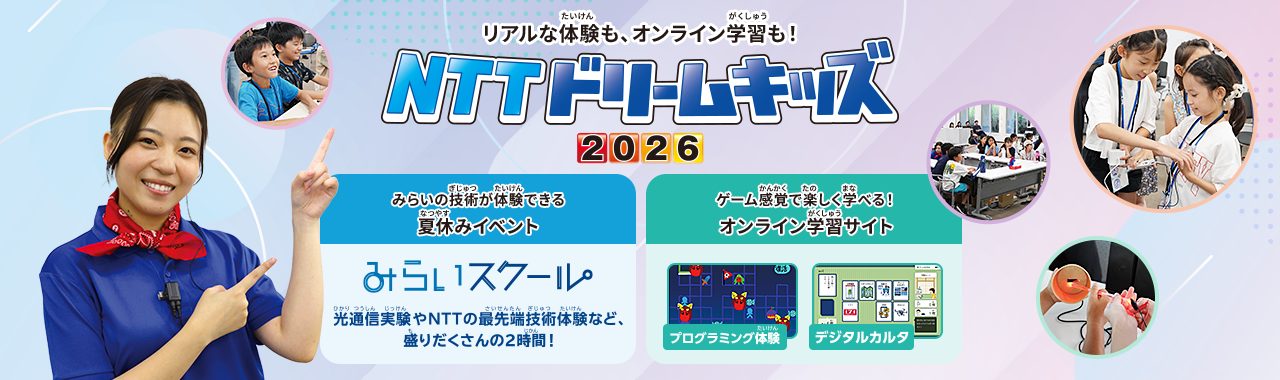
NTT Dream Kids is a hands-on learning event held every summer vacation since 2006, with the aim of explaining the role and the workings of “communication”—an essential part of the infrastructure that supports society—to children in a way they can easily understand.
This year, nine NTT Group companies took part, and the program expanded beyond communication into a wider range of fields, including digital transformation (DX), town development, and energy.
In addition to programs for learning ICT literacy and how to use the internet safely, we held a variety of hands-on programs in which children could touch cutting-edge technologies for themselves and have fun thinking about the future of their lives and of society.
2) The “Communication of the Future” the Children Experienced
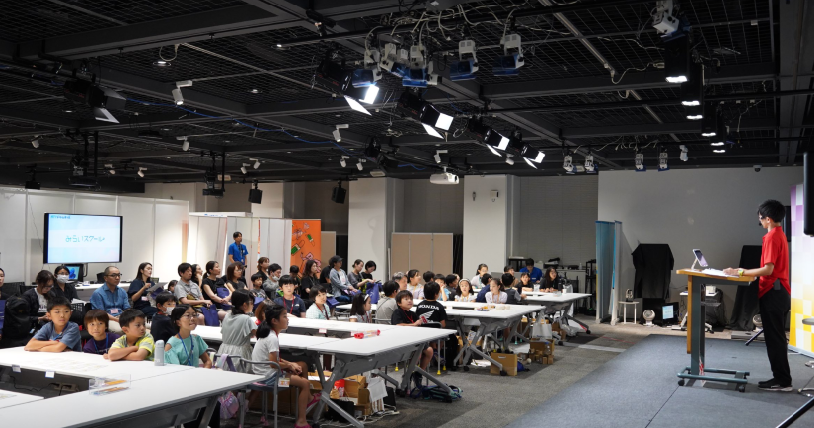
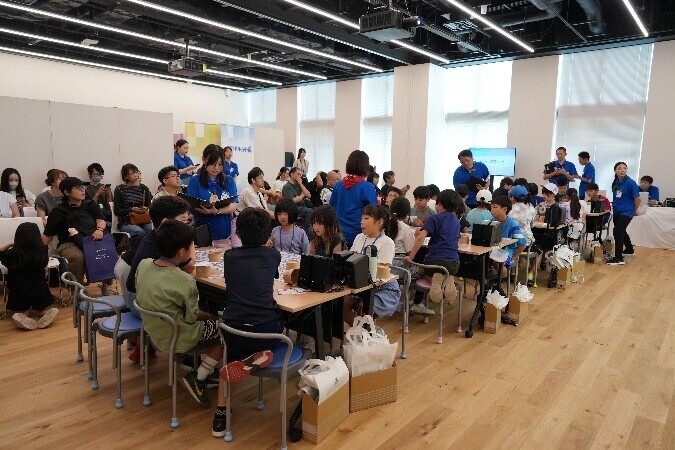
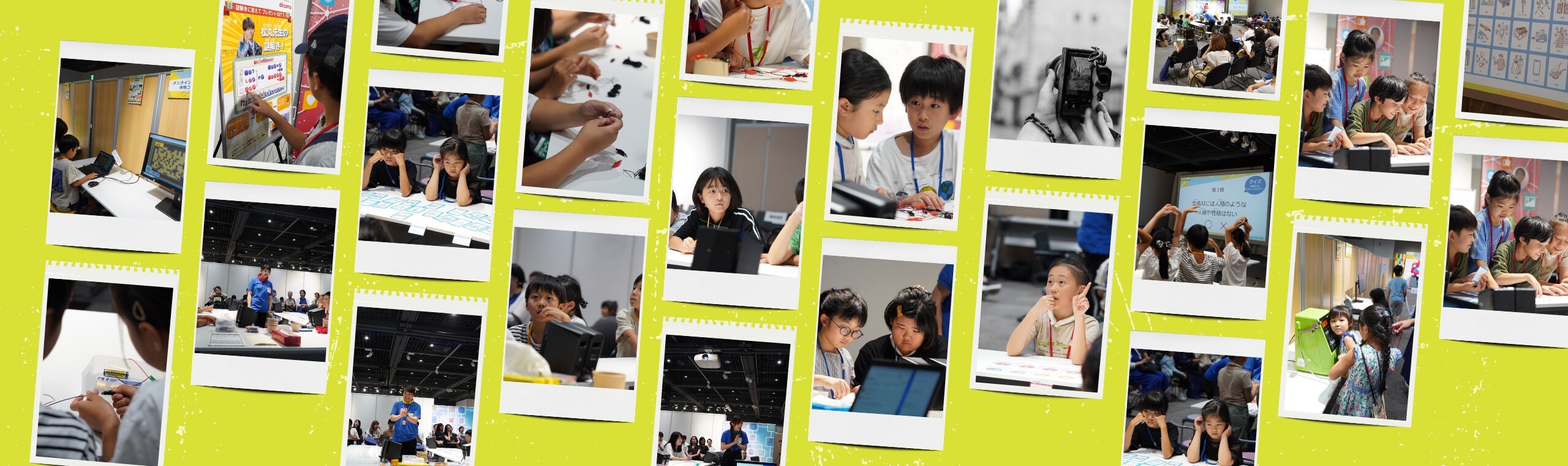
One day during summer vacation, children began arriving one after another at the NTT InterCommunication Center [ICC] in Shinjuku, Tokyo, looking a little nervous but full of anticipation, for NTT Dream Kids 2026 Mirai School.
In this hands-on workshop for third- to sixth-grade elementary school students, the children took part in a craft activity to learn how optical communication works, and thought about “the world of the future” through experiences with cutting-edge technologies developed by NTT Laboratories.
As the digital world and the real world continue to merge, what kind of society would allow people to connect with one another more naturally and comfortably? Over the course of the two-hour program, the children had fun imagining what the future might look like.
3) The Communication of the Future Begins with Sharing “How You Feel Right Now”
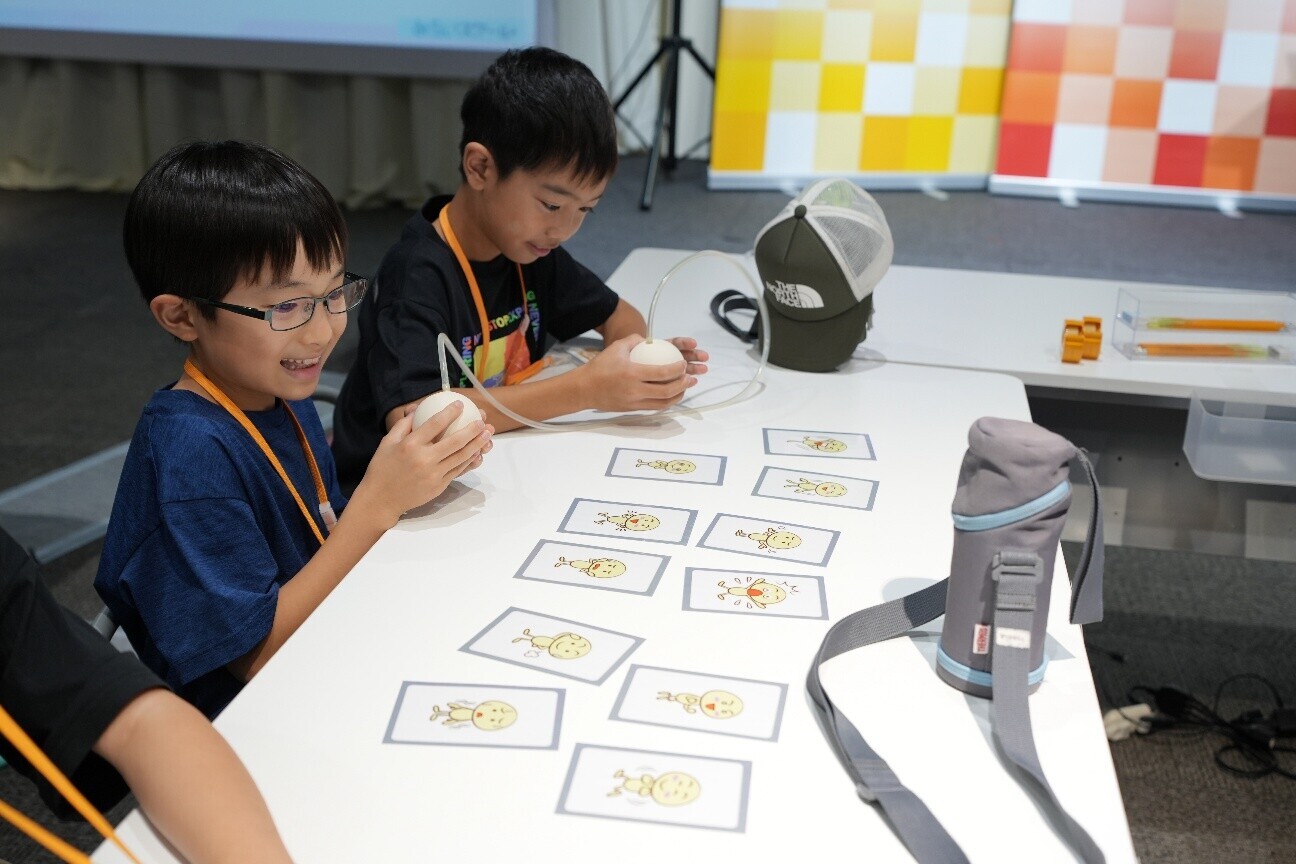
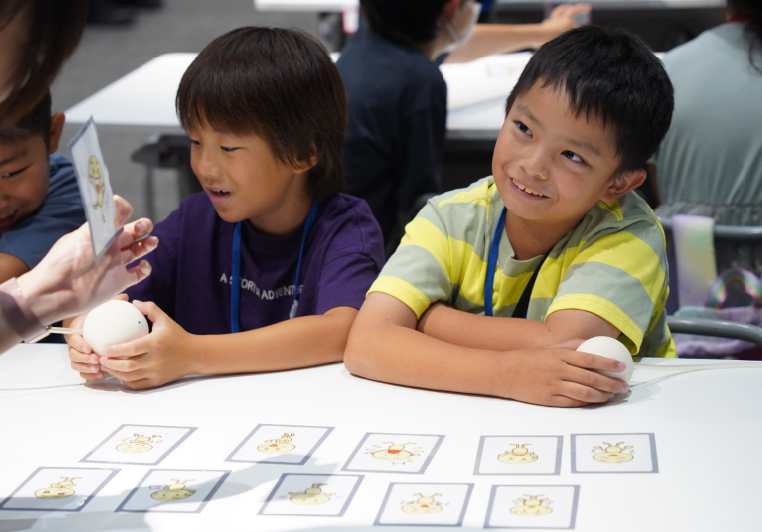
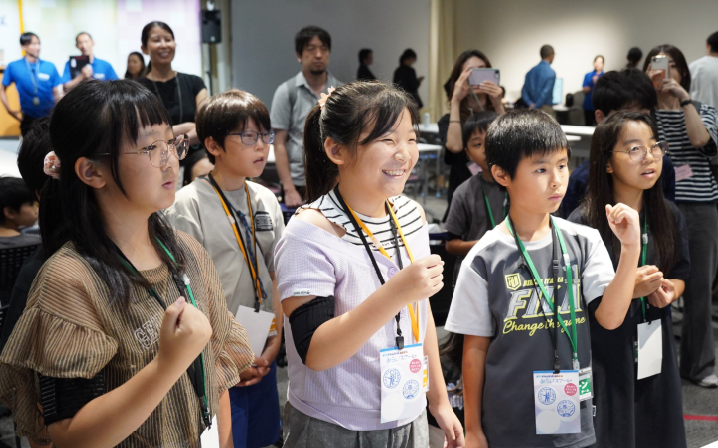
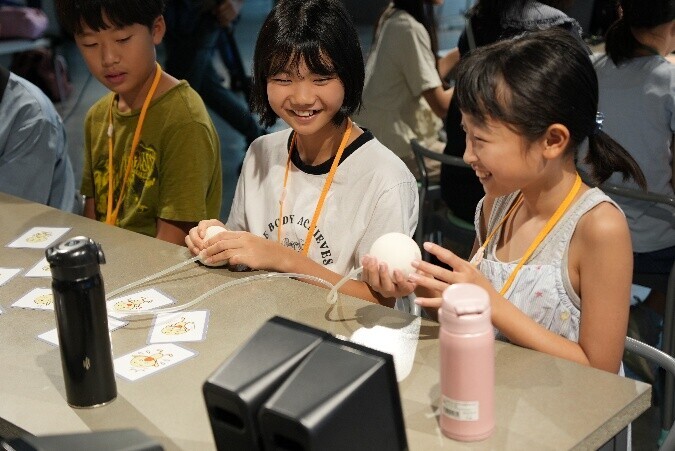
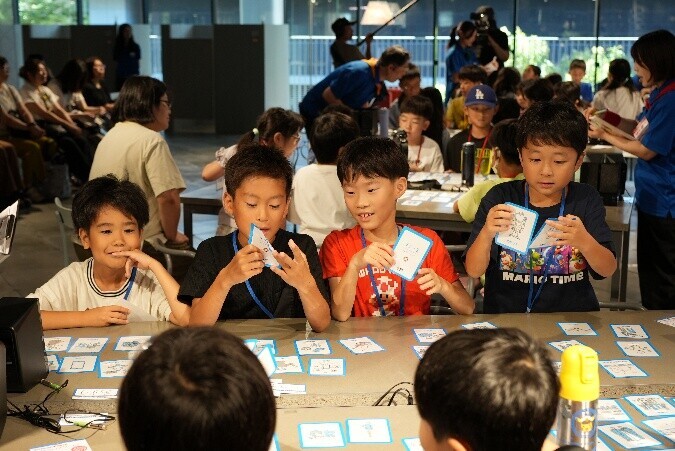
The first program was self-introductions. But this was not simply a matter of saying your name. The children held “Kanjo-kun” cards depicting different emotions and “tactile balls,” which allow children to communicate how they feel through touch, both developed at NTT Laboratories.
“Which ‘Kanjo-kun’ is inside your heart right now?”
The children chose the Kanjo-kun whose expression came closest to how they were feeling, then conveyed that feeling to the person next to them through the strength and rhythm of their grip on a tactile ball. This is communication through the sense of touch rather than through words. A little shy at first, the children gradually broke into smiles, and each team grew closer.
Well-being, introduced here, refers to a state in which each person can live comfortably as themselves.
It became an opportunity for the children to think about the possibility that the future technologies they were about to experience might enrich people’s lives and communication.
4) Sound Delivered by Light!? Experiencing How Optical Communication Works
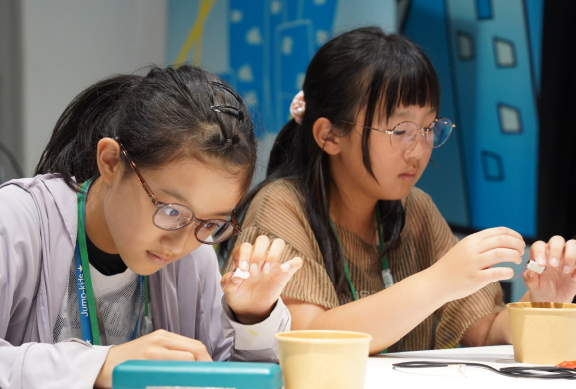
Next up was an optical communication experiment. We use communication without a second thought every day on the internet and on our smartphones. Behind the scenes, information travels around the world through optical fiber cables.
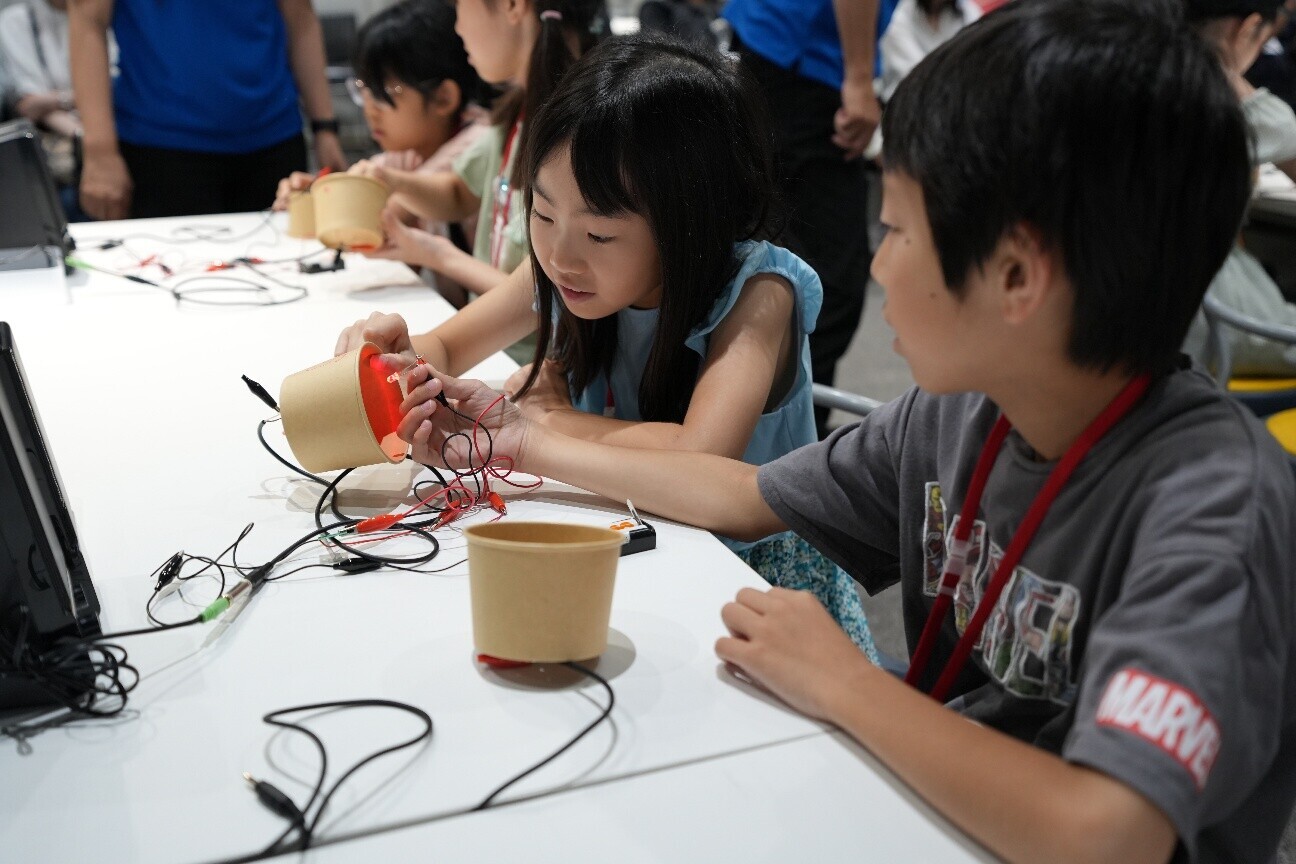
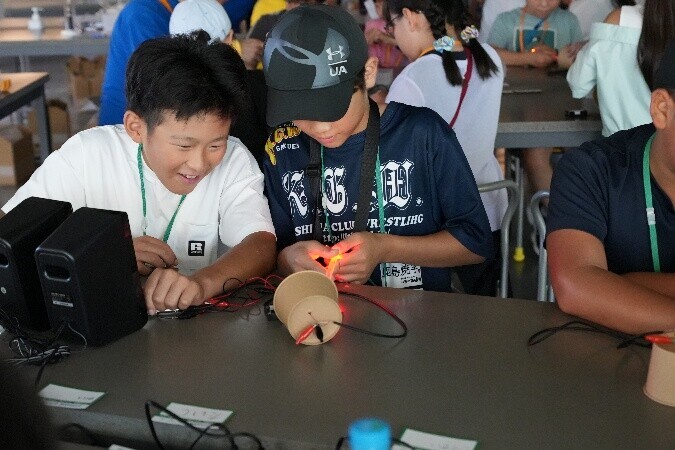
This time, the children experienced how that works with their own hands. First, they built a receiver using a solar cell. Attaching the solar cell to a paper cup, each child completed their own one-of-a-kind receiver.
Next came the transmitter. Combining an electronic music box with an LED, they assembled a device that carries music—information in the form of sound—on a beam of light.
Then came the experiment. When they pointed the LED light at the receiver… the sound of the music box came out of the speaker.
“I can hear it!”
“Sound really came out of the light!”
Cries of surprise went up all around the room. Next, the instructor’s voice was converted into light as well. The children’s eyes lit up as they heard the voice carried on the LED light coming from their speaker.
What the children learned through this craft activity was that optical communication is an important technology supporting our daily lives. By learning about the concept of IOWN, a cutting-edge optical technology, the children came to understand how communication works while having fun.
5) Experiencing the Future Through Cutting-Edge Technology
Now it was finally time to experience the cutting-edge technologies being developed at NTT Laboratories.
• Flying a Drone with Your Muscles!?
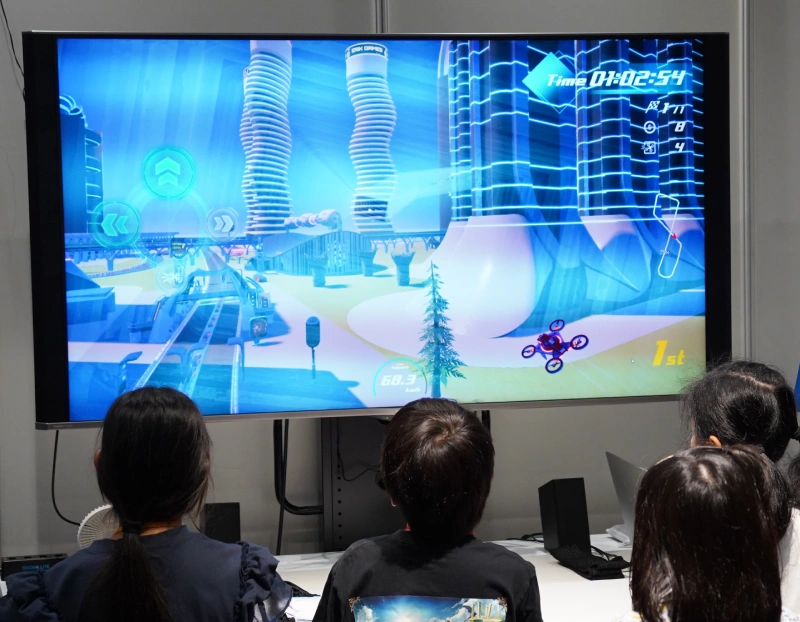
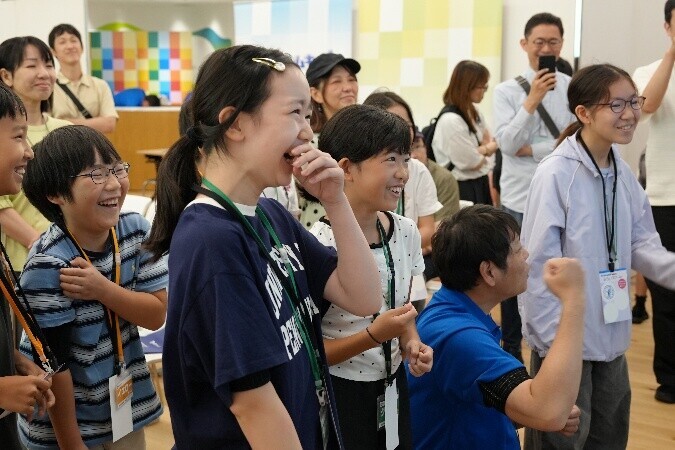
The first experience involved electromyography (EMG) signals. Using the faint electrical signals generated when the muscles in the arm move, the children took on a game in which they controlled a drone on screen. Working in teams of four, each child took charge of one action—“right,” “left,” “ascend” or “speed”—and together they aimed for the goal.
“More to the right!”
“Keep going up!”
Every team naturally began calling out to one another, moving the muscles in their arms up and down to fly the drone.
Because it can be operated without large body movements, this technology leads toward a society in which everyone—with or without a disability—can enjoy sports and communication in the same way.
• Feeling a Distant Landscape Through the Soles of Your Feet
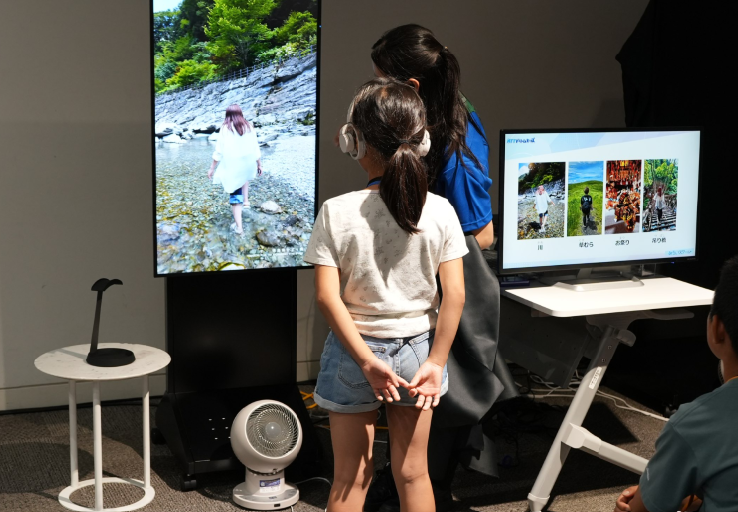
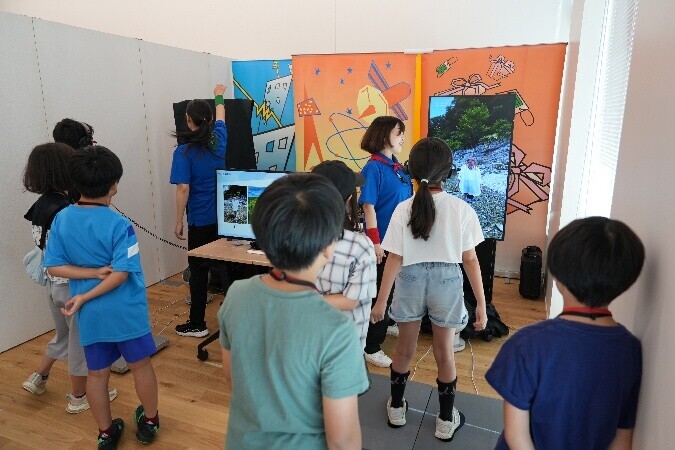
Next came tactile transmission technology. Standing on a dedicated device, the children could feel the sound coming through their headphones and the vibrations traveling up through the soles of their feet, giving them the sensation of having traveled to a faraway place.
“Are you walking in a river?”
“Isn’t it a mountain?”
The children imagined the scenery from the vibrations as they worked out their answers. When the video revealing the answer appeared, cheers went up.
Even across distance, the atmosphere of a place and the feeling of really being there can be shared. The children experienced this communication of the future with their whole bodies.
• AI Starts Speaking in a Voice Just Like Your Own
Last came speech synthesis technology. When the children recorded their own voices, AI generated a voice that sounded just like theirs, which could then read out all sorts of words.
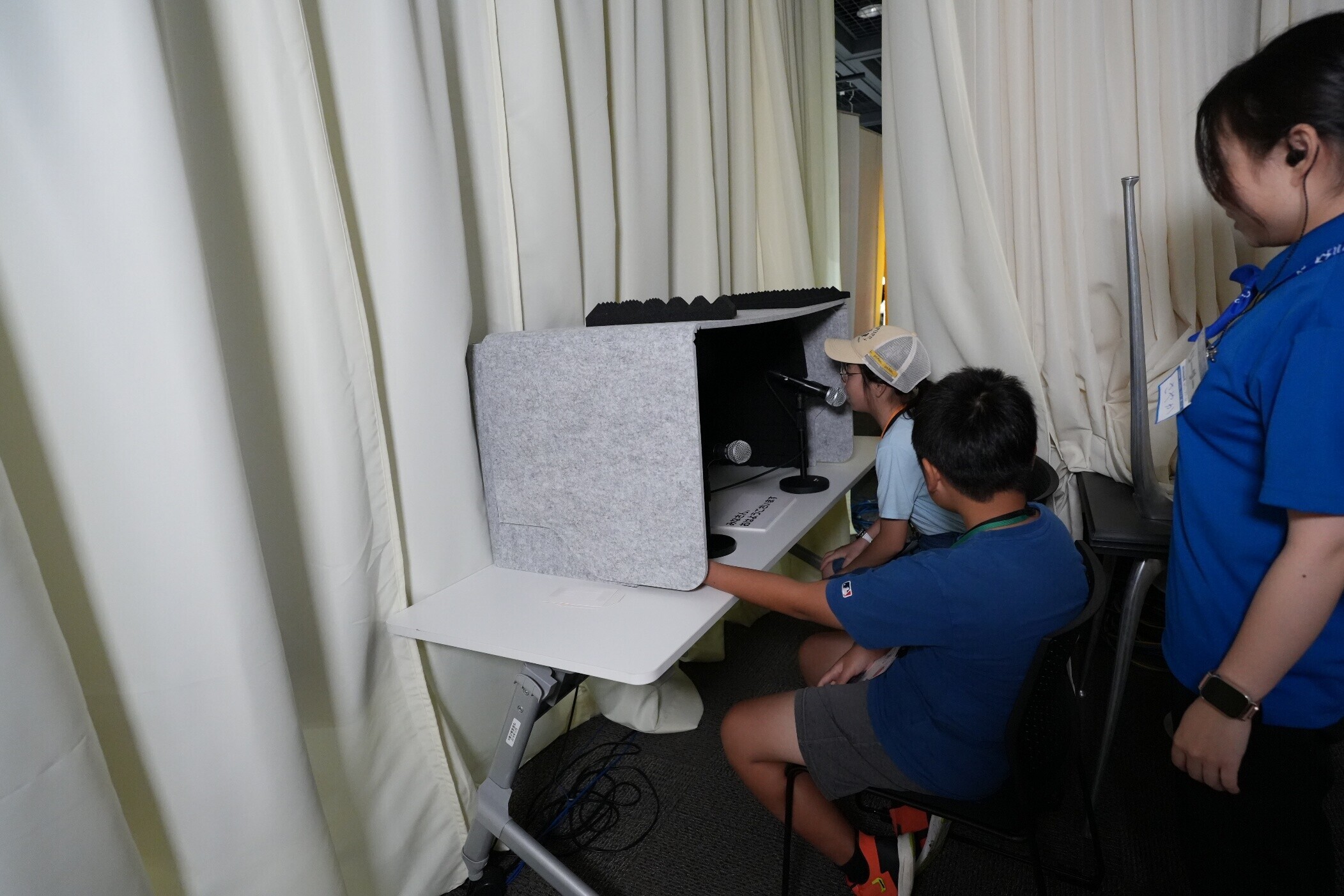
“Is this really my voice?”
Surprised but delighted, the children listened to what the AI had to say.
This technology leads toward a future in which people can speak a foreign language in their own voice, or in which someone who has lost the ability to speak because of illness can hold a conversation in a voice that sounds like their own.
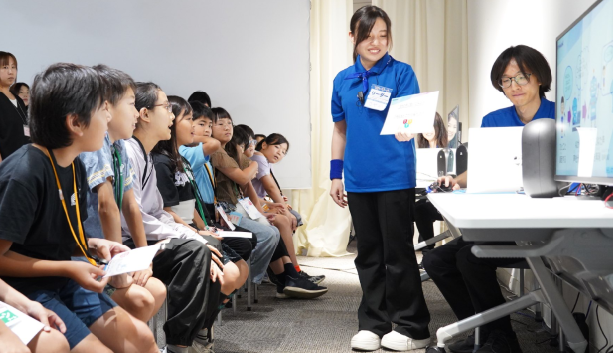
A voice is the very essence of who a person is. Through the experience, the children came to appreciate that this is a technology that expands the possibilities of communication.
6) The Kind of Future We’d Love to See
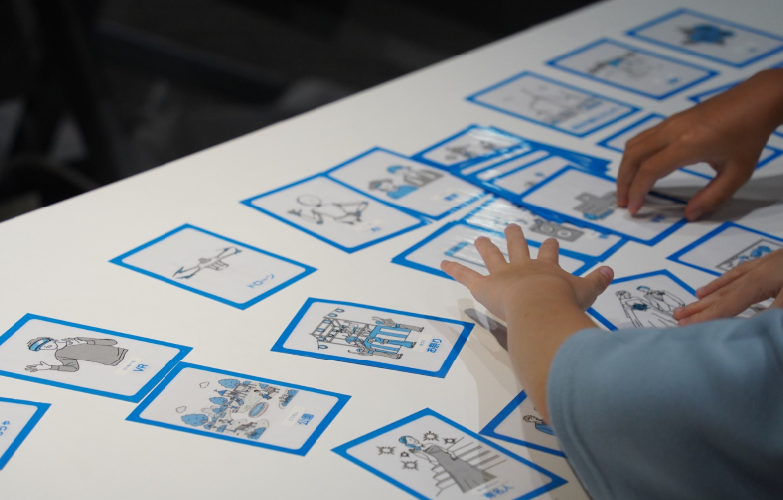
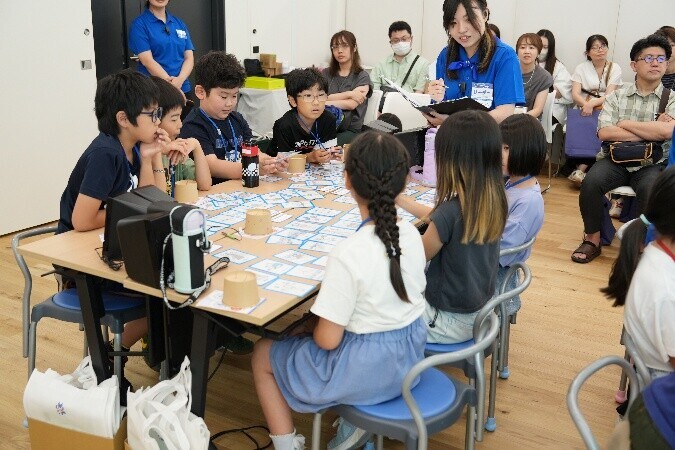
In the final program, each team discussed the theme of “the world of the future.” Combining cards for AI, robots, drones, VR, renewable energy and more, they thought about the future they would like to live in.
“A ‘flying town’ that combines an airplane with a town, so you can move freely through the sky”
“AI and VR that entertain and cheer up people who are in the hospital”
“Recycling technology that turns broken toys into brand-new toys, again and again”
One free-spirited idea after another came from the children—ideas no adult would have thought of.
The future is not born of technology alone. What matters is how we use it and whose happiness it creates. The technologies the children experienced that day seemed to give them a glimpse of what might be possible.
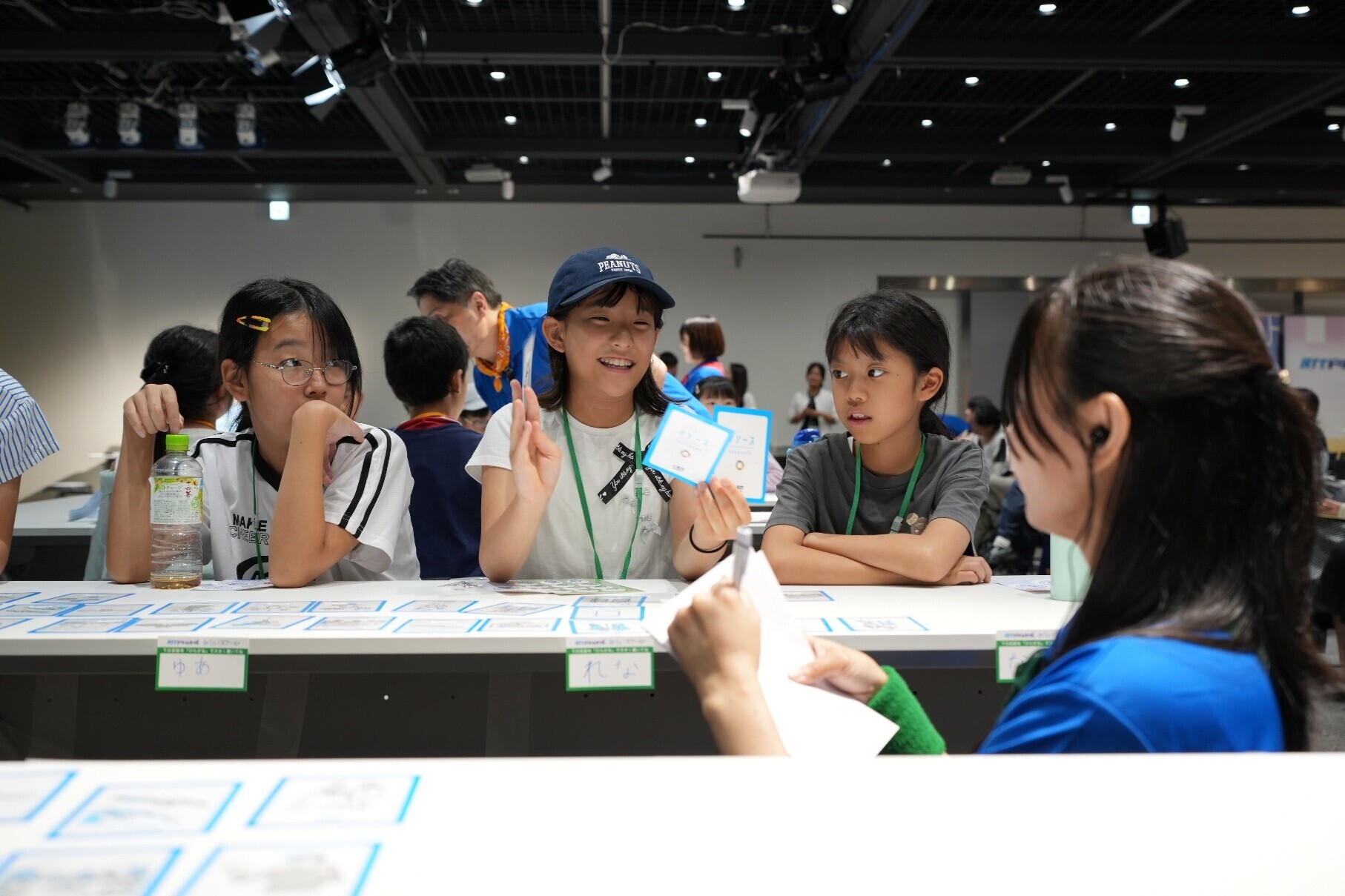
7) The Future Can Be Even Kinder to People
For communication technology, becoming faster is not the only kind of progress. Being able to convey how you feel even from far away. Being able to make your voice heard as your true self. And bringing people closer to one another.
NTT Dream Kids 2026 Mirai School was a two-hour opportunity for the children to experience and think about that kind of future for themselves.
“New technology is fun.” “I’m glad I got to learn things I didn’t know.” “I want to make a game that no one has ever played before.” These were some of the comments the children shared. The surprise and discovery they felt that day may inspire them to pursue careers as engineers in the future. And above all, “the future looks like fun.” With that thought in their hearts, the children left the venue with smiles on their faces.
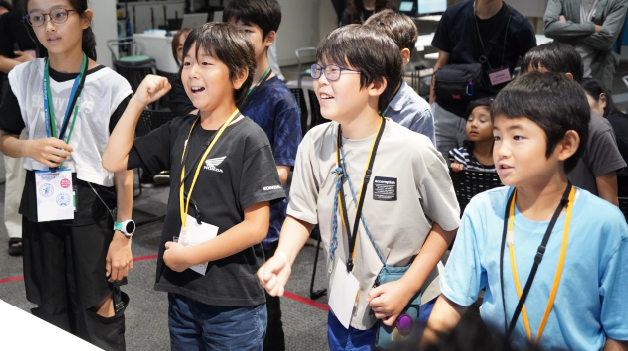
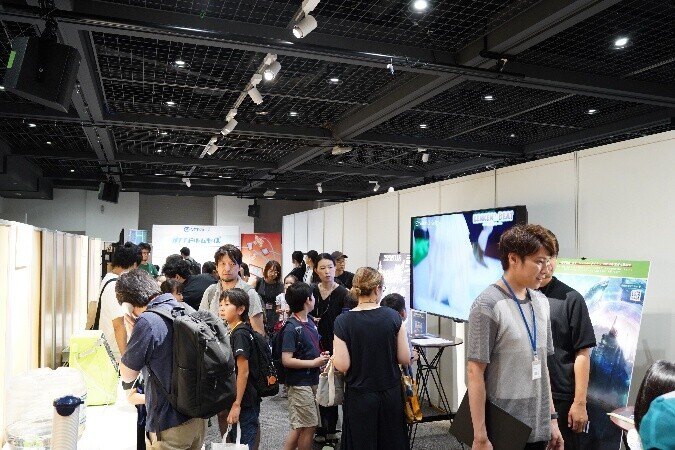
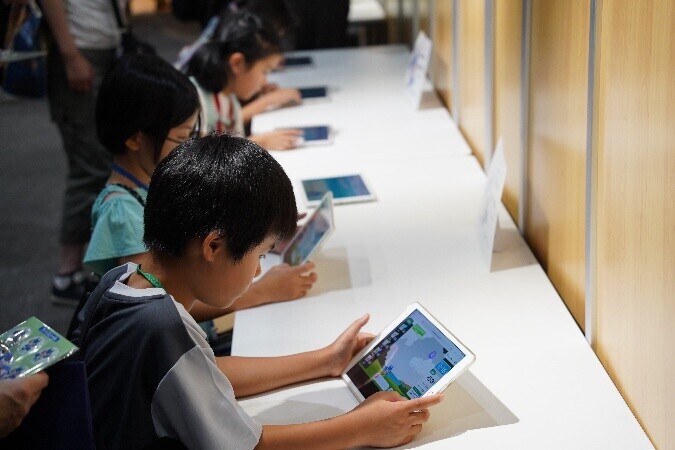
• Hands-On Corners Draw a Crowd
At the hands-on corners, where children could try the “Dream Kids Online” learning site and get their hands on a public payphone, they were free to explore whatever content caught their interest.
8) The Other Venues
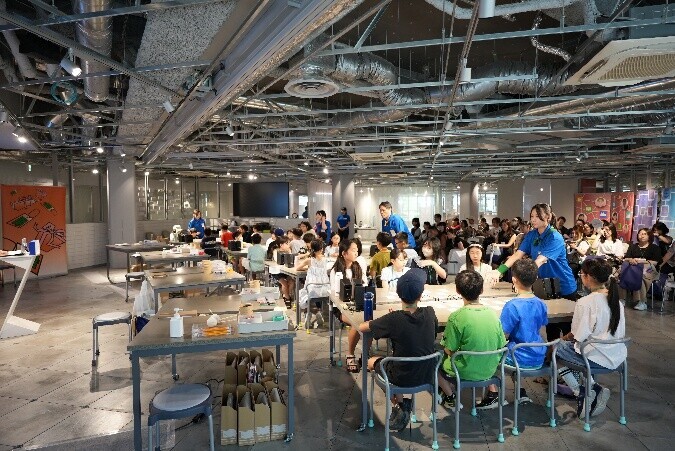
• Osaka Venue
• Sapporo Venue
*Following the 2026 Kumamoto Earthquake on July 28, the Kumamoto venue was canceled with the safety of participants as our top priority.
9) Dream Kids Online: Learn While You Play
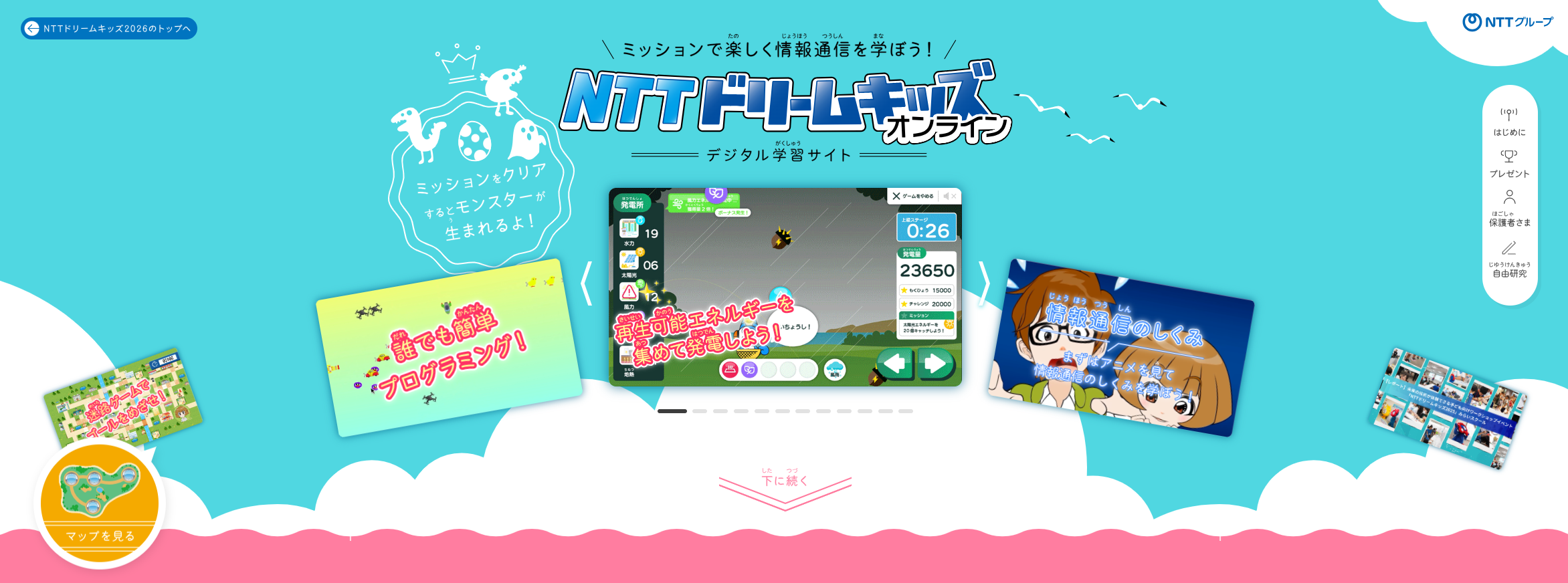
NTT Dream Kids 2026 also offers online content for learning anytime, anywhere. Children can have fun learning about everything from information and communications to programming, disaster preparedness, energy and security.
The online content will be available until Saturday, October 31, 2026, and can be accessed via PC, tablet or smartphone.
https://nttdreamkids.group.ntt/ (Japanese)
10) NTT Group’s Activities for Children
Through NTT Dream Kids, the NTT Group provides opportunities to learn and experience so that the children who will lead the next generation can hold hope and dreams for the future. By engaging with the latest communication technologies and imagining the society of the future, we aim to nurture children’s new interests and spirit of challenge, and to help them envision a rich and convenient society—and a future that makes their hearts race. We will continue to advance these efforts going forward.
https://group.ntt/jp/kids/ (Japanese)
Related Article
-
September 10, 2025
[Report] NTT Dream Kids 2025, a workshop event for children to experience the technologies of the future Mirai School
-
September 19, 2024
[Report] Think about the future by experiencing the latest technology! Workshop event for children "NTT Dream Kids 2024 Mirai School"
-
November 28, 2023
Real-Life Programming!
Report on "NTT Dream Kids 2023," a hands-on programming learning event for children [Live Programming Classroom]. -
September 11, 2023
Real-Life Programming!
Report on "NTT Dream Kids 2023," a hands-on programming learning event for children [Online Programming Classroom].
Recommended Article
-
April 12, 2024
Erbium's Quantum Revolution
-
February 14, 2024
The world's first remote rap battle and remote comedy using our next-generation network!
Report on the "IOWN WEEK" event, where the next generation office was also opened to the public! -
December 1, 2023
NTT's Large Language Model "tsuzumi" is Here!
-

November 17, 2023
Realizing a Recycling-Oriented Society through a Data Mining Approach
Search by Tags