Microsoft ends support for Internet Explorer on June 16, 2022.
We recommend using one of the browsers listed below.
- Microsoft Edge(Latest version)
- Mozilla Firefox(Latest version)
- Google Chrome(Latest version)
- Apple Safari(Latest version)
Please contact your browser provider for download and installation instructions.



November 14, 2025
NTT, Inc.
TOKYO BROADCASTING SYSTEM TELEVISION, INC.
TBS ACT, INC.
NTT and TBSTV Demonstrate Long-Distance Remote Connection of GPU Resources for Video Production Using IOWN APN
~Enabling high-quality video production with low latency between sites approximately 3,000 km apart~
News Highlights:
- Demonstrated long-distance remote connection of approximately 3,000 km to a common infrastructure that allows flexible allocation of GPUs and game engines for video compositing used in virtual production, leveraging the low-latency and jitter-free characteristics of the IOWN All-Photonics Network (IOWN APN).
- Confirmed that by connecting multiple GPU resources distributed across distant locations via IOWN APN, high-quality video production can be achieved with low latency without the need to permanently deploy high-performance equipment at production sites.
TOKYO — November 14, 2025 — NTT, Inc. (Headquarters: Chiyoda-ku, Tokyo; President and CEO: Akira Shimada; hereinafter "NTT"), TOKYO BROADCASTING SYSTEM TELEVISION, INC. (Headquarters: Minato-ku, Tokyo; President & Representative Director: Masamine Ryuho; hereinafter "TBSTV"), and TBS ACT, INC. (Headquarters: Minato-ku, Tokyo; President and CEO: Jun Yasuda; hereinafter "TBS ACT") have successfully demonstrated the remote connection of GPUs for video compositing game engines in virtual production between sites approximately 3,000 km apart using IOWN APN1,2, aiming to improve efficiency and sophistication in video and audio production. This achievement is expected to enable high-quality, immersive video production over wide areas, regardless of the scale of each site, by leveraging IOWN APN.
This initiative will be exhibited at NTT R&D FORUM 2025 IOWN ∴Quantum Leap3 to be held from November 19 to 26, 2025.
Background
In video production, there are operational efficiency challenges, such as the need to dispatch many staff to shooting locations, as well as social issues like a declining number of video and audio technicians due to population decrease. These factors have driven the digital transformation (DX) of video production, including the standardization and centralization of production equipment and technologies.
One approach within video production DX is virtual production. Virtual production is a filmmaking technique that merges real-world subjects with a virtual environment in real time, simultaneously capturing live actors in front of LED walls displaying background imagery.
Virtual production eliminates the need for on-location shooting or large-scale set construction, significantly shortens post-production compositing work, and enhances actors' performances through realistic lighting effects, achieving both cost reduction and greater creative freedom. However, it also requires substantial GPU resources for video processing, creating new challenges in power consumption and system setup time.
Overview of the Initiative
In this initiative, NVIDIA RTX PRO GPUs for video processing, which were previously installed within the same site, were instead placed in a common infrastructure at a remote site and flexibly allocated, connected via IOWN APN. In this environment, it was confirmed that various inter-site data can be transmitted with low latency using IOWN APN, and demonstrated that video production tasks can be performed with the same quality as when using GPU resources located on-site in a studio.
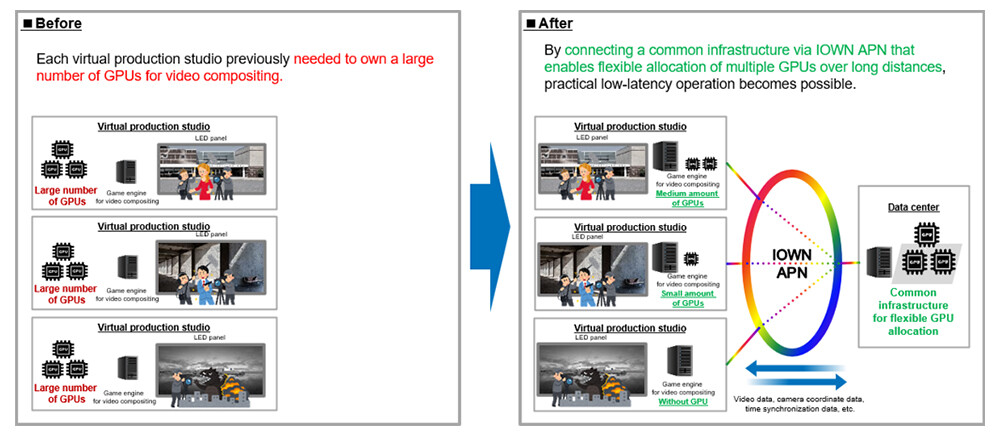 Figure 1 Concept of virtual production utilizing IOWN APN
Results of the Initiative
■ Demonstration of low latency in long-distance remote environments using IOWN APN
Leveraging the low-latency and jitter-free characteristics of IOWN APN, various data necessary for coordination, such as time synchronization for video compositing game engines used in virtual production and camera and lighting coordinate information were successfully transmitted over a field verification environment equivalent to the length of Japan from north to south (approximately 3,000 km). In addition, low latency of 5 frames (approximately 84 ms) was confirmed between the shooting camera and the LED background, demonstrating that video production tasks can be performed with the same quality as when using on-site GPU resources in a studio.
■ Demonstration of long-distance remote connection to a common infrastructure with flexible GPU allocation
To enable flexible and scalable GPU allocation according to the size of LED panels used in virtual production and the increasing resolution and frame rate of displayed video, it was demonstrated that long-distance remote connection to a common infrastructure capable of flexibly allocating game engines and GPUs for video compositing is feasible.
Key Technical Points
■ Demonstration of low latency in long-distance remote environments using IOWN APN
By leveraging the IOWN APN for long-distance remote connections of video compositing game engines, low-latency, jitter-free inter-site connections were achieved, enabling stable time synchronization between devices and minimizing transmission delays. In addition, to simplify the device configuration and further reduce latency, NVIDIA ConnectX networking combined with NVIDIA Rivermax technology4 was adopted, allowing large-volume uncompressed video according to the SMPTE ST2110 standard5 to be transmitted with low latency using GPU Memory Direct6.
■ Demonstration of long-distance remote connection to a common infrastructure with flexible GPU allocation
For the video compositing game engine, Epic Games' Unreal Engine7 was used, which is also utilized in virtual production, game development, CG production, and XR 3D space development. Regarding the common infrastructure with flexible GPU allocation, a product from LIQID, Composable Disaggregated Infrastructure (CDI)8 was used, which enables centralized management and flexible allocation of multiple GPUs. Using these products, long-distance remote connection to a common infrastructure capable of flexible GPU allocation was successfully demonstrated.
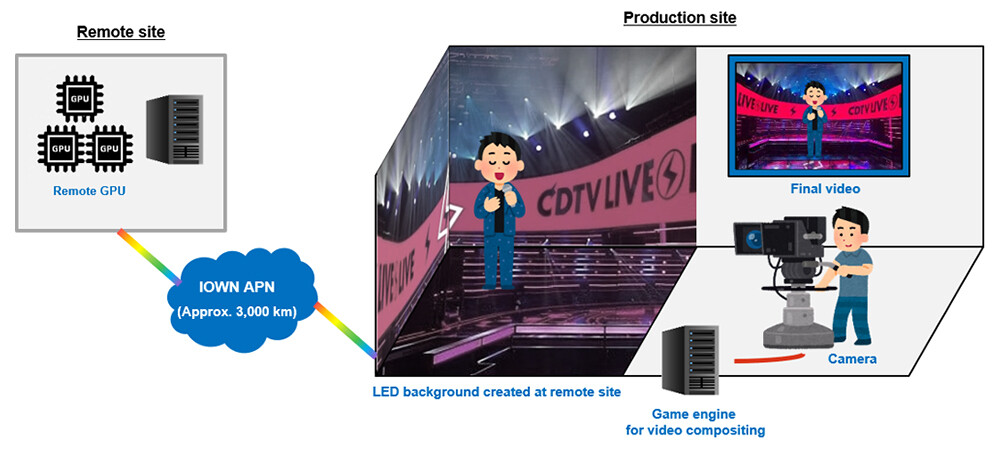 Figure 2 Exhibition image at NTT R&D FORUM 2025
Roles of Each Company
This initiative was promoted as a joint effort by NTT, TBSTV, and TBS ACT.
NTT···Technical study on IOWN APN and common infrastructure for flexible GPU allocation
TBSTV···Extraction of business requirements for virtual production
TBS ACT···Technical study on virtual production
In addition, the long-distance remote connection to the common infrastructure with flexible GPU allocation was carried out with technical support from Servants International, a sales partner of LIQID's CDI.
Future Developments
Building on this initiative, joint studies on further advancement and efficiency of video production using IOWN APN will continue, contributing to higher production quality and the establishment and deployment of flexible production environments through the promotion of video and audio production DX.
In addition, by deploying IOWN APN technology, which forms the foundation of this initiative, to broadcasters and various production sites, efficiency and sophistication across the entire video and audio production industry are expected to improve through the development of production DX, and collaborative efforts toward this goal will continue.
[Glossary]
1IOWN
The IOWN (Innovative Optical and Wireless Network) initiative is a concept for a network and information processing infrastructure, including devices, that optimizes both individual and overall system performance based on all types of information. It leverages innovative optical-centric technologies to provide high-speed, large-capacity communication as well as massive computing resources. For more details, please visit the following website.
■ What is IOWN concept?
https://group.ntt/en/group/iown/
2IOWN APN
The IOWN APN (All-Photonics Network) is a network in which photonics-based technologies are applied from the network core to end devices. This enables transmission with extremely low power consumption, high quality and large capacity, and low latency, which is difficult to achieve with conventional electronics-based technologies. For more details, please visit the following website.
■ What is APN?
https://group.ntt/en/group/iown/function/apn.html
3NTT R&D FORUM 2025 IOWN ∴Quantum Leap official website https://www.rd.ntt/e/forum/2025/

4NVIDIA Rivermax technology
Software development kits (SDKs) for streaming high-definition video and data over IP networks with low latency and high accuracy.
https://developer.nvidia.com/networking/rivermax
5SMPTE ST2110 standard
A set of standards established to enable the broadcast industry to transition from SDI-based to IP-based transmission, allowing video, audio, and ancillary data to be transmitted over IP networks.
6GPU Memory Direct
A technology that enables direct data transfer between a GPU and other devices, such as storage or network cards, without passing through the CPU or system memory.
7Unreal Engine
A high-quality game engine developed by Epic Games that enables advanced game creation. In addition to game development, it is used in diverse fields such as film, architecture, and virtual reality (VR).
8Composable Disaggregated Infrastructure (CDI)
Next-generation infrastructure that separates compute, storage, and network resources, enabling dynamic software-controlled allocation and release as needed.
About NTT
NTT contributes to a sustainable society through the power of innovation. We are a leading global technology company providing services to consumers and businesses as a mobile operator, infrastructure, networks, applications, and consulting provider. Our offerings include digital business consulting, managed application services, workplace and cloud solutions, data center and edge computing, all supported by our deep global industry expertise. We are over $90B in revenue and 340,000 employees, with $3B in annual R&D investments. Our operations span across 80+ countries and regions, allowing us to serve clients in over 190 of them. We serve over 75% of Fortune Global 100 companies, thousands of other enterprise and government clients and millions of consumers.
Media contacts
NTT, Inc.
NTT IOWN Integrated Innovation Center
Public Relations
Inquiry Form
TOKYO BROADCASTING SYSTEM TELEVISION, INC.
TEL: 03-3746-1111
TBS ACT, INC.
Mail: ta-qa@gr.tbsact.co.jp
Information is current as of the date of issue of the individual press release.
Please be advised that information may be outdated after that point.


NTT STORY
WEB media that thinks about the future with NTT