Microsoft ends support for Internet Explorer on June 16, 2022.
We recommend using one of the browsers listed below.
- Microsoft Edge(Latest version)
- Mozilla Firefox(Latest version)
- Google Chrome(Latest version)
- Apple Safari(Latest version)
Please contact your browser provider for download and installation instructions.



February 27, 2026
NTT, Inc.
Hokkaido University
NTT and Hokkaido University Demonstrate Equivalent Malfunction Rates in Semiconductors Caused by Protons and Neutrons for the First Time
— Enabling evaluation of space radiation effects using neutron testing alone and improving preparedness for solar flares —
News Highlights:
- NTT and Hokkaido University have demonstrated for the first time in the world that the probability of semiconductor malfunctions (soft errors) caused by protons, the dominant component of cosmic radiation in space, and neutrons, the dominant component in the Earth's atmosphere, is equivalent in the high-energy range that accounts for the majority of cosmic radiation in space.
- Conventionally, evaluating the effects of cosmic radiation on electronic equipment in both terrestrial and space environments has required separate neutron irradiation tests and proton irradiation tests. This achievement enables both effects to be evaluated through a single neutron irradiation test, reducing the cost and time required for irradiation testing.
- The neutron irradiation testing service already commercialized for terrestrial applications will be expanded to support evaluation for space environments, improving the efficiency of preparedness against communication equipment failures caused by events such as solar flares.
TOKYO — February 27, 2026 — NTT, Inc. (Headquarters: Chiyoda-ku, Tokyo; President and CEO: Akira Shimada; hereinafter "NTT") and Hokkaido University (Sapporo, Hokkaido; President: Kiyohiro Houkin) have demonstrated for the first time in the world that the occurrence rates1 of semiconductor malfunctions (soft errors)2 caused by protons in cosmic radiation and neutrons in the Earth's atmosphere are equivalent in the kinetic energy range of 20 megaelectronvolts (MeV) or higher, which accounts for more than 80% of cosmic radiation in space.
Conventionally, evaluating the effects of cosmic radiation on electronic equipment in terrestrial and space environments has required separate neutron irradiation tests and proton irradiation tests. This achievement enables both effects to be evaluated through a single neutron irradiation test, reducing irradiation testing costs and shortening evaluation periods. It also makes it easier to secure testing opportunities and lowers barriers to entry into the space industry for private companies. As a result, the risk of soft errors in electronic equipment supporting space-based ICT infrastructure can be more accurately estimated during the development phase, enabling preventive measures prior to operation and contributing to the realization of safe and reliable space infrastructure (Figure 1).
NTT will incorporate these results into its commercially available neutron soft-error testing services for terrestrial electronic equipment and expand their applicability to evaluation for use in space environments. Through this initiative, NTT aims to quickly realize a commercial service that improves preparedness against communication equipment failures caused by events such as solar flares. Furthermore, to verify the effectiveness of this technology in space, demonstration experiments will be conducted on an external experimental platform of the International Space Station (ISS) under the PEGASEUS project3, with the aim of further improving accuracy.
These results were published in two papers in IEEE Transactions on Nuclear Science on February 18, 2026.
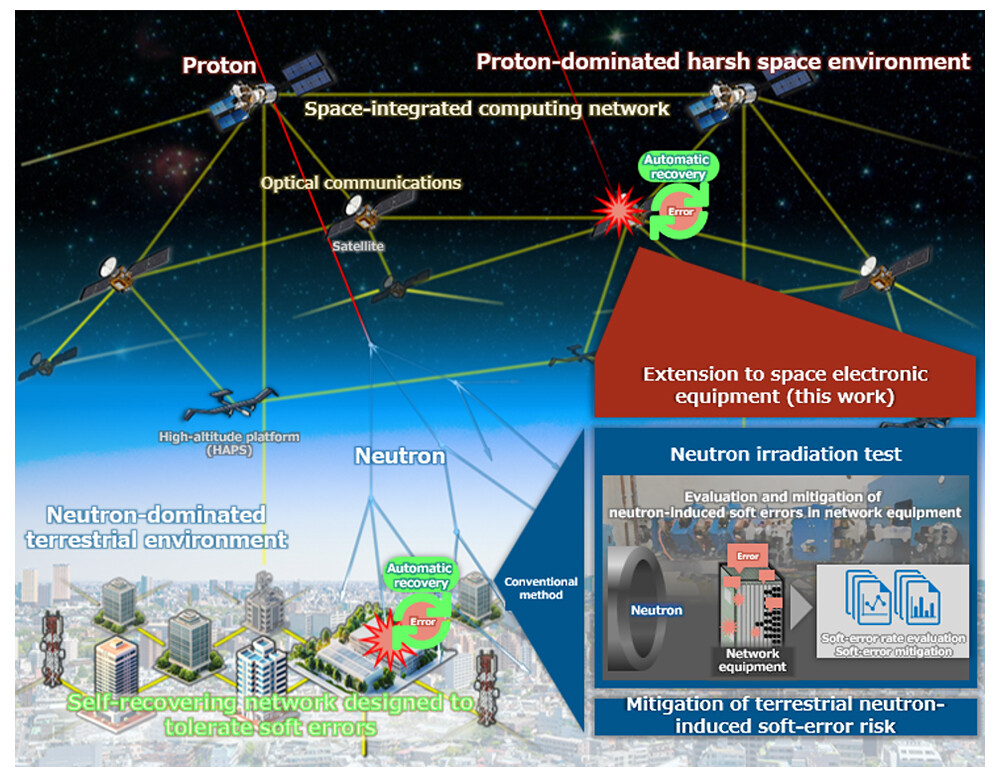 Figure 1 Evaluation of proton-induced soft-error risk in space using neutron irradiation testing for terrestrial electronic equipment
Background
In recent years, the use of space has become essential for services that support modern daily life, including navigation, weather forecasting, and satellite communications, and space-related businesses led by private companies have been expanding rapidly. NTT has also launched its space business brand "NTT C89"4 and is engaged in initiatives in communications, observation, and data utilization.
Meanwhile, space is an extremely harsh environment in which invisible microscopic particles known as cosmic radiation travel at speeds close to the speed of light, exposing equipment to radiation levels thousands to tens of thousands of times higher than those on Earth. In addition, cosmic radiation levels can increase suddenly due to events such as solar flares. To ensure the stable operation of communication and observation equipment in such environments, it is essential to evaluate and mitigate the effects of cosmic radiation on electronic equipment in advance. However, testing for this purpose currently relies primarily on accelerator facilities intended for academic use, and securing testing opportunities suitable for industrial applications has been a major challenge.
Even on the ground, cosmic radiation interacts with the atmosphere to produce neutrons that reach the Earth's surface, and neutron-induced semiconductor malfunctions known as soft errors have long been recognized as an issue for terrestrial network equipment (Figure 2). Soft errors occur when data stored in semiconductor memory is unintentionally altered, and in network systems they can develop into diverse and complex failures. NTT has clarified the characteristics of neutron-induced soft errors5,6 and has built highly reliable ICT infrastructure by conducting advance evaluation and mitigation measures through neutron irradiation testing of entire systems prior to service deployment. In 2016, NTT commercialized this testing technology7,8. Subsequently, NTT contributed to standardization activities at ITU-T in 20189 and participated in the development of guidelines at CIAJ in 202210, thereby advancing the establishment of evaluation frameworks.
At the same time, with the expansion of the space business, there has been increasing demand to use low-cost, high-performance commercial off-the-shelf equipment designed for terrestrial use in space environments. Furthermore, as space utilization expands from standalone equipment to networked infrastructure, higher reliability is required even under severe cosmic radiation environments. This makes quantitative evaluation and mitigation of service disruption risks caused by soft errors essential (Figure 2). In addition, because protons dominate in space environments while neutrons dominate in terrestrial environments, evaluation testing has needed to be conducted separately for each particle type, creating challenges in terms of cost and the availability of testing opportunities. Proton irradiation testing also has limitations in irradiation area and beam conditions, making it difficult in some cases to evaluate entire systems including enclosures, which can increase both the number of tests and the associated workload.
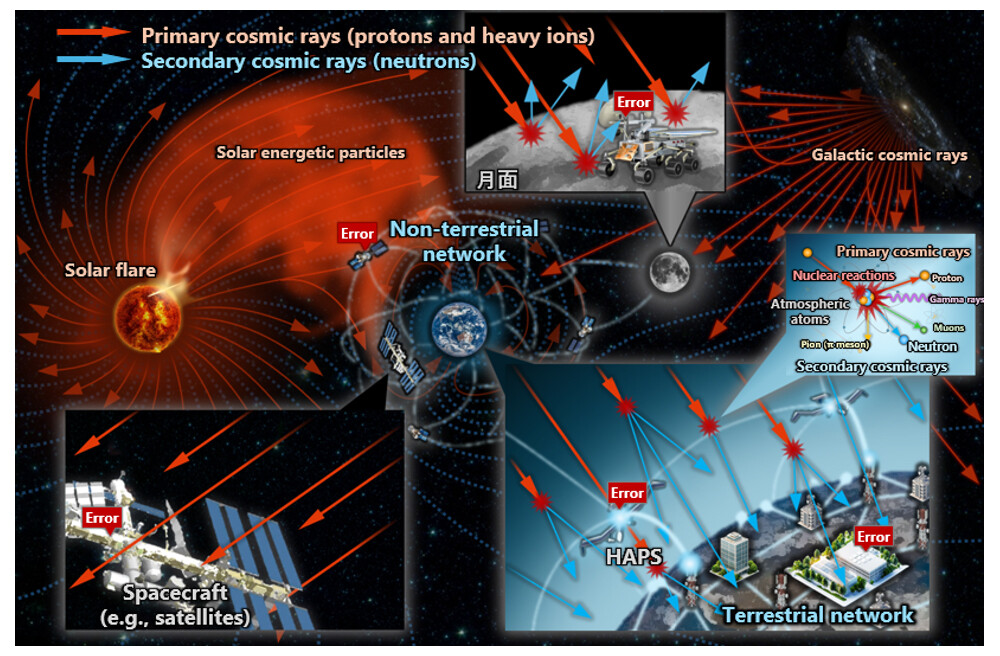 Figure 2 Soft errors caused by cosmic radiation from terrestrial to space environments
Research Results
Against this background, NTT and Hokkaido University focused on the relationship between soft-error occurrence rates caused by protons, which dominate in space environments, and atmospheric neutrons, which dominate in terrestrial environments, with the aim of applying the neutron irradiation testing framework established for terrestrial electronic equipment to the evaluation of electronic equipment for space use.
As a result, the two organizations demonstrated for the first time in the world that the soft-error occurrence rates caused by protons and neutrons are equivalent in the kinetic energy range of 20 megaelectronvolts (MeV) or higher (Figure 3). In addition, the measurement method for neutron-induced soft-error occurrence rates was improved to enable high-precision measurement across a wide energy range in a single test.
These results establish a path toward utilizing a single neutron irradiation test for evaluation of electronic equipment for space use (Figure 4), whereas conventional irradiation evaluation has required multiple tests depending on particle type and kinetic energy range.
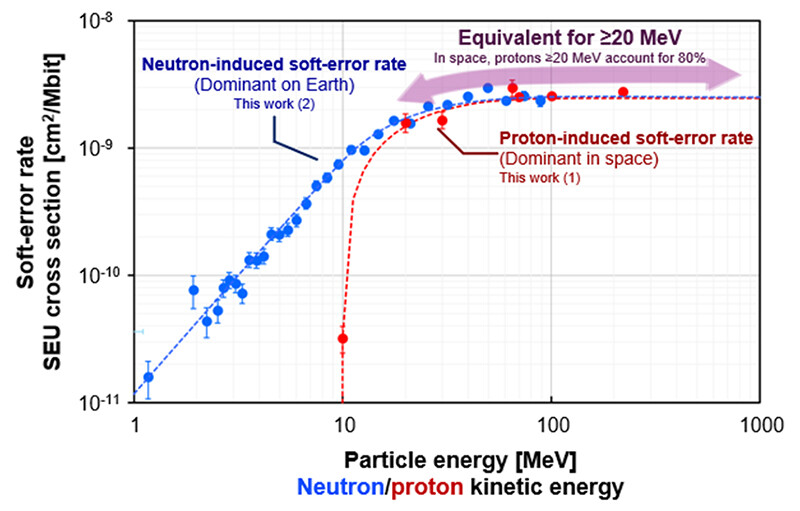 Figure 3 Measured soft-error occurrence rates for protons and neutrons as a function of kinetic energy
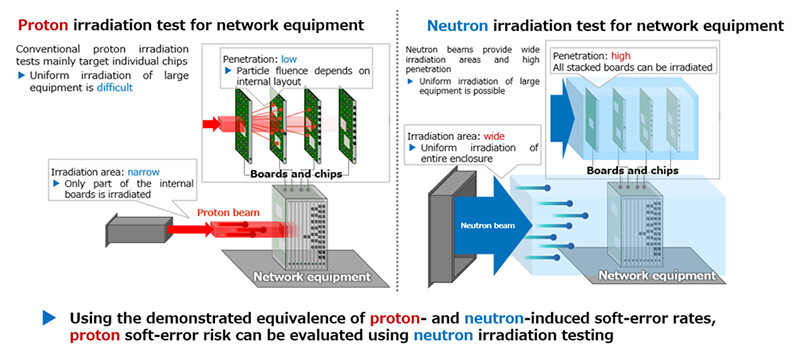 Figure 4 Measurement methods for proton- and neutron-induced soft-error occurrence rates in network equipment
Technical Highlights
(1) Evaluation previously separated for space (protons) and terrestrial environments (neutrons) can be performed with a single neutron irradiation test
By demonstrating that the soft-error occurrence rates caused by protons and neutrons are equivalent in the kinetic energy range of 20 megaelectronvolts (MeV) or higher, neutron irradiation testing can now be utilized for evaluation of electronic equipment for space use.
To verify this equivalence, proton irradiation tests in the energy range of 10 to 65 MeV were conducted at the ion irradiation facility (TIARA) of the Takasaki Advanced Radiation Research Institute, where proton-induced soft-error occurrence rates were measured. In addition, to evaluate higher energy ranges, proton irradiation tests were carried out at the Proton Beam Therapy Center of Hokkaido University Hospital (Figure 5), which is normally used for medical treatment. Test conditions used for cancer therapy were converted for application to electronic equipment evaluation, enabling measurement of proton-induced soft-error occurrence rates in the range of 70 to 220 MeV.
Based on these results, together with detailed comparisons of neutron-induced soft-error occurrence rates and their kinetic energy dependence across multiple semiconductor devices, NTT and Hokkaido University demonstrated for the first time in the world that proton-induced soft-error occurrence rates for 20 MeV and higher, which account for more than 80% of cosmic radiation in space11, are equivalent to neutron-induced soft-error occurrence rates in the same kinetic energy range (Figure 3).
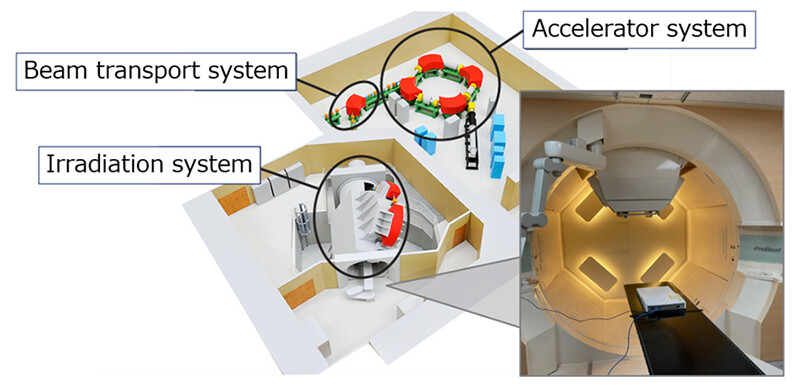 Figure 5 Proton Beam Therapy Center of Hokkaido University Hospital
(2) Integrated evaluation from low to high energy ranges with a single neutron irradiation test
The measurement method for neutron-induced soft-error occurrence rates was enhanced to enable measurement and evaluation across a wide energy range, from low-energy neutrons to high-energy neutrons on the order of 100 MeV, using a single neutron irradiation test.
In this work, a correction method was developed to compensate for reduced energy-measurement accuracy that occurs in a specific neutron irradiation scheme. Using this method, neutron-induced soft-error occurrence rates up to 100 MeV were successfully measured at the Neutron Beam Characterization Instrument (NOBORU) installed at the Materials and Life Science Experimental Facility (MLF) of the Japan Proton Accelerator Research Complex (J-PARC), a major domestic research facility (Figure 3).
This method enables irradiation testing, which previously required multiple measurements depending on kinetic energy range, to be consolidated into a single neutron irradiation test covering both low- and high-energy ranges, thereby improving measurement and evaluation accuracy.
(3) More realistic evaluation of entire systems including enclosures
By extending neutron irradiation testing, which provides a wide irradiation area, to evaluation for space applications, it becomes possible to evaluate entire systems including enclosures.
This enables soft-error risks to be more easily estimated during the development phase and supports the implementation of mitigation measures prior to operation. In particular, when evaluating entire systems including enclosures, neutron irradiation testing can reduce the need for test segmentation and preparation steps that may be required in proton irradiation testing. As a result, the number of tests and preparation workload can be further reduced, potentially leading to greater cost savings.
Roles of Each Organization
- NTT‐ Coordination of experiments with each facility‐ Design and fabrication of soft-error detection circuits‐ Analysis of soft-error measurement data
- Hokkaido University‐ Analysis of neutron energy distributions‐ Facility operation and experimental support for experiments conducted at the Proton Beam Therapy Center
Future Plans
NTT will incorporate these results into its commercially available neutron soft-error testing services for terrestrial electronic equipment and aims to quickly realize a commercial service capable of supporting evaluation for space environments.
In addition, NTT will expand the scope of evaluation to include soft errors caused by other types of cosmic radiation, such as heavy ions, as well as other forms of physical damage, enabling more comprehensive reliability assessments.
Furthermore, to verify the effectiveness of this technology under actual space conditions, demonstration experiments will be conducted on the exposed facility of the International Space Station (ISS) under the PEGASEUS project, with the aim of further improving evaluation accuracy.
Based on these efforts, NTT will continue to refine its technologies and services under its space business brand NTT C89, and will promote this evaluation methodology and testing service for use by a wide range of customers, including equipment manufacturers and space infrastructure operators in Japan and overseas, thereby contributing to the safe and reliable expansion of space utilization.
Publication Information
Journal: IEEE Transactions on Nuclear Science
Title: Experimental Confirmation of Equivalence of Proton- and Neutron-induced Energy-dependent SEU Cross Sections for Sub-100-nm Bulk Planar SRAM-based FPGAs
Authors: Ryu Kiuchi, Yuji Sunada, Yoshiharu Hiroshima, Mayu Tominaga, Nagomi Uchida, Hidenori Iwashita, Takashi Ikeda, Hirotaka Sato, Seishin Takao, Taeko Matsuura, Takashi Kamiyama, Michihiro Furusaka, and Yoshiaki Kiyanagi
DOI: 10.1109/TNS.2025.3646265
URL: https://ieeexplore.ieee.org/document/11305188
Journal: IEEE Transactions on Nuclear Science
Title: A Method for Deduction of Single-Event Upset Cross Sections from Time-of-Flight Data Obtained at a Double-Bunch Proton Accelerator-Based Neutron Source
Authors: Yuji Sunada, Hidenori Iwashita, Ryu Kiuchi, Mayu Tominaga, Yoshiharu Hiroshima, Nagomi Uchida, Kaito Ishiguro, Hirotaka Sato, Takashi Kamiyama, Michihiro Furusaka, and Yoshiaki Kiyanagi
DOI: 10.1109/TNS.2025.3646262
URL: https://ieeexplore.ieee.org/document/11305232
[Glossary]
1Soft-error occurrence rate
In this release, this term refers to the probability that a single radiation particle per unit area causes a soft error. Technically, this is defined as the SEU (Single Event Upset) cross section. In some cases, it is also defined as the probability of soft-error occurrence per unit time.
2Soft error
A temporary failure that can be recovered by restarting the device or rewriting data, unlike a hard error in which the device is permanently damaged.
3PEGASEUS Project
An abbreviation for Payload for Evaluation of Guarding Against Single Event Upset in Space. This is an NTT project in which electronic equipment is exposed to cosmic radiation on an external exposure facility of the International Space Station (ISS) in order to measure radiation tolerance, including soft errors.
4NTT C89
NTT Technical Journal: "NTT Group Initiatives Promoted under the Space Business Brand 'NTT C89'"
https://journal.ntt.co.jp/article/29836 (Japanese)
5November 25, 2020 "Neutron energy dependence of semiconductor soft errors was successfully measured for the first time"
https://group.ntt/en/newsrelease/2020/11/25/201125a.html
6March 16, 2023 "World's first clarification of the complete picture of neutron-induced semiconductor soft-error characteristics"
https://group.ntt/en/newsrelease/2023/03/16/230316a.html
7March 21, 2013 "Development of technology to prevent failures in information and communication equipment caused by cosmic rays"
https://group.ntt/jp/newsrelease/pdf/news2013/1303/130321a.pdf (Japanese)
8December 19, 2016 "Launch of 'Soft-Error Testing Service' to reproduce electronic equipment malfunctions caused by cosmic rays"
https://group.ntt/jp/newsrelease/2016/12/19/161219a.html (Japanese)
9November 22, 2018 "International standards adopted by ITU-T to address soft errors affecting telecommunication equipment"
https://group.ntt/en/newsrelease/2018/11/22/181122a.html
10Establishment of the "Soft Error Guideline for Telecommunications Equipment"
CIAJ Website
https://www.ciaj.or.jp/news/topics/topics_past_issue/topics2022/8056.html (Japanese)
11Based on estimates under the cosmic radiation environment assumed in this study (orbital and shielding conditions), more than 80% of incident protons with respect to particle fluence have kinetic energies of 20 MeV or higher. This proportion varies depending on orbital conditions, shielding conditions, and solar activity.
About NTT
NTT is a leading global technology innovator, providing a broad range of services to both consumers and businesses. As a mobile operator and provider of infrastructure, networks, and services, NTT is dedicated to promoting a sustainable future through cutting-edge innovations. Our portfolio includes business consulting, AI-powered solutions, application services, global networks, cybersecurity, data center and edge computing, all supported by our deep global industry expertise. Generating over $90 billion in revenue and employing 340,000 professionals, we allocate 30% of our annual profits to fundamental research and development. With operations spanning more than 70 countries and regions, our clients include over 75% of Fortune Global 100 companies, alongside thousands of enterprises, government organizations, and millions of consumers.
Media Contacts
NTT, Inc.
NTT Information Network Laboratory Group
Public Relations
Inquiry form
Hokkaido University
<1> Inquiries regarding the research
Hokkaido University
Faculty of Engineering
Division of Applied Quantum Science and Engineering
Research Group of Quantum Engineering for Life Science and Medicine
Laboratory of Applied Neutron Beam Science and Engineering
Associate Professor Hirotaka Sato
TEL: 011-706-6679 Email: h.sato@eng.hokudai.ac.jp
Laboratory of Quantum Beam Science and Medical Engineering
Associate Professor Seishin Takao
TEL: 011-706-6167 Email: stakao@eng.hokudai.ac.jp
<2> Media inquiries
Hokkaido University
Public Relations & Communications Division
Office of Public Relations and Social Collaboration
TEL: 011-706-2610 Email: en-press@general.hokudai.ac.jp
Information is current as of the date of issue of the individual press release.
Please be advised that information may be outdated after that point.


NTT STORY
WEB media that thinks about the future with NTT