Microsoft ends support for Internet Explorer on June 16, 2022.
We recommend using one of the browsers listed below.
- Microsoft Edge(Latest version)
- Mozilla Firefox(Latest version)
- Google Chrome(Latest version)
- Apple Safari(Latest version)
Please contact your browser provider for download and installation instructions.



May 14, 2026
NTT, Inc.
NTT-ME Corporation
NTT e-Drone Technology, Inc.
NTT, NTT-ME, and NTT e-Drone Technology Demonstrate a Method to Reduce Delay Variation in Wireless Segments and Stabilize Video Quality for Remote Drone Operation
Enabling real-time remote inspections, contributing to enhanced safety and labor savings
News Highlights:
- Developed a technology that reduces delay variation in wireless segments when transmitting video captured by drones to operators, thereby stabilizing video quality.
- Established a remote drone operation environment between sites approximately 60 km apart using Local 5G and FLET'S VPN, and demonstrated the effectiveness of the technology.
- Confirmed that stable video transmission enables precise remote drone operation, allowing inspection tasks to be performed without on-site dispatch.
TOKYO — May 14, 2026 — NTT, Inc. (Headquarters: Chiyoda-ku, Tokyo; President and CEO: Akira Shimada; hereinafter "NTT"), NTT-ME Corporation (Headquarters: Shinjuku-ku, Tokyo; President: Kei Ikeda; hereinafter "NTT-ME"), and NTT e-Drone Technology, Inc. (President: Masahiro Takizawa; hereinafter "NTT e-Drone Technology") developed a technology to reduce delay variation in wireless segments and demonstrated a remote drone operation environment between sites approximately 60 km apart. In this demonstration, stable video transmission to the operator was achieved via Local 5G1 and FLET'S VPN2, confirming that drones can be operated remotely. This enables precise inspection work in hazardous locations without the need for on-site personnel dispatch.
This technology is scheduled to be exhibited at Tsukuba Forum 20263, which will be held on May 27 and 28, 2026.
Background
In Japan, labor shortages are becoming increasingly severe, creating challenges in securing personnel for infrastructure and equipment inspection tasks. As a result, expectations for remote inspections using drones are rising, as a means to conduct inspections without on-site dispatch.
Autonomous flight is suitable for inspections in fixed locations and relatively large areas. In contrast, in cases such as construction sites and factory inspections, where inspection points vary daily or where operations take place in relatively confined spaces, precise, safe, and real-time remote drone operation is required. This requires not only uninterrupted communication but also stable video transmission without distortion.
A key challenge has been that fluctuations in packet delay cause video distortion, leading to reduced operational precision. In wireless segments, such fluctuations occur because uplink and downlink communications share the same frequency band and because retransmission control is triggered when wireless quality deteriorates. To address these challenges, a technology was demonstrated that reduces delay variation in wireless segments and stabilizes video quality, with the aim of enabling operators to control drones remotely with confidence.
Results
In this demonstration, a remote drone operation environment was established in which an operator controlled a drone while viewing camera footage transmitted over a network. The system was configured with a drone deployed at the Robot Test Field in Minamisoma City, Fukushima Prefecture, and operated from Koriyama City, Fukushima Prefecture. Two sites located approximately 60 km apart in a straight line were connected via FLET'S VPN, with Local 5G used in the wireless segment. Under this environment, successful remote operation of the drone was confirmed.
In addition, a function to compensate for delay variation occurring in the wireless segment was implemented in the system. When high-load video transmission was conducted, video distortion was observed for 12% of the total transmission time. By applying this technology, the duration of video distortion was reduced to 5%. Furthermore, as significant video distortion can cause operators to interrupt control and increase the time required to reach a destination, travel time was also evaluated. A movement that required an average of 35 seconds under visual line-of-sight operation in Minamisoma was completed in an average of 32 seconds through remote operation from Koriyama without interruption. This confirmed that the system achieves video quality sufficient for stable and uninterrupted operation.
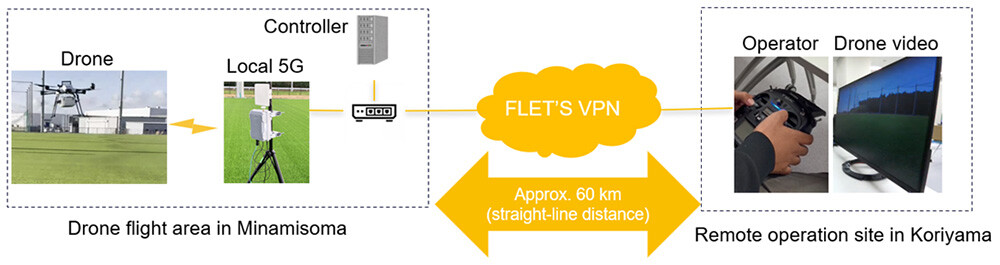 Figure 1. Configuration of the remote drone operation demonstration
Technical Highlights
In wireless segments, delay variation caused by retransmission control and other factors leads to fluctuations in video frame timing, resulting in video distortion. This technology analyzes the video rate using traffic information collected from the wireless base station and corrects frame intervals in an optical network device according to the analyzed video rate. As a result, delay variation generated in the wireless segment can be reduced (Figure 2). While a wireless base station alone cannot adequately address delay variation in the wireless segment, coordinated control across both wireless and optical segments enables reduction of delay variation and stabilization of video quality.
The technology consists of the following three steps:
- Collection: Continuously collects traffic information from the wireless base station to track changes in video rate.
- Analysis: Calculates an accurate video rate based on the collected traffic information.
- Control: Applies shaping control according to the video rate to correct frame intervals.
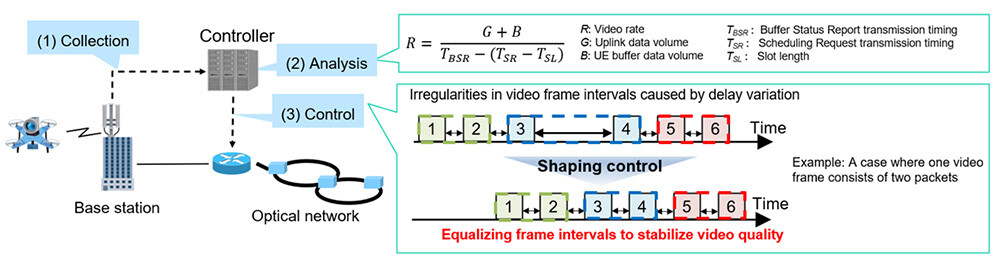 Figure 2. Optical-wireless coordinated control technology for mitigating delay variation
Video quality is considered more stable when the distribution of video frame intervals is closer to the ideal value. Before applying this technology, delay variation in the wireless segment caused significant variability in frame intervals, resulting in video distortion (Figure 3). By applying this technology, delay variation is reduced and frame intervals are brought closer to the ideal value, thereby eliminating video distortion.
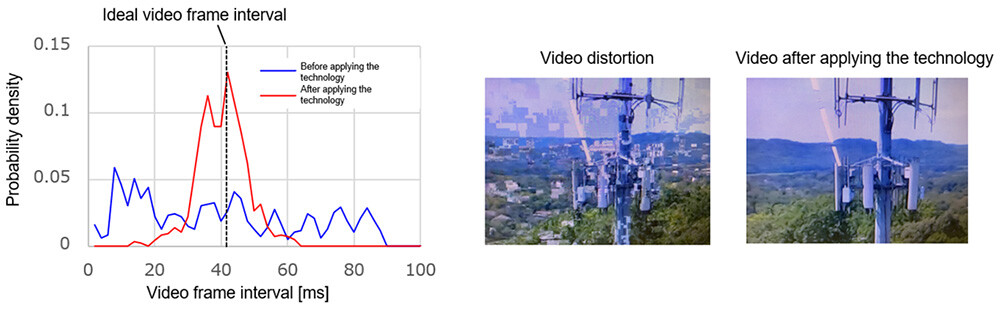 Figure 3. Video frame intervals and video distortion
Roles and Contributions
- NTT: Implemented the video quality stabilization technology and verified its effectiveness in remote drone operation.
- NTT-ME: Designed, built, and operated the Local 5G system for the demonstration.
- NTT e-Drone Technology: Provided the drone and operation environment for the demonstration and confirmed operability under beyond-visual-line-of-sight (BVLOS) conditions.
Future Outlook
This technology enables stable delivery of high-quality video to remote operators. Beyond drones, broader application to the operation of unmanned aerial vehicles and robots is anticipated, and efforts will be made to advance its commercialization.
The technology can also be applied to remote operations beyond inspection tasks. Its adoption across a wide range of fields will be promoted to support remote operational workflows and help address labor shortages.
[Glossary]
1Local 5G URL: https://business.ntt-east.co.jp/solution/local5g/ (Japanese)
2FLET'S VPN URL: https://business.ntt-east.co.jp/service/vpnprio/ (Japanese)
3Tsukuba Forum 2026 URL: https://www.rd.ntt/e/as/tforum/
About NTT
NTT is a leading global technology innovator, providing a broad range of services to both consumers and businesses. As a mobile operator and provider of infrastructure, networks, and services, NTT is dedicated to promoting a sustainable future through cutting-edge innovations. Our portfolio includes business consulting, AI-powered solutions, application services, global networks, cybersecurity, data center and edge computing, all supported by our deep global industry expertise. Generating over $90 billion in revenue and employing 340,000 professionals, we allocate 30% of our annual profits to fundamental research and development. With operations spanning more than 70 countries and regions, our clients include over 75% of Fortune Global 100 companies, alongside thousands of enterprises, government organizations, and millions of consumers.
Media Contacts
NTT, Inc.
NTT Information Network Laboratory Group
Public Relations
Inquiry Form
NTT-ME Corporation
Corporate Strategy Planning Department
Public Relations
contact-form-nttme-ml@east.ntt.co.jp
NTT e-Drone Technology, Inc.
Service Promotion Department
kikaku@nttedt.co.jp
Information is current as of the date of issue of the individual press release.
Please be advised that information may be outdated after that point.


NTT STORY
WEB media that thinks about the future with NTT