Microsoft ends support for Internet Explorer on June 16, 2022.
We recommend using one of the browsers listed below.
- Microsoft Edge(Latest version)
- Mozilla Firefox(Latest version)
- Google Chrome(Latest version)
- Apple Safari(Latest version)
Please contact your browser provider for download and installation instructions.



When you select a year, you can see the list of articles for the selected year.
February 5, 2026
CEO Press Conference
Financial Results for the Third Quarter of FY2025
Representative Member of the Board, President and CEO Akira Shimada
(Attendees)
Senior Vice President, Head of Finance and Accounting Toshihiko Nakamura
Senior Vice President, Head of Corporate Strategy Planning Akitoshi Hattori
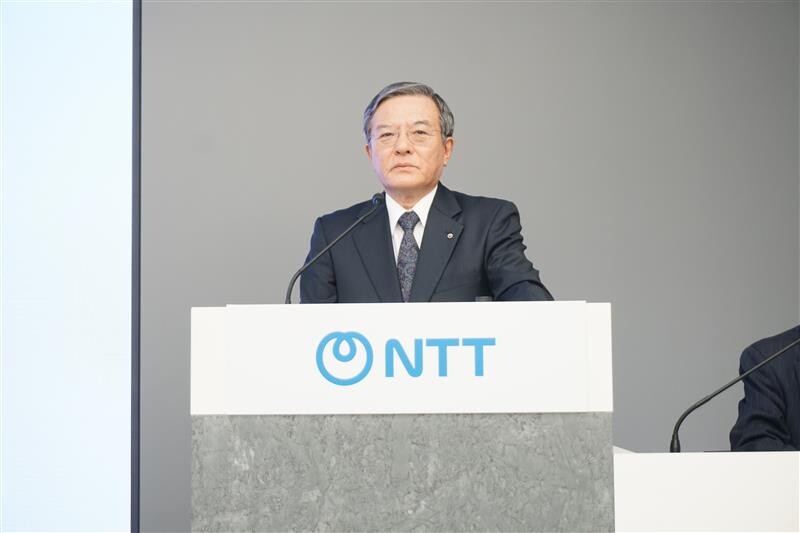


(President Shimada)
I would like to explain the financial results for the third quarter of fiscal year 2025.
Regarding the consolidated financial results for the third quarter, both revenue and profit increased year on year. Operating revenues reached a record high for a third quarter. Operating revenues were 10,421.0 billion yen, an increase of 371.3 billion yen year on year, despite a decrease of approximately 55.0 billion yen due to foreign exchange impacts, mainly reflecting the expansion of enterprise businesses across group companies and increased revenues associated with the REIT conversion of data centers.
Regarding profits, although there were cost increases at NTT DOCOMO due to initiatives aimed at strengthening the customer base and improving mobile network quality, EBITDA increased by 104.8 billion yen year on year to 2,657.3 billion yen, and operating profit increased by 57.9 billion yen year on year to 1,457.1 billion yen, reflecting profit growth from the expansion of enterprise businesses across group companies as well as the REIT conversion of data centers. Net profit for the period increased by 75.4 billion yen year on year to 926.1 billion yen, mainly due to the increase in operating profit.
Next, I will explain revenue and profit by segment.
In the Integrated ICT Business Segment, although the consumer communications business declined due to a decrease in mobile communications service revenues, revenue increased year on year due to growth in the Smart Life business, particularly financial services, as well as growth in the enterprise business. Although profits increased in the Smart Life and enterprise businesses, profit declined year on year due to cost investments associated with initiatives to strengthen the customer base and improve network quality. As a result of initiatives to strengthen the customer base, sales capabilities have steadily improved, and mobile number portability (MNP) recorded net gains in the third quarter.
Regarding the Global Solutions Business Segment, the negative revenue impact from foreign exchange was approximately 55.0 billion yen. However, revenue and profit both increased year on year due to business growth in Japan and overseas as well as increased revenues associated with the REIT conversion of data centers.
Next is the Regional Communications Business Segment. Although revenue from legacy businesses declined, revenue and profit both increased year on year due to increases in enterprise business and optical service revenues. Net additions of optical services increased year on year due to strengthened sales of the 10-gigabit plan and bulk service plans for condominium markets.
In Other businesses (including real estate and energy), revenue increased year on year mainly due to the expansion of office, commercial, and residential businesses at NTT Urban Solutions.
Next, I will explain the full-year earnings forecast.
We will revise downward the NTT consolidated earnings forecast for this fiscal year to reflect revisions to the performance outlooks of NTT DOCOMO and the NTT DATA Group. Specifically, as will be explained later by each company, at NTT DOCOMO, intensified and prolonged competitive conditions are expected to require greater-than-anticipated cost investments to strengthen the customer base. As an important initiative for future growth, DOCOMO will continue to steadily implement measures to strengthen the customer base and improve network quality, and therefore operating profit will be revised downward by approximately 83.0 billion yen.
For the NTT DATA Group, operating profit will be revised downward by 26.0 billion yen, reflecting the market environment and the actual results of gains from the data center REIT conversion taking into account foreign exchange fluctuations.
Although a challenging competitive environment is expected to continue for NTT DOCOMO going forward, we aim to restore performance by accelerating initiatives such as strengthening the customer base and improving mobile network quality, realizing the results of these initiatives, expanding the Smart Life business centered on financial services and the enterprise business, and reducing costs through fundamental reviews of organizational structures and business processes. The breakdown by company is as shown.
Next, I would like to explain four topics.
First, I will explain the mass production of photonics-electronics convergence devices. We plan to begin commercial deployment of switches using photonics-electronics convergence devices during fiscal year 2026 through collaboration with supply chain partners including Broadcom and Accton Technology. In preparation for mass production, NTT Innovative Devices will continue initiatives such as increasing production per line through automation of assembly, mounting, and inspection processes, as well as strengthening production lines in response to demand. Through these initiatives, production of up to 30,000 units per month will be possible, and we will continue to actively develop demand among hyperscalers and cloud service providers.
Next, I will explain the social implementation of AI integrating digital and physical domains. To date, NTT has promoted the development and provision of the domestically developed LLM tsuzumi, while also supporting the introduction of major global LLMs. As of the third quarter of FY2025, total AI business orders across the group reached 147.8 billion yen, progressing at a pace significantly exceeding the annual target of 150 billion yen. Currently, initiatives with Toyota Motor Corporation, Mujin, and Trial Holdings are progressing. We will continue to collaborate with leading companies across industries in Japan and overseas to accelerate the social implementation of AI that integrates digital and physical domains.
Next, I will explain our participation in MWC Barcelona 2026. At MWC Barcelona 2026, to be held in Barcelona in March, the NTT Group will jointly exhibit for the first time in seven years under the key message "Photonics Unlocks an Intelligent Power-Optimized Future." I will also deliver a keynote speech on March 4, where I plan to discuss initiatives to achieve lower power consumption through photonics technologies centered on IOWN, including photonics-electronics convergence devices and optical quantum computers. We would be delighted if you could join us.
Regarding the medium-term management strategy, the progress of initiatives since November last year is shown as indicated.
This concludes my explanation.
Q&A Session
-
Could you comment on NTT DOCOMO's plan to terminate its 3G services at the end of this fiscal year?
We are planning to discontinue 3G services at the end of this fiscal year. In preparation for the shutdown, we have been recommending that customers currently using 3G services migrate to 4G and 5G. At the same time, we are providing various measures such as handset discounts to support this transition.
We expect that approximately 2 million subscriptions may remain at the time of the shutdown, but most of these are likely to be IoT contracts that continue until their usage is completed. For our actual users, we will continue to provide careful support and make every effort to ensure a smooth migration to 4G and 5G. -
NTT DOCOMO has revised downward its full-year operating profit forecast. Could you explain whether this trend is expected to continue into the next fiscal year?
NTT DOCOMO's two key missions at present are to steadily maintain and expand its customer base and to further improve network quality. We have been working on these initiatives this fiscal year and intend to continue doing so next fiscal year. When I said that we must "defend a 35% share," the message was that our share should not decline any further, and I used the figure of 35% to make the point easy to understand. Maintaining the current share is important for providing value-added services in the future, such as financial services and entertainment, and we believe it is not desirable to further weaken our customer base. In order for a wide range of customers to use these value-added services, we will continue working to expand our customer base.
-
Regarding IOWN, you mentioned the mass production of photonics-electronics convergence devices and that commercial deployment will begin next fiscal year. Could you provide an indication of the expected revenue scale?
At this stage, we would like to refrain from commenting on the revenue from photonics-electronics convergence devices. We are currently in price negotiations, and providing figures would allow the approximate unit price to be calculated, so we ask for your understanding.
-
You mentioned that AI business orders across the group reached 147.8 billion yen as of the third quarter of FY2025. Could you indicate the approximate scale when converted into revenue?
AI orders include projects at early stages as well as large-scale projects worth tens of billions of yen, and many of them take a relatively long period to complete. In general, we expect them to be recognized as revenue after about six months. Orders received in the first quarter are already contributing to revenue this year, but some projects extend over several years, so a portion of them will likely contribute to revenue in the next fiscal year.
-
Regarding the downward revision to the full-year earnings forecast, you mentioned intensified and prolonged competition for NTT DOCOMO and increased costs for improving network quality. Could you explain in more detail why the revision was made at this timing? In addition, could you comment on why sales promotion expenses have increased and whether base station construction costs for improving network quality have exceeded expectations?
With regard to quality improvement, some costs are involved, but these are mainly investments. We have increased annual investment by about 50 billion yen as part of our plan, and this is basically covered within that framework.
The costs that have increased are mainly sales promotion expenses and provisions related to device return rates. For devices provided to customers under residual value programs, the return rate has been higher than we originally expected, so we have made additional provisions. NTT DOCOMO will provide further details later, but both these provisions and sales promotions have increased because competitors are also actively promoting their services. We have responded firmly during the third quarter and January as well, and MNP has remained positive for three consecutive months, but these efforts have required additional spending. -
Could you share your views on wage increases in relation to the spring labor negotiations, and the measures you plan to take to secure funding for wage increases, such as price adjustments or cost reductions?
We have implemented wage increases for 12 consecutive years, and we recognize the importance of continuing this trend. However, this year's wage increase will be discussed after receiving requests from the labor union, and the level will depend on the outcome of negotiations. As the costs of various materials and labor continue to rise, we believe that price adjustments for the services we provide may also need to be considered in order to secure the necessary resources. On the other hand, the competitive environment in areas such as mobile services remains challenging, so we believe that our immediate measures will include efforts to reduce costs and improve efficiency, as well as introducing AI to absorb cost increases. Ideally, we hope to raise prices in various areas while gaining customers' understanding.
-
Could you confirm the facts regarding additional investment in Rapidus and share what you expect from the company?
We would like to refrain from commenting on investments in Rapidus. Please direct such inquiries to Rapidus.
That said, we have very high expectations for Rapidus. For example, we believe there may be opportunities to collaborate on PEC-3 for photonics-electronics convergence devices, and we have discussed this with President Koike. Rapidus has expressed its intention to work on both front-end and back-end semiconductor processes, and if something like PEC-3 could be incorporated into the back-end process, it would significantly increase the value of the product. We would very much like to participate together in such initiatives. -
Tokyo Electric Power recently announced that it will solicit alliance proposals. Do you have any intention or interest in participating?
As we do not yet have detailed information about this matter, we would like to refrain from commenting.
-
NTT DOCOMO is strengthening its financial business, and you have mentioned in interviews the idea of establishing a financial holding company. Could you explain the objective, timing, and current status of these considerations?
We have mentioned on various occasions that we would like to establish a financial holding-type entity that also functions as an operating company, and if conditions are in place, we would like to establish it around July 2026. Naturally, companies such as the bank that will succeed DOCOMO SMTB Net Bank following the recent M&A, as well as Monex Securities and DOCOMO Finance, would be placed under this entity. In addition, we would like to establish a company that can manage all financial-related businesses currently operated by NTT DOCOMO, such as d Card and d Payment.
One reason is that we believe it is necessary to clarify governance in dealing with the Financial Services Agency and financial regulations. Until now, our supervising authority has primarily been the Ministry of Internal Affairs and Communications, but since these are businesses that fall under the jurisdiction of the Financial Services Agency, we would like to establish an appropriate structure to address that oversight. If things proceed as planned, we hope to establish this structure around the summer. -
Do you believe that consolidating financial-related businesses and companies will contribute to a turnaround for the group?
Our approach is to strengthen the customer base and then provide new value-added businesses such as financial services and entertainment to customers. Therefore, we believe it is important to ensure that these businesses work together effectively.
President Maeda of NTT DOCOMO may not yet be able to provide full details, but we expect there will be an opportunity to explain this more thoroughly at an appropriate time. -
NEC has announced its withdrawal from the mobile base station business. NTT invested in NEC in 2020 and has worked together to expand the base station business, particularly in Open RAN. As a shareholder, how do you view NEC's decision to scale back this business, and what will be your response going forward?
I have spoken with NEC President Morita regarding the maintenance of existing base stations, and we have been assured that these services will continue to be provided properly. Therefore, we are not concerned about the NEC equipment and software currently used in our services.
On the other hand, it is very unfortunate that domestic vendors were unable to demonstrate stronger competitiveness in the 5G market. As new services such as vRAN develop, we hope that domestic vendors will continue to create strong technologies that can be adopted and utilized. -
Are you considering any specific actions at this point?
We do not have any specific actions planned at this time.
-
Regarding the downward revision of the full-year earnings forecast, compared with the initial plan at the beginning of the fiscal year, which aspects differed most from your expectations?
Regarding sales promotions, NTT DOCOMO lost ground in MNP competition in the second quarter. One factor was the termination of new applications for the irumo 0.5GB plan, which effectively reduced the number of subscribers. Since then, although we feel that excessive competition is not desirable, there are no signs that it is easing.
Last year we strengthened sales promotions significantly from the second half of the fiscal year, and we expected the situation to calm down somewhat this year. However, in reality it has not eased at all. Competition has intensified, and unless we respond appropriately, we will lose. Since losing is not an option, we continue to respond to the current situation.
Both sides are making significant cost investments, so it is difficult to predict what will happen next fiscal year and beyond. However, since we must win this competition, we will continue to respond as necessary. -
Could you also comment on the outlook for each segment's performance in the next fiscal year?
We will formulate next fiscal year's plan going forward, so we will consider the details from now. However, we believe that NTT DOCOMO will likely reach the bottom this year. At the same time, network traffic is increasing by about 20% each year, driven in particular by growing video consumption. We will need to respond appropriately to this increase and continue working to improve network quality so that customers remain satisfied.
NTT East and West are performing relatively well, with stable growth expected from enterprise businesses as well as businesses such as NTT Solmare within the NTT West Group. Between the end of February and March, we expect to have an opportunity to explain the start of the process for phasing out fixed-line telephone services.
As for NTT DATA, the business continues to grow organically. We are considering how to support further global growth. At the fiscal year-end results announcement, we plan to revise NTT DATA's medium-term plan and incorporate synergies while developing a strategy that will lead the overall growth of the group. -
Could you explain your view on NTT DOCOMO's capital expenditures? In relation to DOCOMO's business performance and the downward revision of the full-year forecast, to what extent are you prepared to allow capital expenditures to increase in the coming fiscal years? According to materials released by DOCOMO today, capital expenditures increased by 132.7 billion yen year on year to 565.8 billion yen through the third quarter. How do you evaluate this level?
It would also be appropriate to ask President Maeda of NTT DOCOMO, but we believe that capital expenditures for increasing the number of base stations should continue in order to ensure network quality. On the other hand, venue-related investments were particularly high this year, and we believe that investments in Smart Life-related areas will likely decrease next fiscal year. Since many major venues were completed this year, those investments should decline. Overall, our understanding is that total capital expenditures may decrease.
-
Regarding the social implementation of AI, today's presentation introduced examples of collaboration with leading companies in industries such as transportation, manufacturing, and retail. Could you share which new areas you expect to develop next and your outlook going forward? Also, what initiatives will the NTT Group undertake to accelerate social implementation?
Today we explained the social implementation of AI that integrates digital and physical domains. In the physical domain, as in the examples with Toyota, Mujin, and Trial Holdings, it is necessary to combine AI based on mathematical models rather than relying solely on LLM-based foundation models. The reason is that errors cannot be tolerated in environments such as factories. Since LLMs are language models, errors can occur, but in the types of applications shown in our materials, such errors could lead to accidents. Therefore, we must develop models that minimize the possibility of mistakes, which is why both technologies are required.
Currently, we have received about 2,000 inquiries in Japan regarding tsuzumi, with many coming from local governments, financial institutions, and the healthcare sector. Since some organizations cannot provide their data to open AI systems, there has been strong interest in tsuzumi. We believe that private or sovereign AI will continue to increase going forward. In that sense, demand for Mistral AI is already emerging in NTT DATA's European business. Azure OpenAI is currently the most widely used, but sovereign AI demand is likely to grow.
However, our approach is to provide consulting and implementation support for AI solutions that best suit customers' needs in an open and multi-vendor environment. Different AI models have different characteristics depending on how they are used, and we expect continued evolution in line with those needs. Overall, we believe private AI will likely become more widespread. -
Regarding tsuzumi, the domestically developed AI model, you mentioned that demand from financial institutions may increase. However, it is said that major banks currently tend to use large overseas AI models rather than domestic ones. Are you considering focusing sales efforts on regional banks and smaller financial institutions going forward?
The choice of AI depends on how financial institutions intend to use it. Large financial institutions may adopt very large language models with a high number of parameters, while in other cases there may be demand for more closed environments. Therefore, we believe there will be cases where large LLMs are used and others where smaller models are used in environments where data must remain fully closed.
Rather than the size of the institution, the choice is likely to depend on the specific use case. In terms of inquiries, financial institutions are the second largest group after local governments. We receive inquiries from many different sections within organizations, which suggests that various departments are exploring potential applications. -
From the perspectives of interest-bearing debt and capital investment, how do you view the potential impact of rising interest rates? Also, could you comment on the impact of exchange rate fluctuations on your business?
My personal view may differ somewhat from the company's official position, but as a general expectation, it is natural to assume that domestic interest rates will gradually rise. Of course, from the perspective of corporate business operations, lower interest rates are preferable. However, in areas such as the data center business, returns are high enough to support expansion even if interest costs increase, so we are not overly concerned. A weaker yen tends to have a positive impact on our business, but ideally exchange rates should remain stable. From a global perspective, the relationships between currencies such as the yen and the dollar, and the dollar and the euro, have become increasingly complex, so stability in currency markets is very important.
-
Regarding the synergies from making the NTT DATA Group a wholly owned subsidiary, I understand this may still be under consideration, but could you share any specific points at this stage?
As we have said from the beginning, while it is certainly necessary to consider synergies from making NTT DATA a wholly owned subsidiary, we believe it is even more important to grow NTT DATA itself both organically and through non-organic initiatives. Currently, system integration (SI) businesses account for roughly 40% of the NTT Group's business. In reality, the impact of non-organic growth opportunities is likely to be far greater than synergies alone. Therefore, we believe it will be necessary to review our medium-term strategy, and NTT DATA's strategy will play a central role in that process. Synergies will be included, but the impact beyond synergies may be even greater.
END
Corporate


NTT Group Medium-Term Management Strategy
NTT STORY
WEB media that thinks about the future with NTT