Microsoft ends support for Internet Explorer on June 16, 2022.
We recommend using one of the browsers listed below.
- Microsoft Edge(Latest version)
- Mozilla Firefox(Latest version)
- Google Chrome(Latest version)
- Apple Safari(Latest version)
Please contact your browser provider for download and installation instructions.



You've been waiting in line to speak to a customer service agent for the last 45 minutes, because they're dealing with "unusually high" call volumes, as usual. But finally you're in! You've used up almost all of your lunch break waiting to speak to someone, but it's going to be worth it when you get everything resolved.
You start explaining your issue to the agent and quickly realize that it's their first week on the job and you're going to have to take them through the details of your problem very, very slowly. You understand, of course, and it's hard to stay angry, but it's still frustrating when you aren't offered a good level of service and can't get through to someone with the experience needed to understand your issue, take in the particulars of what you're asking, and cut through to the heart of the matter. If you're a customer, it's the luck of the draw whether you get to talk to an expert, or someone new to the job.
Fresh Blood vs. Experience
All large customer-facing companies and organizations are the same. Employees move on, retire, or quit work, and employers depend on a steady flow of fresh blood. They all face the same pressure to keep service levels high and although bringing in junior staff is healthy for any team, experience and knowledge gaps are easy to spot as soon as difficult cases arrive.
But there are no shortcuts to experience. Seasoned operators are able to rely on rules of thumb—heuristics—shaped by years of repetition, noticing patterns that newcomers aren't yet able to see. Shortcuts that look like intuition, because they allow experts to skip steps and move directly toward the right question. The problem is that intuition is almost impossible to teach. Manuals and scripts are not able to express the subtle reasoning behind each decision, and shadowing a senior colleague can only go so far.
Understanding Intuition
The NTT Service Innovation Laboratory Group looks at the problem a little differently. Rather than doing the same old thing and just relying on human trainers to explain what experts do, their recent research has used AI to uncover the structure hidden inside real conversations. They fed thousands of operator and customer dialogues into a large language model which was able to identify the exact moments when an operator asked a meaningful question, the type of answer they received, and the point at which they shifted toward a conclusion.
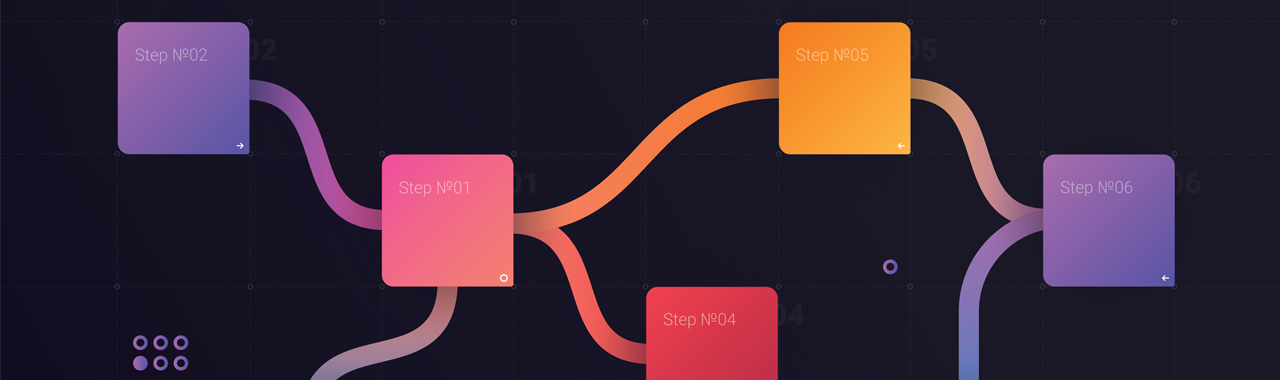
The AI then grouped similar questions together, even when phrased differently, and linked them into “question → answer → next step” sequences. By counting how often each pattern appeared across the full dataset, the system succeeded in reconstructing the decision paths that experienced operators take over and over again. These paths were then assembled into flowcharts that show how experts actually think: which questions tend to come first, which branches appear only in certain conditions, and where operators decide to skip ahead, because their experience tells them what matters.
Confident Call Operators
Here's how it would work in practice. Imagine you're that inexperienced agent, dealing with someone's problem. Instead of guessing what to say next or flipping through a script, you would have a clear, AI‑generated flowchart on your screen for each type of issue. As the caller explains their individual case, you start at the top of the chart and follow the same sequence an expert would: ask the first relevant question, choose the branch that matches the customer’s answer, and keep moving. When a senior operator would normally skip a step because a certain combination of answers makes the cause obvious, the chart shows that too. You see not only what to ask, but why. Over time, patterns become familiar and you start to build up a sense of how things fit together. It's accelerated learning.
Better AI-Human Communication
NTT's model can also improve how AI systems support people from now on. Many AI assistants still follow frustratingly rigid internal logic, working through a fixed and unalterable list of questions and checks, where a human expert would find it easy to adjust the flow based on context. It's one of the reasons AI can still feel so unnatural and alienating.
This is a way to help AI understand what intuition is and where it comes from. By learning and then teaching the same question‑answer‑suggestion patterns used by experienced operators, NTT's AI system can guide conversations in a way that feels more aligned with human reasoning. It can skip steps when the user has already provided the relevant information, ask more targeted questions early, and cut out the repetitive phrasing that we all hate when we're trying to talk to someone about a problem and just have a few minutes left to eat something for lunch.
New staff gaining confidence sooner, happier customers, and more efficient solutions to customer issues. NTT is working to help organizations communicate better.
Innovating a Sustainable Future for People and Planet
For further information, please see this link:
https://group.ntt/en/newsrelease/2025/08/01/250801a.html
If you have any questions on the content of this article, please contact:
Public Relations
NTT Service Innovation Laboratory Group
https://tools.group.ntt/en/rd/contact/index.php

Daniel O'Connor
Daniel O'Connor joined the NTT Group in 1999 when he began work as the Public Relations Manager of NTT Europe. While in London, he liaised with the local press, created the company's intranet site, wrote technical copy for industry magazines and managed exhibition stands from initial design to finished displays.
Later seconded to the headquarters of NTT Communications in Tokyo, he contributed to the company's first-ever winning of global telecoms awards and the digitalisation of internal company information exchange.
Since 2015 Daniel has created content for the Group's Global Leadership Institute, the One NTT Network and is currently working with NTT R&D teams to grow public understanding of the cutting-edge research undertaken by the NTT Group.
Related Article




Recommended Article
-

March 14, 2024
What is NTT's GX? Our solution brand "NTT G×Inno"
-

March 5, 2024
[Press Conference Information] Launch of "NTT G×Inno," a New Solution Brand to Strengthen Efforts in the GX Field
-

January 15, 2024
Digitization and Digitization for Smart Agriculture
-

November 17, 2023
Realizing a Recycling-Oriented Society through a Data Mining Approach
Search by Tags