Microsoft ends support for Internet Explorer on June 16, 2022.
We recommend using one of the browsers listed below.
- Microsoft Edge(Latest version)
- Mozilla Firefox(Latest version)
- Google Chrome(Latest version)
- Apple Safari(Latest version)
Please contact your browser provider for download and installation instructions.




Not everything is about the brain.
Don't misunderstand—most things are about the brain, but every living creature makes its way through the world using brain power in partnership with a physical body. Intelligence is spread across many systems: reflexes are handled in the spinal cord, the gut has its own nervous system, and muscles, bones, blood flow, and chemistry all influence how we interact with the world. Some reactions to events even occur before conscious thought has time to realize what's happening. The brain is in charge, but we're all made up of systems working together as a team.
How Digital Communications Work
That's not really how digital communications work. Until now, it's always been about a central processor receiving and sending out information. Data is collected, then sent to be processed, then turned into action. All very tidy and linear.
Digital networks are the same. You have pipes that move ever-larger volumes of data from one point to another as efficiently and quickly as possible; after that, any sort of meaning, urgency, or context gets handled at the edges or in centralized systems. And when you think about how efficiently living creatures operate, it feels as though the situation could be improved. Right now, every bit of data has to wait its turn and travel the full distance, whether it matters or not. It works, but you'd imagine nature would have designed something a bit more elegant.
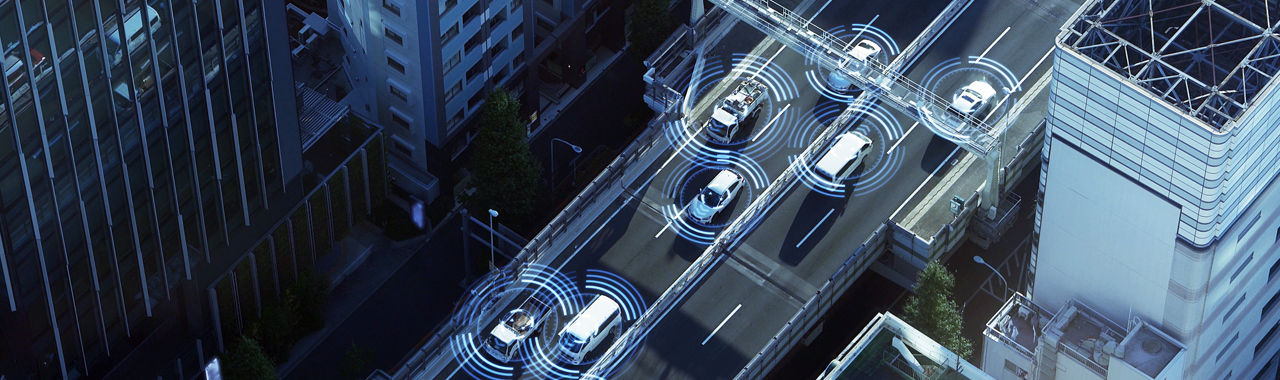
You notice it especially when AI systems have to operate in the physical world. When you have robots, immersive systems, and autonomous machines interacting with the world, sending raw video or sensor data to be analyzed and sent back with instructions, that's when you can get delays. There's also the issue of energy wastage, as systems move and process information they don't actually need at that moment.
Smarter Pipes?
NTT has developed a technology it calls in-network computing and has been collaborating with the University of Tokyo and NEC to build a potential solution around it.
In a nutshell, the solution makes it possible to have parts of data processing carried out inside the network itself, not just pushed out to devices or data centers. Rather than treating transmission and processing as distinct stages that have to be completed one after the other, the partners are looking at what happens when they are combined.
NTT, Tōdai and NEC are working to make large volumes of data moving through the network, such as video streams, into smaller, semantic representations that work out what matters right now. In this way, the network stops being just a pipe and becomes part of the decision loop: as it carries data, it keeps tabs on its own conditions and considers congestion, latency, and available computing capacity. It then allocates the appropriate communication and computing resources when higher-priority processing is required.
Each partner has its own, specific role in the process. Researchers at the University of Tokyo are focusing on access networks and devices, including areas such as AR glasses, where large volumes of sensory data are generated at the edge. NEC is working on end-to-end media control and AI-related processing, looking at how information flows from devices through systems and back again. And NTT is building the network and computing foundation that allows everything to work together, using the experience and know-how gained from its development of IOWN and next-generation network design.
Agentic AI Will Benefit
And who or what is this for? Well, users of Agentic AI, especially, will get real benefits from in-network computing. Their systems and products will show much better, more natural, responsiveness. They'll have systems that react as events unfold, with no unnecessary delays to process information and think about what to do. No more hesitation in deciding which actions to take, as well as lower energy use, because only information that matters is moved and processed at scale.
MWC 2026
NTT will be showcasing its in-network computing innovations at Mobile World Congress Barcelona 2026, alongside a wide range of NTT Group innovations that all feature a similar focus on integration and responsiveness.
Under the banner “Photonics Unlocks an Intelligent Power‑Optimized Future,” the Group, including NTT, NTT DOCOMO, and NTT DATA, will be presenting advances in optical and photonics‑electronics convergence technologies designed to improve energy efficiency for large‑scale AI systems, and platforms that connect next‑generation infrastructure with real‑world use cases. From adaptive resource control in data‑intensive environments to AI‑driven services and immersive applications, it promises to be an eye-opening exhibit.
If you're in town next month, why not register and head along to Fira Gran Via – Hall 6 Stand 6E54?
Innovating a Sustainable Future for People and Planet
For further information, please see this link:
https://group.ntt/en/newsrelease/2026/02/26/260226a.html
MWC 2026 Official Site:
https://www.mwcbarcelona.com/
NTT Group at MWC
https://www.global.ntt/mwc/
If you have any questions on the content of this article, please contact:
Public Relations
NTT Information Network Laboratory Group
https://tools.group.ntt/en/news/contact/index.php

Daniel O'Connor
Daniel O'Connor joined the NTT Group in 1999 when he began work as the Public Relations Manager of NTT Europe. While in London, he liaised with the local press, created the company's intranet site, wrote technical copy for industry magazines and managed exhibition stands from initial design to finished displays.
Later seconded to the headquarters of NTT Communications in Tokyo, he contributed to the company's first-ever winning of global telecoms awards and the digitalisation of internal company information exchange.
Since 2015 Daniel has created content for the Group's Global Leadership Institute, the One NTT Network and is currently working with NTT R&D teams to grow public understanding of the cutting-edge research undertaken by the NTT Group.
Related Article



Recommended Article
-

March 14, 2024
What is NTT's GX? Our solution brand "NTT G×Inno"
-

March 5, 2024
[Press Conference Information] Launch of "NTT G×Inno," a New Solution Brand to Strengthen Efforts in the GX Field
-

January 15, 2024
Digitization and Digitization for Smart Agriculture
-

November 17, 2023
Realizing a Recycling-Oriented Society through a Data Mining Approach
Search by Tags