Microsoft ends support for Internet Explorer on June 16, 2022.
We recommend using one of the browsers listed below.
- Microsoft Edge(Latest version)
- Mozilla Firefox(Latest version)
- Google Chrome(Latest version)
- Apple Safari(Latest version)
Please contact your browser provider for download and installation instructions.



Construction sites are difficult places to connect. They always have been. Work is spread over large areas, conditions change all the time, and some of the most important work takes place in locations where standard communications simply don't work.
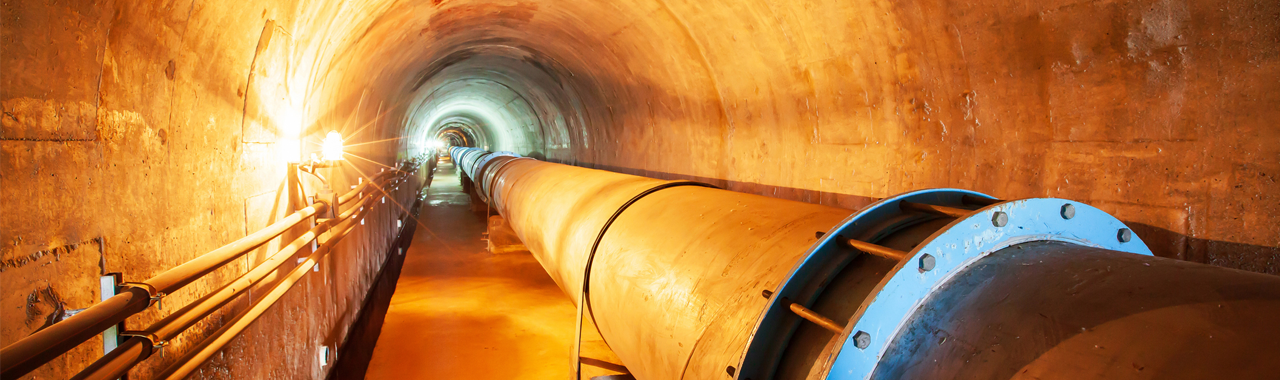
Take mountain tunnels. Long, enclosed, humid, and often far from urban infrastructure. No satellite positioning (because they are tunnels), spotty wireless signal, and with cables that have to be moved again and again as work progresses. In other words, the sort of construction site where accurate, timely information matters most.
Tunnel Data
That's where the work of NTT and Tokyo-based construction company Hazama Ando comes in, collaborating under the framework of the IOWN Global Forum. The partners have been exploring how advanced networking could support construction work, starting with tunnel projects. Along with the immediate aim of helping the construction at a number of test sites, their long-term goal is to understand what kind of network is needed when large volumes of video and sensor data have to be sent reliably from deep underground to be seen by people who are not physically present on site.
NTT and Hazama Ando are planning four use cases, each scheduled to enter the proof-of-concept phase by March 2026. They include:
- Continuous Surveillance and Data Acquisition (Remote Monitoring) — using the IOWN All-Photonics Network to enable real-time remote monitoring of construction sites by transmitting high-resolution video and sensor data to support image analysis and remote assessment of safety conditions
- Event-Driven Monitoring and Data Analysis (Remote Analysis) — connecting tunnel excavation sites to remote computing resources, enabling rapid point cloud data analysis and real-time safety and quality decisions without delaying construction work
- Mobile Inspection (Remote Inspection) — enabling high-resolution, low-latency remote inspections using portable HD cameras, allowing inspectors to accurately assess specific site conditions in real time
- Remote Maintenance Leveraging Embedded Infrastructure — using optical fibers embedded during construction as sensors, so that IOWN technology can make possible continuous remote monitoring of tunnel conditions to detect structural issues early and support planned maintenance
Safer, More Timely Decisions
In tunnel construction, decisions are often made under pressure, based on partial information, with rapidly changing conditions. Those decisions usually need experienced engineers to travel to the site, sometimes repeatedly. The test cases will look at whether high-resolution video, along with data from multiple sensors, can be transmitted out of the tunnel in a stable, predictable way. If it can, inspections, safety patrols, and progress checks will no longer have to depend entirely on specific people being on site, reducing the need for repeated inspections in hazardous areas and lowering the need for site teams to interpret complex conditions alone.
It also means potential problems can be discussed earlier, before they escalate into serious delays or safety incidents. Remote access to reliable, high-quality site data makes it possible for one experienced engineer or inspector to contribute to multiple projects in a single day.
Reliability is Key
The IOWN APN is incredibly quick, but it's also reliable. The work by NTT and Hazama Ando is about making networking predictable in environments where it usually fails. Construction sites sometimes have to rely on best-effort communications that work until conditions change; use of the APN should mean that even as equipment is moved and the site evolves, there will still be a stable environment that allows for remote judgment and decisions.
Not Just a One-Off
The project partners are clear that rather than building a custom solution for a single project, they plan to turn practical experience into shared technical specifications and reference architectures. Documenting what works, what doesn't, and what requirements future systems have to meet.
So tunnels are just the beginning. They provide some demanding test cases, combining poor radio conditions, safety risks, and heavy data needs; if reliable networking can be established there, NTT and Hazama Ando will be able to replicate their approach at other construction settings where distance, danger, or isolation means that things are better done remotely.
How much of construction work really needs someone to be there? How much depends on having trustworthy information at the right time? That's what NTT and Hazama Ando are intending to find out, starting very soon.
Innovating a Sustainable Future for People and Planet
For further information, please see this link:
https://group.ntt/en/newsrelease/2025/08/07/250807a.html
If you have any questions on the content of this article, please contact:
Public Relations
NTT IOWN Integrated Innovation Center
https://tools.group.ntt/en/news/contact/index.php

Daniel O'Connor
Daniel O'Connor joined the NTT Group in 1999 when he began work as the Public Relations Manager of NTT Europe. While in London, he liaised with the local press, created the company's intranet site, wrote technical copy for industry magazines and managed exhibition stands from initial design to finished displays.
Later seconded to the headquarters of NTT Communications in Tokyo, he contributed to the company's first-ever winning of global telecoms awards and the digitalisation of internal company information exchange.
Since 2015 Daniel has created content for the Group's Global Leadership Institute, the One NTT Network and is currently working with NTT R&D teams to grow public understanding of the cutting-edge research undertaken by the NTT Group.
Related Article




Recommended Article
-

March 14, 2024
What is NTT's GX? Our solution brand "NTT G×Inno"
-

March 5, 2024
[Press Conference Information] Launch of "NTT G×Inno," a New Solution Brand to Strengthen Efforts in the GX Field
-

January 15, 2024
Digitization and Digitization for Smart Agriculture
-

November 17, 2023
Realizing a Recycling-Oriented Society through a Data Mining Approach
Search by Tags