Microsoft ends support for Internet Explorer on June 16, 2022.
We recommend using one of the browsers listed below.
- Microsoft Edge(Latest version)
- Mozilla Firefox(Latest version)
- Google Chrome(Latest version)
- Apple Safari(Latest version)
Please contact your browser provider for download and installation instructions.



May 12, 2026
NTT, Inc.
NTT Develops Technology to Infer Intercellular Interactions from Spatial Cell Patterns
~Toward Understanding Tissue Development and Accelerating the Design of iPSC-Derived Organoids~
Highlights:
- NTT has developed a technology to infer the intercellular interactions underlying specific cellular arrangements in biological and engineered tissues. This study is part of NTT's foundational research toward realizing a Bio Digital Twin, a digital representation of biological systems.
- A machine-learning-based inverse surrogate model enables direct estimation of intercellular interactions from cellular arrangements, without requiring trial-and-error optimization for each target tissue structure.
- Potential applications include elucidating tissue formation mechanisms in biological tissues and controlling tissue structures in engineered tissues such as iPSC-derived organoids.
TOKYO, May 12, 2026 — NTT, Inc. (Headquarters: Chiyoda-ku, Tokyo; President and CEO: Akira Shimada; hereinafter "NTT") has developed a technology that estimates the cell-cell interactions involved in the formation of tissue structures composed of multiple cell types.
NTT conducts basic biomedical research aimed at realizing a Bio Digital Twin, a digital representation of biological systems.*1 Biological tissues are formed through a process of self-organization driven by intercellular interactions among multiple cell types. Understanding the formation of specific tissue structures therefore requires identifying the intercellular interaction conditions underlying their formation. However, conventional approaches for identifying such conditions from observed tissue structures have required extensive experimentation and computational resources.
To address this challenge, NTT developed an inverse surrogate model*2, *3 that directly infers the intercellular interaction conditions underlying observed tissue structures.
This technology aims to advance the understanding of the mechanisms underlying the formation of specific tissue structures and facilitate the structural control of organoids*4 derived from induced pluripotent stem cells (iPSCs)*5, which are attracting attention for their potential applications in regenerative medicine. It is also expected to form a core component of NTT's Bio Digital Twin.
The technology will be exhibited at the Communication Science Laboratories Open House 2026, to be held from May 20 to 22, 2026.
Communication Science Laboratories Open House 2026
https://www.kecl.ntt.co.jp/openhouse/2026/index_en.html
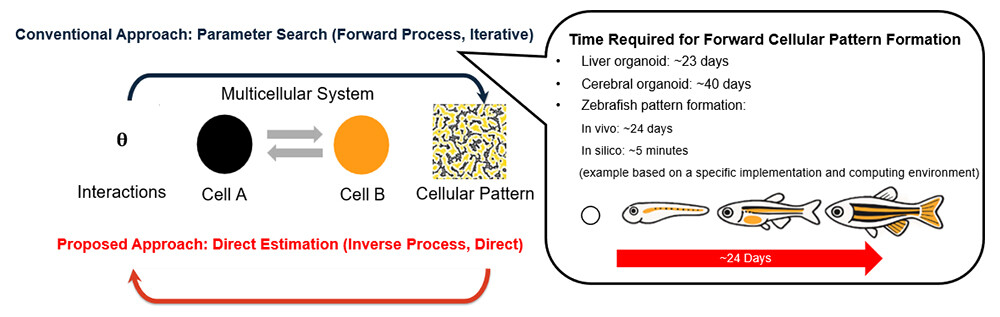 Figure 1. Direct Estimation of Cell-Cell Interactions from Cellular Patterns
Background
NTT is conducting research and development toward future healthcare technologies. The Bio Digital Twin is NTT's concept of an individual-specific digital representation of biological and health-related information.
To realize a Bio Digital Twin that represents biological phenomena at the cellular and tissue levels, NTT is conducting fundamental research to understand the mechanisms underlying tissue and organ formation and to develop technologies to control these processes.
Tissues in organs contain various types of cells. For example, cardiac tissue consists of cardiac muscle cells, nerve cells, epicardial cells, and other cell types. The spatial arrangement of these different cell types, referred to here as cellular patterns, plays an important role in maintaining tissue functions and human health.
Recent advances in induced pluripotent stem cell (iPSC) technology have enabled the generation of organoids, artificial tissue models derived from iPSCs. Organoids have a wide range of potential applications, from patient-specific drug testing to regenerative medicine, and are designed to reproduce the mechanisms and functions of target tissues.
However, organoids do not always exhibit the same functions as their biological counterparts. One factor contributing to this limitation is the difficulty of reproducing biological cellular patterns in organoids. Reconstructing the spatial organization of multiple cell types in biological tissues remains a major challenge and can limit organoids' ability to reproduce native tissue functions. Controlling these cellular patterns is therefore an important challenge for improving organoid function.
Functional cellular patterns emerge through intercellular interactions, such as cell adhesion and repulsion, in living organisms. Recent advances in tissue engineering have made it increasingly possible to control such intercellular interactions. However, identifying the interaction conditions required to generate a target cellular pattern typically involves a difficult trial-and-error process. To address this challenge, NTT developed the Topology-Informed Inverse Parameter Surrogate (TI²PS), which directly estimates the intercellular interaction conditions required to generate a target cellular pattern (Figure 1). The framework consists of two key technologies: "Multiscale topology feature extraction" and "Inverse surrogate modeling."
Technical Highlights
The agent-based model (ABM)*6 is a practical approach for modeling the processes underlying cellular pattern formation in biological and engineered tissues. In an ABM, individual cells are modeled as agents, and the resulting cellular patterns depend on interactions among these cells. Because the model predicts cellular patterns from predefined interaction conditions, following the causal direction of the underlying biological process, it is referred to as a forward model.
These forward ABMs typically require substantial computational resources because they must compute interactions for many cell pairs. Furthermore, identifying the parameters that generate a desired cellular pattern requires repeated simulations with different parameter settings, thereby increasing computational cost.
To address these challenges, NTT developed a technology that directly infers model parameters from target cellular patterns, eliminating the need for iterative ABM-based parameter searches. The technology consists of the following two key elements:
(1) Robust Multiscale Feature Extraction of Cellular Patterns
Cellular patterns in living organisms exhibit multiscale characteristics. For instance, an arrangement that appears random when viewed at the level of only a few cells may reveal distinct regularity when observed across hundreds or thousands of cells. Therefore, the extracted features should capture cellular patterns across multiple spatial scales.
In addition, the stochastic nature of cellular behavior, such as cell proliferation and apoptosis, can alter cell numbers and positions. As a result, even identical interaction conditions do not necessarily generate the same cellular pattern. Therefore, the extracted features must be robust to such stochastic variation while remaining sensitive to differences in intercellular interactions.
To meet these requirements, we adopted a method based on persistent homology*7. Instead of using the spatial coordinates of individual cells directly, the method represents cellular patterns by the number of characteristic topological structures. Specifically, spheres are placed around individual cell positions and connected components and loop structures formed as the spheres expand are counted.
This enables robust multiscale feature extraction from cellular patterns (Figure 2).
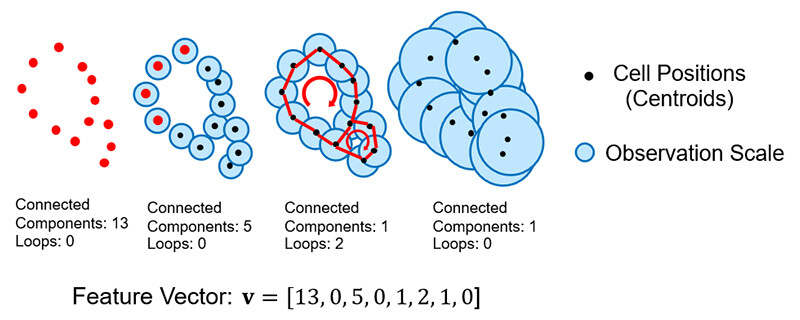 Figure 2. Concept of Multiscale Feature Extraction
(2) Construction of an Inverse Surrogate Model
A surrogate model is a machine learning model that can replace a simulation with a simpler and faster calculation. In this study, we use an inverse surrogate model. Unlike a forward model, it takes features of a cellular pattern as input and estimates the interaction parameters that produced the pattern.
As shown in Figure 3, the inverse surrogate model is built in two phases. First, in the "training data generation phase," we run ABM simulations with different interaction parameters. Each simulation generates a cellular pattern, and multiscale topological features are extracted from the pattern. These pairs of interaction parameters and extracted features are used as training data.
Next, in the "machine learning phase," a multilayer perceptron (MLP)*8 is trained using the dataset. The trained model learns the relationship between cellular pattern features and interaction parameters. After training, the model can directly estimate the interaction parameters of a target cellular pattern without repeating ABM-based parameter searches.
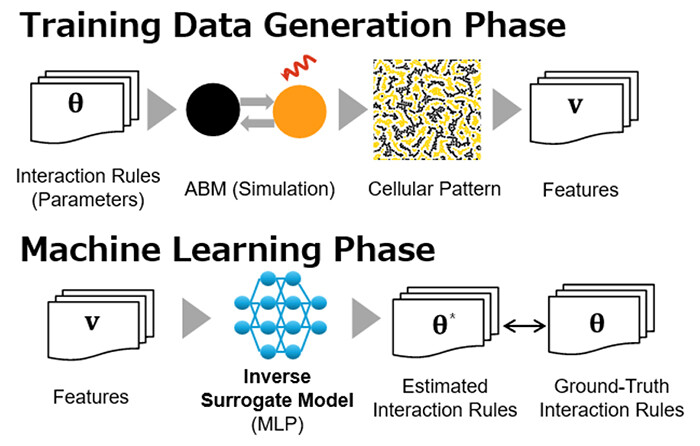 Figure 3. Workflow for Constructing the Inverse Surrogate Model
The inverse surrogate model is constructed through two phases: a training data generation phase and a machine learning phase, in which the generated dataset is used to train the inverse surrogate model.
Application Example
Figure 4 shows an example application of the proposed method to pattern formation in zebrafish*9.
First, to evaluate the accuracy of the inverse surrogate model, we compared the interaction parameters predefined in the simulation (target values) with those estimated by the proposed method (estimated values) (Figure 4(1)). In this evaluation, simulations were performed with known interaction parameters, and the resulting cellular patterns were used as inputs to estimate those parameters. The accuracy of the method was then assessed by comparing the estimated values with the original target values.
The results demonstrated that the proposed method achieved higher accuracy than a baseline approach based on an existing machine learning technique commonly used for point cloud classification.
Next, we evaluated the visual reproducibility of cellular patterns generated using the estimated interaction parameters (Figure 4(2)). Compared with the conventional method, the proposed approach generated cellular patterns that more closely resembled the target patterns, reproducing characteristic features such as stripe widths and spot sizes with greater fidelity.
The proposed method requires only a few seconds per inference on a standard laptop computer. In contrast, conventional approaches based on iterative forward simulations require repeated parameter searches and can take several hours when, for example, 100 simulation iterations are performed. These results demonstrate that the proposed method can estimate interaction parameters in a significantly shorter time while maintaining high accuracy.
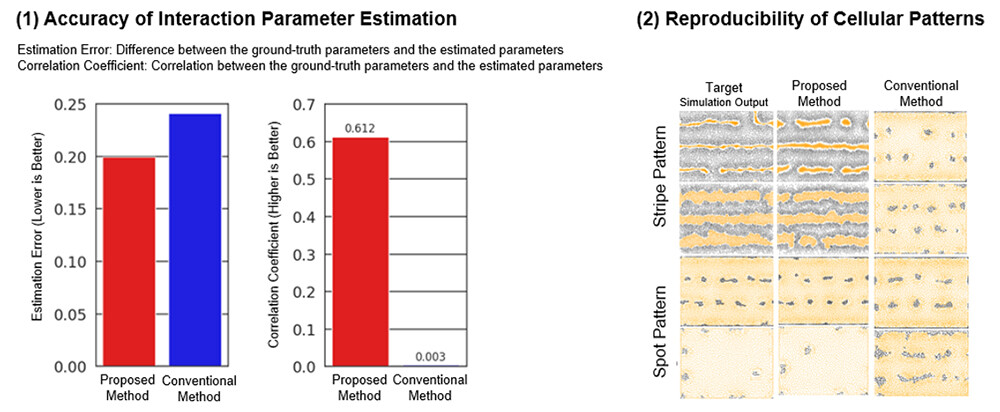 Figure 4. Evaluation Results of the Proposed Method
(1) Quantitative Evaluation of the Inverse Surrogate Model
The proposed method outperformed the conventional method in terms of both estimation error and correlation coefficient.
(2) Visual Evaluation of Cellular Pattern Reproducibility
The proposed method more successfully reproduced the characteristic features of the target cellular patterns.
Future Outlook
This technology is expected to help us better understand how cellular patterns form in a wide range of biological tissues by enabling analysis of the factors that control tissue formation.
Zebrafish pigment patterns are a relatively simple system modeled as a two-dimensional arrangement of yellow and black cells. In contrast, human tissues are typically composed of many different cell types organized into complex three-dimensional structures.
NTT will further validate the proposed method using more complex biological systems and apply it to organoids such as those modeling the heart, liver, and retina. Through these efforts, NTT aims to contribute to the reproduction and control of desired tissue structures, supporting future advances in regenerative medicine and Bio Digital Twin technologies.
[Glossary]
*1NTT's Biomedical Research
NTT Bio-Medical Informatics Research Center conducts research and development under the mission of "Creating the Future of Healthcare through ICT." The center aims to contribute to the realization of precision medicine, enabling highly personalized healthcare and medical treatment tailored to individual needs.
https://www.rd.ntt/e/bmc/
*2Surrogate Model
A machine learning-based model that replaces a computationally intensive simulation model with a computationally efficient alternative, such as an artificial neural network.
*3Inverse Surrogate Model
A surrogate model, typically implemented using artificial neural networks or similar machine learning techniques, that predicts simulation conditions from simulation results, operating in the reverse direction of a conventional simulation workflow.
*4Organoid
A three-dimensional multicellular tissue structure created by culturing and differentiating stem cells, such as induced pluripotent stem cells (iPSCs).
*5Induced Pluripotent Stem Cells (iPSCs)
Stem cells artificially generated from somatic cells such as blood or skin cells. Stem cells possess the ability to self-renew (produce more cells of the same type) and to differentiate into other cell types.
*6Agent-Based Model (ABM)
A simulation model that represents the behavior of a population of autonomous entities (agents) based on interactions among agents and influences from their environment. In cellular pattern formation studies, cells are treated as agents, and the resulting cellular patterns are simulated based on their interactions.
*7Persistent Homology
A method for analyzing the shape and topological features of data, such as clusters and holes in point clouds, across multiple spatial scales. By tracking the appearance and disappearance of these features as the observation scale changes, persistent homology quantitatively characterizes the underlying structure of the data.
*8Multilayer Perceptron (MLP)
One of the most fundamental forms of artificial neural networks. It consists of multiple layers of interconnected artificial neurons that activate in response to input signals.
*9Zebrafish
Danio rerio, a small freshwater fish that typically grows to approximately 5 centimeters in length. Zebrafish are widely used as a vertebrate model organism in biological research. Various strains exhibiting different pigmentation patterns have been identified and studied.
About NTT
NTT is a leading global technology innovator, providing a broad range of services to both consumers and businesses. As a mobile operator and provider of infrastructure, networks, and services, NTT is dedicated to promoting a sustainable future through cutting-edge innovations. Our portfolio includes business consulting, AI-powered solutions, application services, global networks, cybersecurity, data center and edge computing, all supported by our deep global industry expertise. Generating over $90 billion in revenue and employing 340,000 professionals, we allocate 30% of our annual profits to fundamental research and development. With operations spanning more than 70 countries and regions, our clients include over 75% of Fortune Global 100 companies, alongside thousands of enterprises, government organizations, and millions of consumers.
Media Contact
NTT, Inc.
NTT Science and Core Technology Laboratory Group
Public Relations
Inquiry Form
Information is current as of the date of issue of the individual press release.
Please be advised that information may be outdated after that point.


NTT STORY
We introduce various fields that NTT Group is working on and collaborations with partners.