Microsoft ends support for Internet Explorer on June 16, 2022.
We recommend using one of the browsers listed below.
- Microsoft Edge(Latest version)
- Mozilla Firefox(Latest version)
- Google Chrome(Latest version)
- Apple Safari(Latest version)
Please contact your browser provider for download and installation instructions.



August 3, 2026
NTT, Inc.
OptQC Corp.
NTT and OptQC Sign New Capital and Business Alliance Agreement Toward the Practical Application of Optical Quantum Computers
Advancing concrete initiatives toward the realization of a fault-tolerant, one-million-qubit-class optical quantum computer and accelerating real-world implementation
News Highlights:
- NTT and OptQC have signed a capital and business alliance agreement toward the practical application of a fault-tolerant, one-million-qubit-class optical quantum computer, and have commenced joint research building on the joint studies conducted under their previous collaboration agreement.
- NTT plans to invest in OptQC, strengthening a medium- to long-term collaboration framework from research and development to commercialization and real-world implementation.
- The two companies aim to realize a fault-tolerant, one-million-qubit-class optical quantum computer by fiscal year 2030 and promote representative use cases in fields such as finance, manufacturing, medicine development, new materials development, energy optimization, and the advancement of AI technologies.
Japan — August 3, 2026 — NTT, Inc. (Headquarters: Chiyoda-ku, Tokyo; President and CEO: Akira Shimada; hereinafter "NTT") and OptQC Corp. (Headquarters: Toshima-ku, Tokyo; Representative Director and CEO: Kan Takase; hereinafter "OptQC") have signed a capital and business alliance agreement toward the practical application of a fault-tolerant, one-million-qubit-class optical quantum computer.
Under the alliance, NTT plans to invest in OptQC. The two companies will strengthen a medium- to long-term collaboration framework that covers not only research and development, but also commercialization, use case development with prospective users and industry partners, supply chain development, and real-world implementation. Through this framework, the companies will enhance their talent base and research and development environments, and accelerate system design and the development of key component technologies needed to realize a fault-tolerant, one-million-qubit-class optical quantum computer.
Through the real-world deployment of optical quantum computers as a next-generation computing platform, the two companies aim to contribute to solving social challenges in areas including finance, manufacturing, medicine development, new materials development, energy optimization, and the advancement of AI technologies.
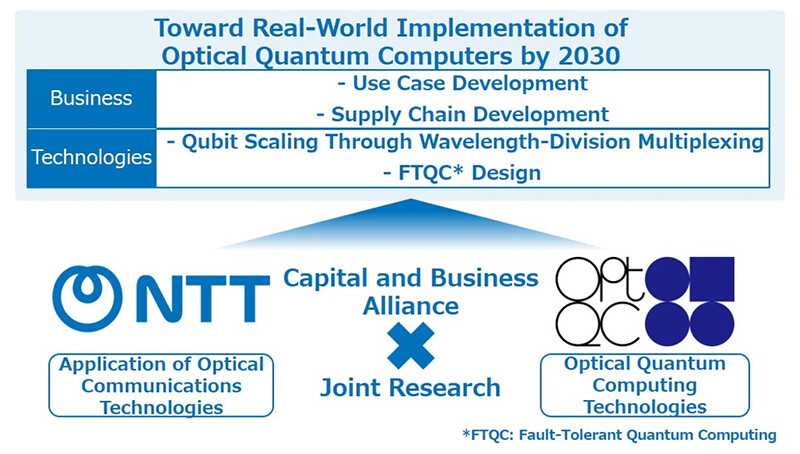 (Figure 1 Initiatives Toward the Practical Application of Optical Quantum Computers)
Background
In recent years, expectations for quantum computers have been growing worldwide as a means of addressing complex challenges that would require enormous amounts of time to solve using conventional computers. Such challenges include risk analysis in the financial sector, advanced production planning and logistics optimization in the manufacturing sector, medicine development, new materials development, and the optimization of energy use.
Among the various approaches to quantum computing, optical quantum computers are attracting attention as a next-generation computing platform because of their high affinity with optical communications technologies, as well as their potential for future scalability and energy efficiency.
In November 2025, NTT and OptQC entered into a collaboration agreement toward the realization of scalable, reliable, and practical optical quantum computers, and have since been conducting studies toward the realization of a one-million-qubit-class optical quantum computer. Following the agreement, NTT established a research and development hub for optical quantum computers at the Atsugi R&D Center. OptQC has also begun operating "MoQuren," its first optical quantum computer, at The Global Research and Development Center for Business by Quantum-AI Technology (G-QuAT) of the National Institute of Advanced Industrial Science and Technology (AIST).
In addition, a research team in which NTT and OptQC participate has succeeded in realizing the world's highest-quality quantum light source, which is essential for improving the performance of optical quantum computers. This achievement represents one of the key foundational technologies toward the realization of reliable and practical optical quantum computers.
At the same time, in order to put quantum computers capable of contributing to solving social challenges into practical use, the following technical challenges must be overcome:
- Realization of fault-tolerant quantum computing (FTQC)
- Scaling to the one-million-qubit class
- Development of a practical software platform
- System integration for real-world implementation
Overview of the Initiative
NTT and OptQC have entered into a new capital and business alliance agreement and have commenced joint research that further develops the joint studies conducted under their previous collaboration agreement. Through these efforts, the two companies will accelerate integrated initiatives spanning research and development, commercialization, and real-world implementation of optical quantum computers.
- Capital and Business Alliance Agreement
NTT has entered into a capital and business alliance agreement with OptQC. Going forward, NTT plans to invest in OptQC. Through this alliance, the two companies will strengthen their collaboration framework that covers not only research and development, but also commercialization, use case development together with prospective users and industry partners, supply chain development, and real-world implementation.
By combining NTT's expertise in optical communications technologies, networks, data centers, quantum information processing technologies, and IOWN-related technologies with OptQC's optical quantum computing technologies, the two companies aim to accelerate the practical application and commercialization of optical quantum computers.
In addition, NTT and OptQC will promote collaboration with prospective users, research institutions, and other partners in Japan and overseas, and will advance initiatives toward the development of use cases for optical quantum computers, future market development, and real-world implementation.
NTT's planned investment is positioned as a strategic investment to connect research outcomes in optical quantum computing to real-world implementation, and will further strengthen the medium- to long-term collaboration between the two companies. - Joint Research Agreement
As the first phase, the two companies have entered into a joint research agreement running through fiscal year 2027 and have begun research and development toward the realization of a fault-tolerant, one-million-qubit-class optical quantum computer. This joint research aims to complete the design of the architecture and key component technologies required for the one-million-qubit-class system.
Specifically, the joint research will address the following themes:‐ Scaling the number of qubits by using wavelength-division multiplexing technologies‐ Designing a fault-tolerant optical quantum computer‐ Designing the system architecture for a one-million-qubit-class systemAfter the completion of the joint research, the companies plan to pursue new joint research toward the next phase of actual system implementation based on the design outcomes.
Business and Technology Roadmap
NTT and OptQC will promote initiatives toward research and development as well as real-world implementation, with the aim of realizing a fault-tolerant, one-million-qubit-class optical quantum computer by fiscal year 2030.
As part of the business roadmap, beginning in fiscal year 2026, the two companies will start co-creation activities with prospective users, industry partners, and research institutions that share an interest in developing use cases for optical quantum computers. In fiscal year 2027, they will begin building a supply chain with a view toward future practical application. In fiscal year 2028, they will start Proof-of-Concept (PoC) projects with users based on a 10,000-qubit-class optical quantum computer system. In fiscal year 2029, they will further expand application development and verification activities, and advance initiatives toward real-world implementation.
As part of the technology roadmap, by fiscal year 2027, the two companies aim to complete the design of the system architecture and key component technologies required to realize a fault-tolerant, one-million-qubit-class optical quantum computer. In parallel, by fiscal year 2027, they aim to realize a practical 10,000-qubit-class optical quantum computer system and begin verification using the system in fiscal year 2028. In fiscal year 2029, they will develop a software platform for the integrated use of optical quantum computers and classical computers, and advance verification using real-world applications. Through this phased approach, the companies will advance research and development toward the realization of a fault-tolerant, one-million-qubit-class optical quantum computer.
Through these initiatives, NTT and OptQC aim to realize a fault-tolerant, one-million-qubit-class optical quantum computer by fiscal year 2030. At the same time, the two companies will promote the real-world implementation of representative use cases across a wide range of fields, including risk analysis and optimization in the financial sector, advanced production planning and logistics optimization in the manufacturing sector, medicine development, new materials development, and the optimization of energy use.
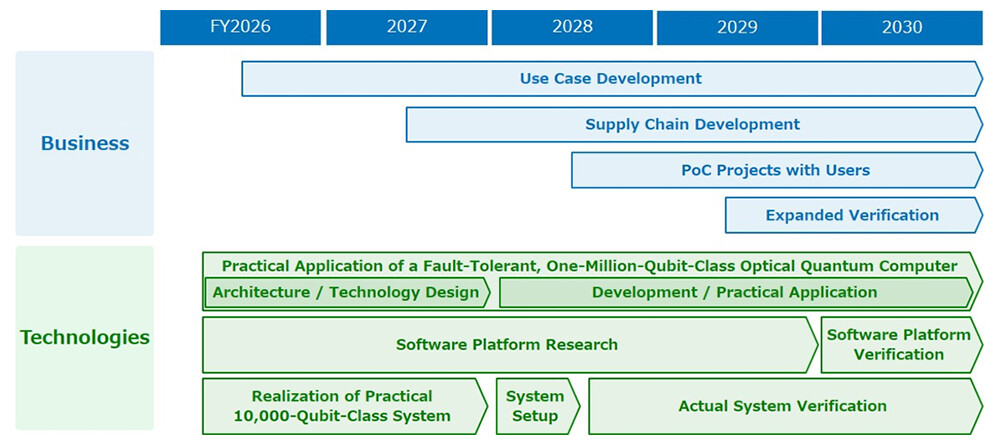 (Figure 2 Business and Technology Roadmap)
Comments from the CEOs
Representative Member of the Board, President and CEO of NTT, Inc., Akira Shimada
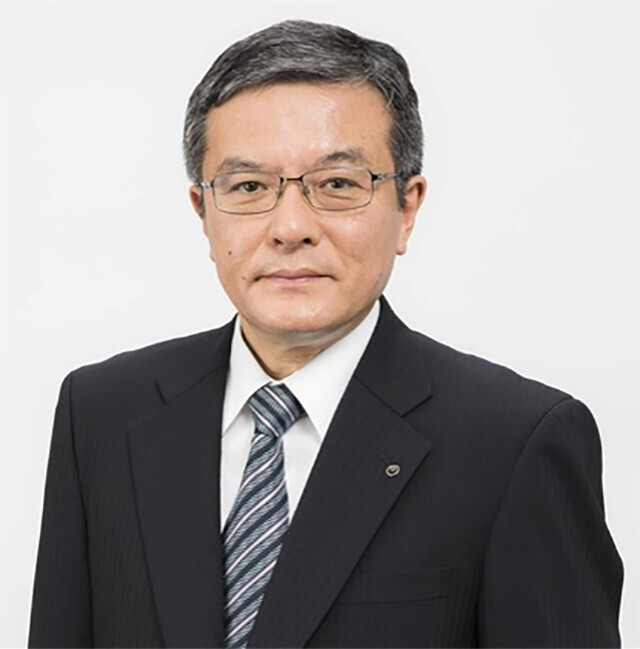
Quantum computers are a next-generation computing platform with the potential to contribute to solving a wide range of social challenges, including finance, manufacturing, medicine development, new materials development, and the optimization of energy use.
Building on the expertise NTT has cultivated in optical communications technologies, networks, data centers, and IOWN, we will work with OptQC through this capital and business alliance and joint research to advance optical quantum computers in an integrated manner, from research and development to commercialization and further to real-world implementation.
Through this initiative, we aim to bring optical quantum computing technologies originating in Japan to the global stage and contribute to the creation of new value.
Representative Director and CEO of OptQC Corp., Kan Takase
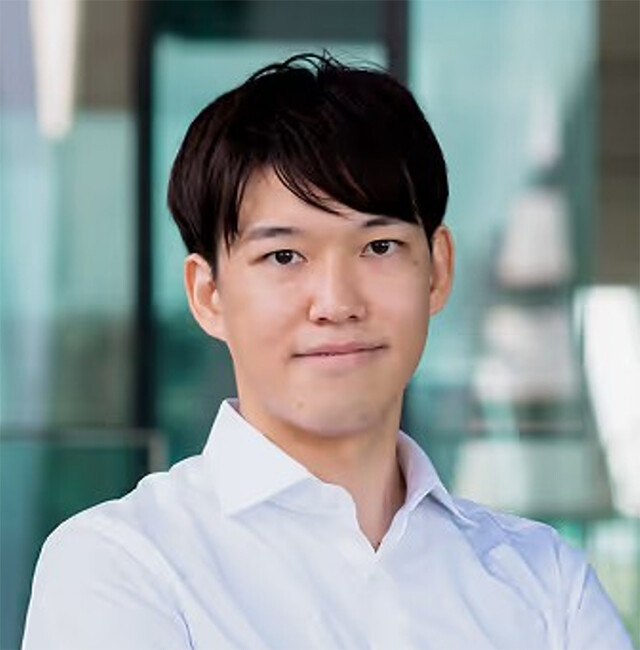
Since the conclusion of our collaboration agreement in November 2025, the research, development, and business teams of both companies have engaged in extensive discussions not only on technical matters, but also on commercialization, use case development, and approaches to real-world implementation.
We are very pleased that this has led to the conclusion of a capital and business alliance agreement and the commencement of joint research, further strengthening the collaboration between our two companies.
By combining the optical quantum computing technologies that OptQC has developed based on 25 years of research at the University of Tokyo with NTT's expertise in optical amplification, optical multiplexing, and other technologies cultivated in the field of optical communications, we are confident that we can make significant progress toward the realization of a fault-tolerant, one-million-qubit-class optical quantum computer.
Toward our fiscal year 2030 target, we will move steadily forward together with NTT and pursue the early practical application of optical quantum computers that contribute to solving social challenges.
Related Information
- "NTT and OptQC Sign Collaboration Agreement to Accelerate Scalable and Reliable Optical Quantum Computing Pioneering the Future of Quantum with Optical Technologies - Toward One Million Qubits by 2030" (2025/11/18)
https://group.ntt/en/newsrelease/2025/11/18/251118a.html - "OptQC and AIST Commence Initial Operations of "MoQuren," OptQC's First Optical Quantum Computer" (2026/7/21)
https://www.optqc.com/en/news/news/moquren-launch
[Glossary]
1Quantum Computer
A computer that operates based on the principles of quantum mechanics, using a different computing paradigm from today's classical computers. Quantum computers are known to have the potential to solve certain types of problems at high speed. For example, they are expected to efficiently solve problems such as the simulation of quantum systems and integer factorization.
2Optical Quantum Computer
In conventional computers, information represented by electrical signals is processed by semiconductor processors. In optical systems, light serves as the carrier of information. Various approaches use physical properties of light, such as photon number, polarization, and amplitude.
3Qubit
A qubit is the basic unit of information in a quantum computer. There are "physical qubits," which are implemented in actual devices, and "logical qubits," which are error-corrected units formed by combining multiple physical qubits to enable stable computation. For practical quantum computation, the number of logical qubits, rather than physical qubits, is an important performance indicator. The number of qubits described in this release refers to the number of physical qubits.
4Fault-Tolerant Quantum Computing (FTQC)
Fault-tolerant quantum computing refers to a computing approach that can detect and correct errors that occur during computation so that quantum computation can proceed reliably. Quantum computers are extremely sensitive, and even slight noise can disturb computation results. Therefore, achieving fault tolerance is essential for practical application. A quantum computer capable of performing such computation is referred to as a fault-tolerant quantum computer.
5Optical Amplification Technology / Quantum Light Source
Optical amplification technology amplifies optical signals. In the field of communications, it is used to amplify weakened light during long-distance transmission so that information can be delivered accurately. In quantum computers, this technology can be applied to stably supply light that carries quantum states, thereby helping to realize a quantum light source required for large-scale computation.
6Wavelength-Division Multiplexing
Wavelength-division multiplexing is one of the technologies used in optical communications to transmit multiple optical signals simultaneously through a single transmission line. It assigns different data to light of different wavelengths. Time-division multiplexing, which assigns different data to different time slots, is already being applied to optical quantum computers.
About NTT
NTT contributes to a sustainable society through the power of innovation. We are a leading global technology company providing services to consumers and businesses as a mobile operator, infrastructure, networks, applications, and consulting provider. Our offerings include digital business consulting, managed application services, workplace and cloud solutions, data center and edge computing, all supported by our deep global industry expertise. We are over $90B in revenue and 340,000 employees, with $3B in annual R&D investments. Our operations span across 80+ countries and regions, allowing us to serve clients in over 190 of them. We serve 75% of Fortune Global 100 companies, thousands of other enterprise and government clients and millions of consumers.
About OptQC
OptQC is a deep-tech startup aiming to provide a next-generation computing platform using optical quantum technology.
Built upon over 25 years of research at the Furusawa Laboratory of the University of Tokyo, we accelerate the practical application of quantum technology in the global market through an approach that simultaneously promotes research, development, and business.
Media contacts
NTT, Inc.
Public Relations
ntt-pr@ntt.com
OptQC Corp.
Public Relations
press@optqc.com
Information is current as of the date of issue of the individual press release.
Please be advised that information may be outdated after that point.


NTT STORY
We introduce various fields that NTT Group is working on and collaborations with partners.