Microsoft ends support for Internet Explorer on June 16, 2022.
We recommend using one of the browsers listed below.
- Microsoft Edge(Latest version)
- Mozilla Firefox(Latest version)
- Google Chrome(Latest version)
- Apple Safari(Latest version)
Please contact your browser provider for download and installation instructions.



August 20, 2026
NTT, Inc.
Tokyo Metropolitan Public University Corporation
NTT and Tokyo Metropolitan University Develop the World's First Multi-Variety Hybridization Technology Enabling Simultaneous Hybridization of Four Rice Varieties
— Enabling the combination of the four varieties-derived desirable traits to develop a novel variety with superior yield and enhanced functional properties —
Key Points:
- Developed the world's first multi-variety hybridization technology capable of simultaneous hybridization of four rice varieties by applying an artificial fertilization technique using plant gametes1.
- Through the combination of desirable traits from four rice varieties in a single hybridization, a process that conventional breeding methods have hardly achieved, the technology can accelerate the development of crop varieties with improved yield and enhanced functional characteristics.
- Rice developed using this technology exhibited approximately 1.7 times the average seed weight of its four parental varieties, indicating its potential for improved productivity. Future research will focus on validating its agricultural performance in field trials toward practical commercialization.
Tokyo, Japan, August 20, 2026 — A joint research team from NTT, Inc. (Headquarters: Chiyoda-ku, Tokyo; President and CEO: Akira Shimada; hereinafter "NTT") and Professor Takashi Okamoto of Tokyo Metropolitan University (Head Office: Hachioji, Tokyo; President: Takaya Ohashi) have developed the world's first technology for simultaneous hybridization of four rice varieties, one of the world's three major cereal crops. The technology successfully produced rice that possesses desirable traits from four different varieties in a single breeding process, overcoming a major limitation of conventional breeding methods.
The technology is expected to enable the development of crop varieties with enhanced yield, nutritional and functional properties, and other valuable characteristics. In the future, it could contribute to increased and more sustainable agricultural production while reducing environmental impact.
The research findings were published in the British scientific journal New Phytologist on August 20, 2026.
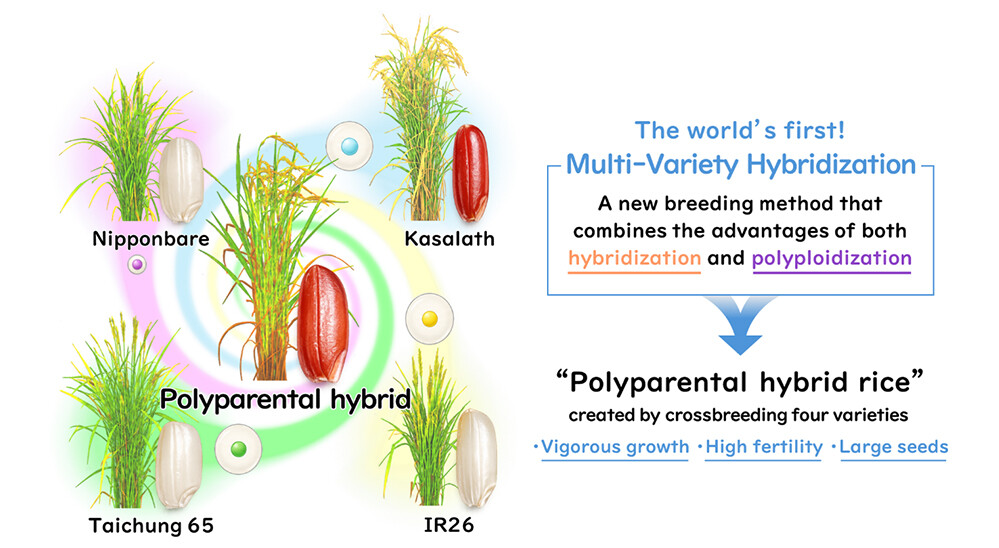 Figure 1. Overview of the study
Background
Under its environmental and energy vision, "NTT Green Innovation toward 2040"2, established in September 2021 to achieve both zero environmental impact and economic growth, NTT has been advancing research and development of plant breeding technologies that support sustainable, low-environmental-impact agriculture.
As part of this initiative, a joint research team from NTT and Tokyo Metropolitan University has been developing plant breeding technologies aimed at producing crop varieties with higher yields, enhanced functional properties, greater carbon dioxide (CO₂) absorption capacity, and reduced requirements for chemical fertilizers and pesticides.
In plant breeding, two conventional techniques have been used: hybridization, which combines two different varieties through artificial pollination (Figure 2, Conventional Method 1), and polyploidization3, which increases the number of genome4 sets mainly through chemical treatment (Figure 2, Conventional Method 2).
The first-generation hybrid (F1) produced through hybridization can exhibit superior growth, yield, and tolerance to environmental stress compared with either parent. This phenomenon, known as heterosis, has been widely utilized in crop breeding. Numerous commercial crop varieties have been developed using heterosis, and many vegetables currently distributed in Japan are F1 hybrids5.
Polyploid plants often exhibit enlarged organs, improved tolerance to environmental stress, and increased levels of beneficial compounds, making polyploidization another long-established breeding strategy. For example, cultivated strawberries have four times as many genome sets as their wild ancestors, producing larger fruit with superior flavor and aroma.
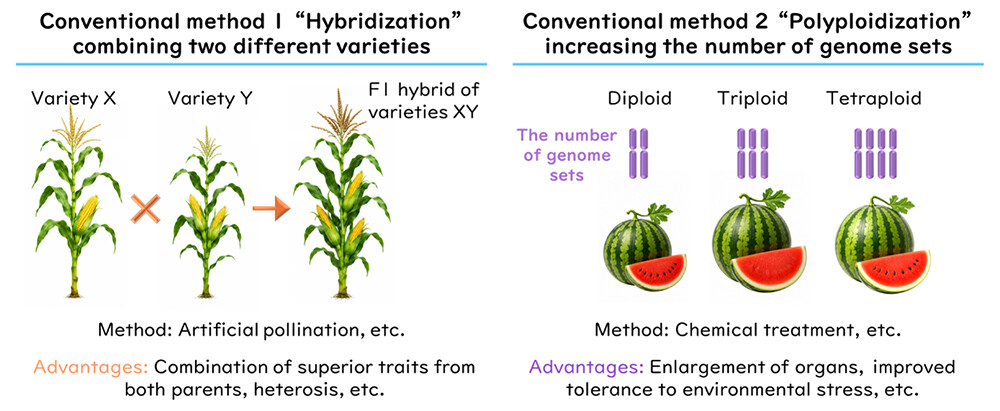 Figure 2. Overview of conventional breeding methods: hybridization and polyploidization
Despite their widespread use, each of these conventional breeding approaches has inherent limitations. Conventional hybridization is generally limited to two parental varieties at a single crossing. As a result, the resulting progenies retain the same number of genome sets as their parents and cannot benefit from the advantages associated with polyploidization. Conversely, polyploidization through chemical treatment duplicates the genome of a single variety, preventing the combination of genetic material from multiple parental lines and therefore limiting the benefits of hybridization.
A breeding approach capable of simultaneously combining genomes from multiple parental varieties while inducing polyploidization could integrate the advantages of both hybridization and polyploidization. Such a technology has the potential to establish a new breeding strategy for developing crop varieties with characteristics that are difficult or impossible to achieve using conventional methods.
Technical Highlights
Researchers at NTT and Tokyo Metropolitan University have developed the world's first method for producing autopolyploid rice through the simultaneous hybridization of four rice varieties. The approach utilizes in vitro fertilization (IVF)6 system, a micromanipulation technique in which isolated plant egg cells7 and sperm cells8 are artificially fused.
A system for regenerating plantlets from IVF-derived fertilized eggs has been established for the world's three major cereal crops, including rice, wheat, and maize. A key advantage of the IVF method is its flexibility in the number and combination of egg and sperm cells for fertilization to control hybrid and ploidy levels.
In this study, using rice as a model crop, the research team applied the IVF system to generate fertilized eggs by fusing egg and sperm cells derived from four different rice varieties (Figure 3). The resulting fertilized eggs were then cultured to regenerate rice plants carrying genomes from all four parental varieties while possessing twice the normal number of genome sets. This achievement demonstrates a new breeding approach that combines the advantages of multi-parent hybridization and polyploidization in a single process.
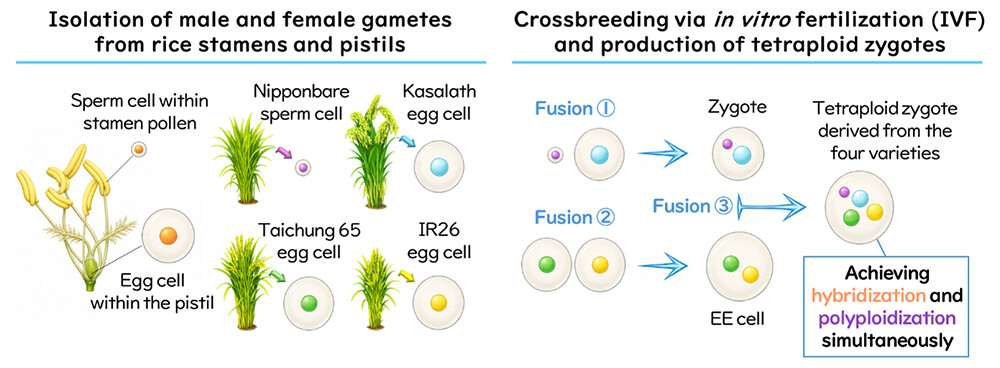 Figure 3. Overview of the multi-variety hybridization technology for simultaneous hybridization of four rice varieties
Experimental Results
1. Generation of Hybrid and Ployploid Rice through Simultaneous Hybridization of Gametes form Four Varieties Using the IVF system
In this study, the research team applied the IVF system to generate rice carrying genomes derived from four parental varieties (Figure 4). The parental varieties consisted of the diploid japonica9 cultivars Nipponbare and Taichung 65, the aus10 cultivar Kasalath, and the indica11 cultivar IR26.
Egg and sperm cells were isolated from each parental variety and fused by electrical stimulation to generate fertilized eggs consisting of egg and sperm cells derived from all four varieties. The resulting fertilized eggs were cultured in multiple media to induce callus formation, followed by regeneration into plantlets.
The analysis using flow cytometry12 confirmed that the regenerated plants were tetraploid rice with twice the normal number of genome sets. In addition, genome-wide analysis using numerous variety-specific single nucleotide polymorphism (SNP) markers13 demonstrated that the regenerated plants retained genomes from all four parental varieties in approximately equal proportions.
These results demonstrate that the IVF system can be used to generate a tetraploid hybrid rice carrying genomes derived from four parental varieties. The four-parent derived hybrid rice was designated as "Quad".
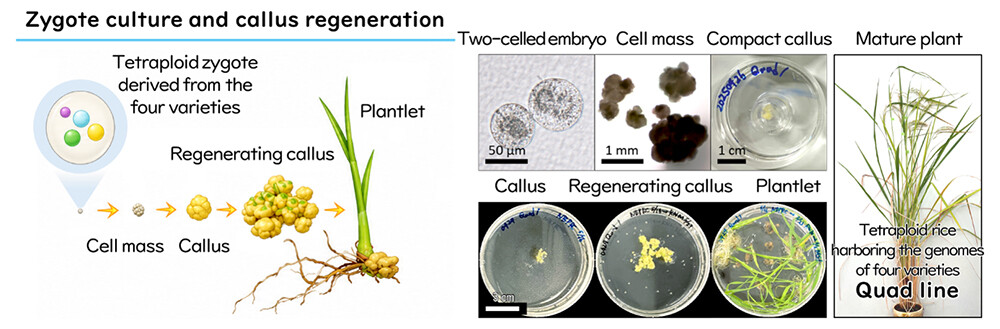 Figure 4. Generation of a tetraploid four-parent rice hybrid (Quad) using the IVF method
2. Evaluation of Phenotipic Traits in the Four-Parent Hybrid Rice
Quad exhibited characteristics that differed substantially from those of its parental varieties (Figure 5). The Quad plants showed vigorous growth, and at the grain-filling stage14, both plant height and flag leaf15 length were comparable to or greater than those of the largest parental variety.
Quad also exceeded all parental varieties in seed length, width, and thickness. The weight of ten brown rice grains was approximately 1.7 times the average of the four parental varieties. Furthermore, Quad showed a significantly greater ten-grain weight than a conventional tetraploid hybrid derived from only two parental varieties, Nipponbare and Kasalath.
These findings suggest that combining genomes from four parental varieties through tetraploidization has the potential to produce rice with greater yield than can be achieved using conventional breeding methods.
In addition, Quad developed red awns16, a trait that was not observed in any of the parental varieties. This finding suggests that combining multiple genetically distinct genomes within a single plant can generate novel traits beyond those represented by the parental lines.
Notably, autotetraploid rice produced using Nipponbare alone as the parental variety generated very few seeds, whereas Quad produced abundant seeds comparable to those of each parental variety. This difference in fertility indicates that polyploidization combined with multiple parental genomes may overcome the low fertility17 level of autotetraploid from a single rice variety.
Taken together, these findings demonstrate that the newly developed multi-variety hybridization technology has the potential to serve as a novel breeding strategy that integrates the advantages of both hybridization and polyploidization.
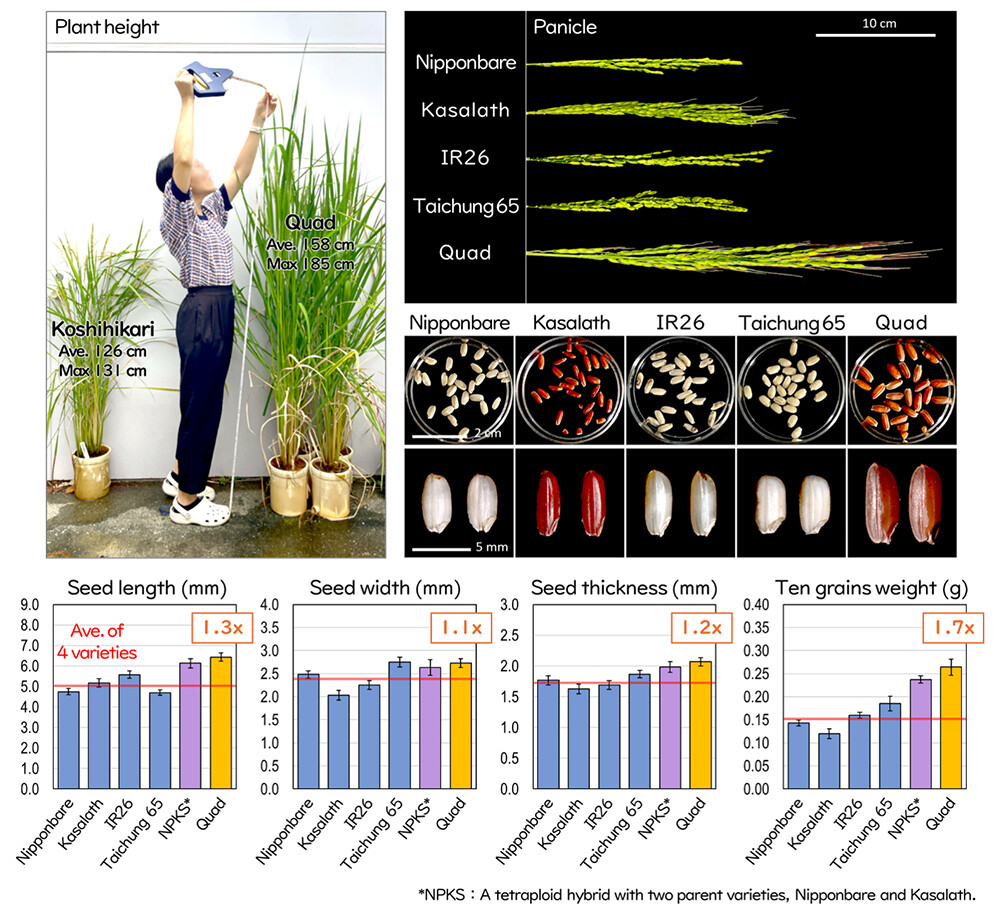 Figure 5. Comparison of traits between the four parental rice varieties and Quad
3. Definition of the "Polyparental Hybrid" Concept
In this study, the researchers introduce the term "polyparental hybrid" to describe a polyploid organism carrying genomes derived from three or more genetically distinct parents within the same species. This concept extends the conventional breeding framework, which has traditionally been based on hybridization between only two parental lines.
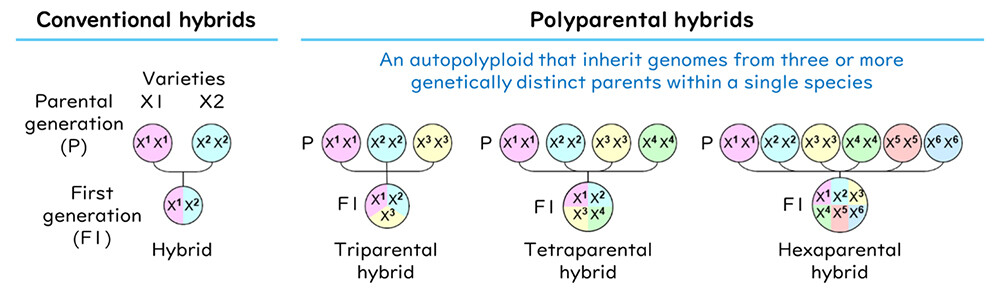 Figure 6. Definition of a polyparental hybrid
Roles of Each Organization
NTT: Leveraging its expertise in plant in vitro fertilization (IVF), cultivation, and phenotypic evaluation, NTT was responsible for planning and designing the study, generating the polyparental hybrids, and evaluating their characteristics.
Tokyo Metropolitan University (TMU): Developed the core technologies for plant IVF system and provided technical expertise throughout the study. TMU also applied its expertise in plant genome analysis to demonstrate that the generated polyparental hybrids retained genomes from all four parental varieties in approximately equal proportions.
Future Outlook
The research team will continue to conduct detailed analyses of the yield, environmental stress tolerance, and quality-related traits of the newly developed polyparental hybrid rice. These studies aim to clarify how polyparental hybridization influences crop yield, eating quality, and functional properties, while also demonstrating the potential of the technology for practical agricultural applications.
Although this study focused on rice, the technology is expected to be applicable to other plant species for which IVF systems have been established. Future research will focus on establishing IVF system for additional plant species and developing technologies to optimize combinations of parental varieties, thereby expanding the applicability of the technology and maximizing its breeding potential.
By leveraging these technologies, the research team aims to develop environmentally sustainable crops and trees that combine high growth and yield, enhanced functional properties, and superior carbon dioxide (CO₂) absorption capacity while requiring minimal fertilizer and pesticide inputs.
In the long term, the technology is expected to contribute to global food security by increasing and stabilizing agricultural production, while also supporting climate change mitigation through enhanced carbon sequestration in agricultural land and forests.
[Research Contacts]
Space Environment and Energy Laboratories, NTT, Inc.
Kazuma Sakoda, Associate Distinguished Researcher
Department of Biological Sciences, Graduate School of Science, Tokyo Metropolitan University
Takashi Okamoto, Professor
TEL:+81-42-677-2566 E-mail:okamoto-takashi@tmu.ac.jp
1Gamete: A haploid reproductive cell that gives rise to the next generation.
2https://group.ntt/en/newsrelease/2021/09/28/210928a.html
3Polyploidization: The process by which the number of genome sets in an organism increases.
4Genome: The complete set of genetic information of an organism. It comprises the organism's entire DNA sequence and serves as the blueprint that determines its characteristics and biological functions.
5F1 hybrid: The first filial generation (F1) produced by hybridizing two different parental varieties. F1 hybrids often exhibit superior yield, quality, or other desirable traits compared with either parent and are widely used in crop breeding.
6In vitro fertilization (IVF): A technique in which reproductive cells isolated from plant reproductive organs (flowers) are artificially fused under a microscope using electrical stimulation. The resulting fertilized egg is then cultured and regenerated into a plantlet.
7Egg cell: The female gamete in plants.
8Sperm cell: The male gamete in plants.
9Japonica: One of the major groups of cultivated rice, widely grown in East Asia, including Japan. Japonica rice typically has short, round grains and a soft, sticky texture after cooking.
10Aus: A rice group primarily cultivated in South Asia. Aus varieties generally possess traits that enable adaptation to environmental conditions such as high temperatures and drought.
11Indica: One of the major groups of cultivated rice, widely grown in South and Southeast Asia. Indica rice typically has long, slender grains and a less sticky texture after cooking.
12Flow cytometry: A technique that uses laser light to measure and analyze individual cells or their components, including DNA content and other cellular characteristics.
13 SNP marker: A genetic marker based on a single nucleotide polymorphism (SNP), which represents a variation at a single position in the DNA sequence. SNP markers are widely used to distinguish varieties and genetic lineages and to determine the parental origin of inherited genomes.
14 Grain-filling stage: The developmental stage after pollination and fertilization during which seeds develop and accumulate starch and other nutrients before reaching maturity.
15Flag leaf: The uppermost leaf on the stem of a cereal plant, such as rice. It plays a critical role in supplying nutrients to developing grains.
16Awn: A slender, bristle-like extension that protrudes from the tip of the husk of cereal grains such as rice and wheat.
17Fertility: The ability of a plant to produce viable pollen and seeds, thereby enabling successful reproduction and the production of the next generation.
About NTT
NTT is a leading global technology innovator, providing a broad range of services to both consumers and businesses. As a mobile operator and provider of infrastructure, networks, and services, NTT is dedicated to promoting a sustainable future through cutting-edge innovations. Our portfolio includes business consulting, AI-powered solutions, application services, global networks, cybersecurity, data center and edge computing, all supported by our deep global industry expertise. Generating over $90 billion in revenue and employing 340,000 professionals, we allocate 30% of our annual profits to fundamental research and development. With operations spanning more than 70 countries and regions, our clients include over 75% of Fortune Global 100 companies, alongside thousands of enterprises, government organizations, and millions of consumers.
Media Contacts
NTT, Inc.
NTT Information Network Laboratory Group
Public Relations
Inquiry Form
Tokyo Metropolitan Public University Corporation
Planning&Public Relations Division
E-mail: info@jmj.tmu.ac.jp
Information is current as of the date of issue of the individual press release.
Please be advised that information may be outdated after that point.


NTT STORY
WEB media that thinks about the future with NTT