Microsoft ends support for Internet Explorer on June 16, 2022.
We recommend using one of the browsers listed below.
- Microsoft Edge(Latest version)
- Mozilla Firefox(Latest version)
- Google Chrome(Latest version)
- Apple Safari(Latest version)
Please contact your browser provider for download and installation instructions.



NTT's Sustainability Efforts
Offering new potential to the fisheries industry with smart land-based aquaculture
NTT EAST New Business Development Headquarters
Tetsumi Ochi
The crisis faced by the fisheries industry and the use of land-based aquaculture as a solution
The global fisheries industry, which includes Japan, currently faces a serious crisis. Due to rising ocean temperatures stemming from global warming and increasing global demand for seafood, fishery resources are being exhausted, and the percentage of fisheries that have the potential to expand their production has fallen to around 7%.
"The fisheries industry is on the verge of a major sustainability crisis due to increasing demand and overfishing resulting from global population increases, rising water temperatures caused by global warming, decreased water quality because of microplastics and other human causes, and similar issues. To resolve such issues, we will transition from 'catching' fishery resources to 'creating' them. Land-based aquaculture contributes to the improved maintenance of natural fishery resources while also contributing to reduced food loss through supply and demand matching." The above is the opinion of Mr. Tetsumi Ochi, who overseas land-based aquaculture business at NTT EAST. Mr. Ochi launched this project four years ago and is currently seeking a new approach for the fisheries industry.
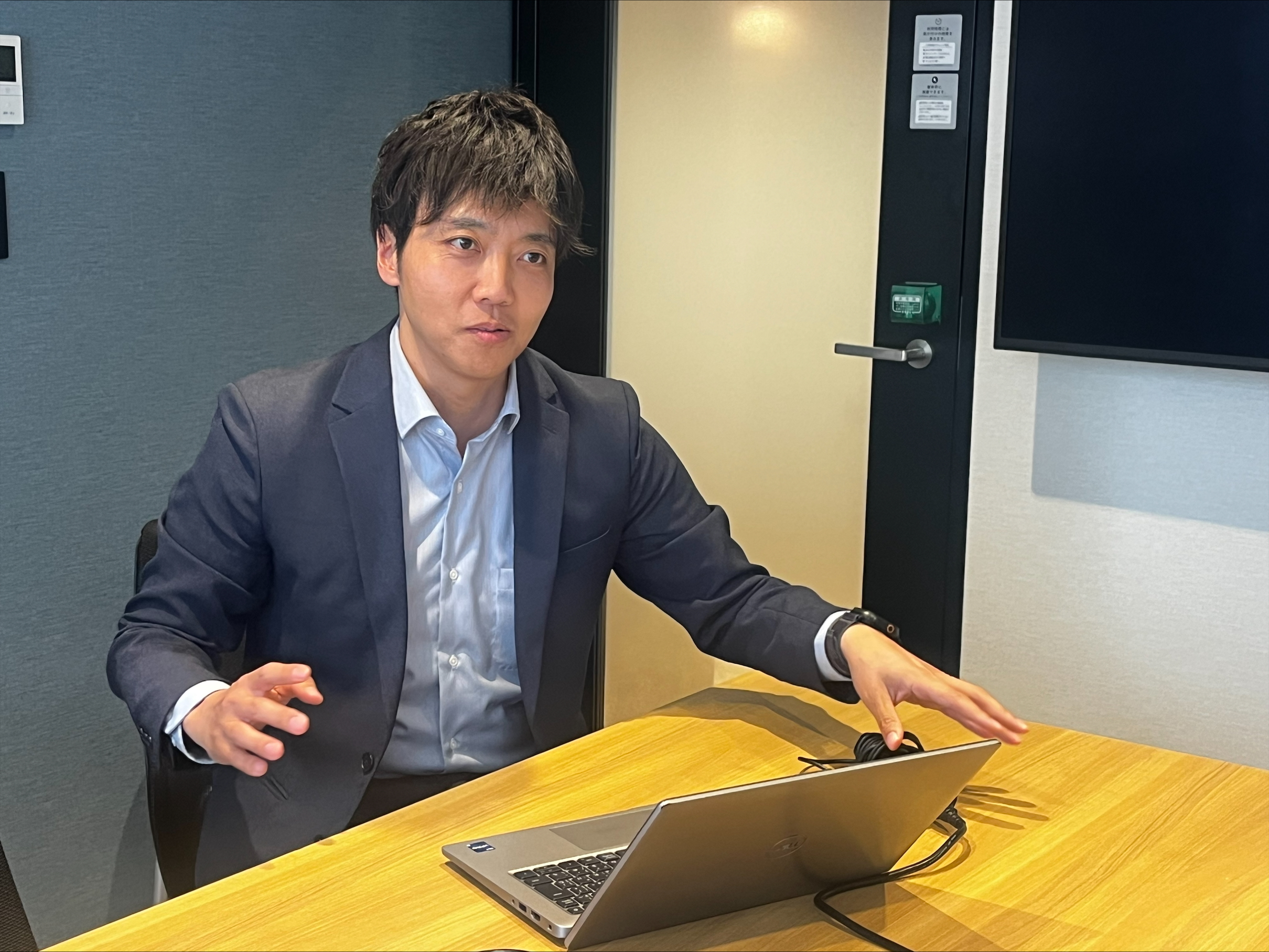
Mr. Ochi, who worked as an LED technology development researcher before getting a new job at NTT EAST and participating in this project, hopes to create a business that enables Japan to use new technology to share first-ever Japanese technology with the rest of the world and is focused on the fisheries industry, where social issues suggest that there is a lot of potential for technological progress. According to him, although he had no fish knowledge to begin with, he read a lot of papers and visited various specialists to accumulate relevant knowledge.
Two innovative features that differ from conventional aquaculture
"The project we are promoting implements 'completely closed-loop land-based aquaculture.' This approach does not depend on seas, rivers, lakes, or other aspects of the natural environment, and, by producing marine products in land-based facilities, we hope to achieve aquaculture 'anywhere, for anyone, and for any fish species.' This technology has already been commercialized, and, if we can achieve its profitability as a business, in the future, we should be able to use aquaculture to breed tuna right in the middle of the Sahara Desert and ship them." (Tetsumi Ochi, same below)
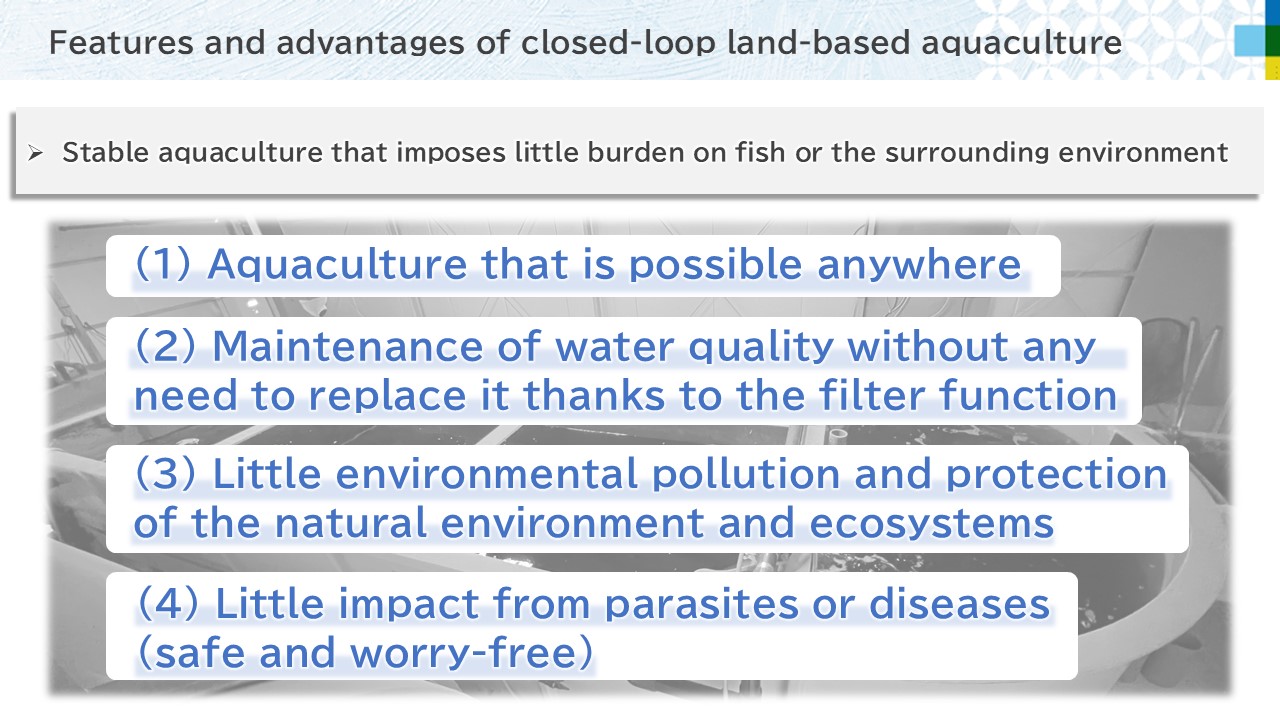
This smart land-based aquaculture has two innovative features that differ from conventional aquaculture. The first is that we purify tap water to create artificial breeding seawater, which enables the efficient breeding of various species of both freshwater and saltwater fish.
"Because we use special filtration technology to recycle and reuse our purified artificial seawater, we can reduce the impact on the surrounding environment due to water discharge compared to conventional flow-through aquaculture. In addition, because our purification process starts with tap water, we can produce fish even in regions that lack abundant water resources."
Mr. Ochi also says that his approach has positive effects on fish growth as well.
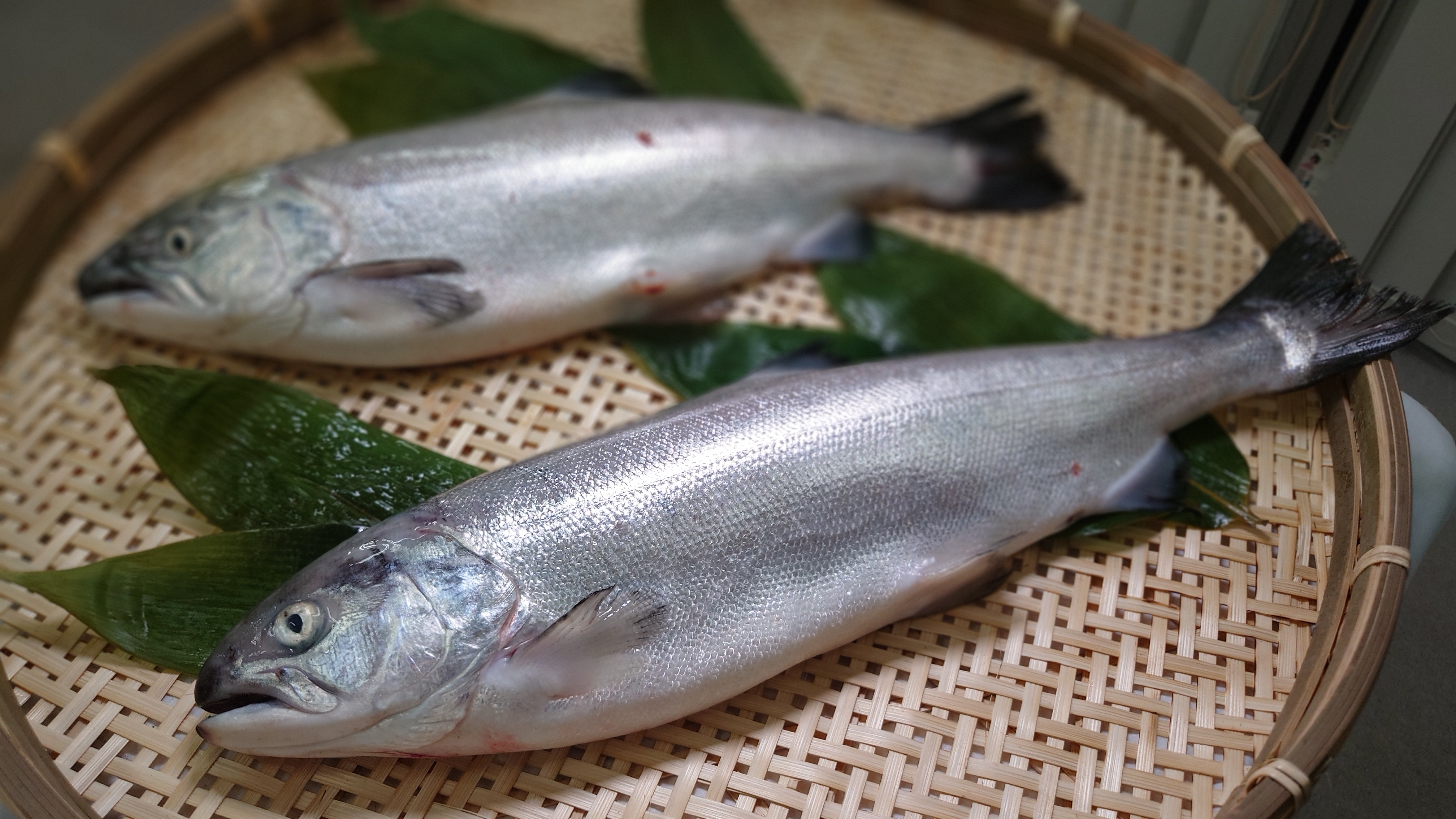 Sockeye salmon obtained through smart land-based aquaculture
"Typical saltwater has a salinity of around 3.5%, but the most livable salinity level for fish is around 1%. Natural saltwater fish use almost 70% of their energy from feed just to adjust the salinity inside their bodies. However, because we adjust the salinity of our purified artificial seawater to be optimal for fish, fish in this environment can use most of their energy for growth. As a result, we have achieved an extremely high fish growth rate so they get bigger faster."
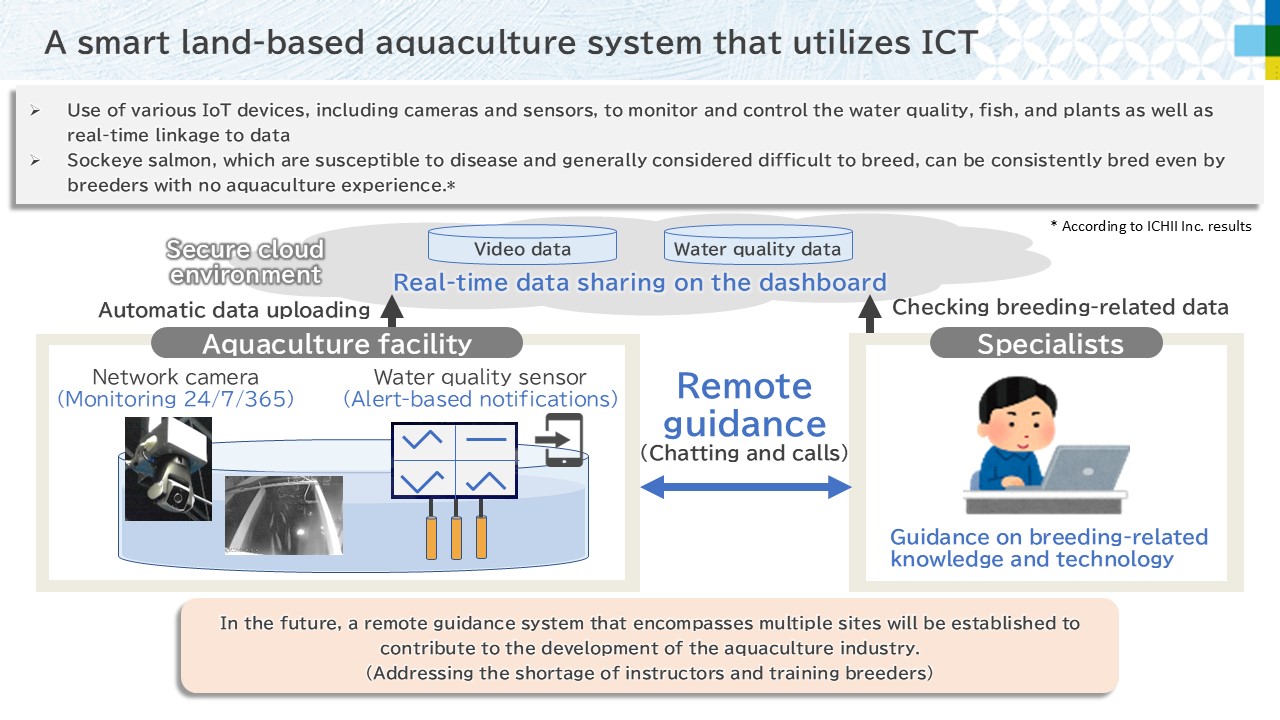
The second feature is that we utilize ICT to achieve a data-driven approach. By using data to manage our breeding environment (including the water quality, environmental temperature and humidity, and operating situation of plant-related devices), we maintain a stable production environment, and we use an IT platform to enable our headquarters and other offices to provide One to Many breeding guidance to remote locations where our plants are actually located.
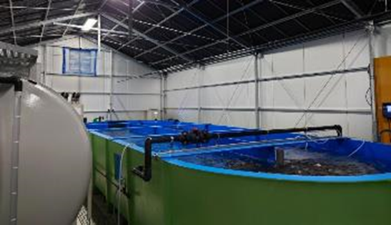 A tank for smart land-based aquaculture
"In the case of conventional aquaculture, it was necessary to rely heavily on experienced specialists and the suitable natural environment, but our completely closed-loop land-based aquaculture facility can be stably operated without any specialized knowledge or experience. With the IT platform we developed, we automatically obtain and centrally manage data related to the plant environment where we raise fish."
In the case of our actual Sockeye Salmon Aquaculture Project, which we introduced at a sustainability conference, we succeeded thanks to guidance from a remote location made possible by collaboration between the Okayama University of Science and our plant in Fukushima City, Fukushima Prefecture. This project, which was started in Fukushima City in January 2022, was also made possible by collaboration with the local supermarket Ichii. These efforts ended up offering new potential to Fukushima's fisheries industry, which suffered reputational damage in the wake of the Great East Japan Earthquake.
"When we first launched the project, fishery industry professionals expressed their concerns about why we would choose sockeye salmon, which are so difficult to raise. However, the reason we took on the challenge posed by sockeye salmon in spite of this is that we wanted to create an original brand to contribute to regional revitalization."
This challenge ended up paying off spectacularly, resulting in the world's first example of sockeye salmon land-based aquaculture succeeding as a business. The next challenge we are taking on is breeding giant groupers (Perciformes: Epinephelidae, a type of luxury fish) via aquaculture in Tsuno, Miyazaki Prefecture.
"The giant grouper is a rare, delicious species of luxury fish that is hardly ever caught in Japan. Therefore, raising such fish can reasonably be expected to be profitable as a business. We finished test breeding in 2024, and we started shipping them all over Japan as Hometown Tax system thank-you gifts."
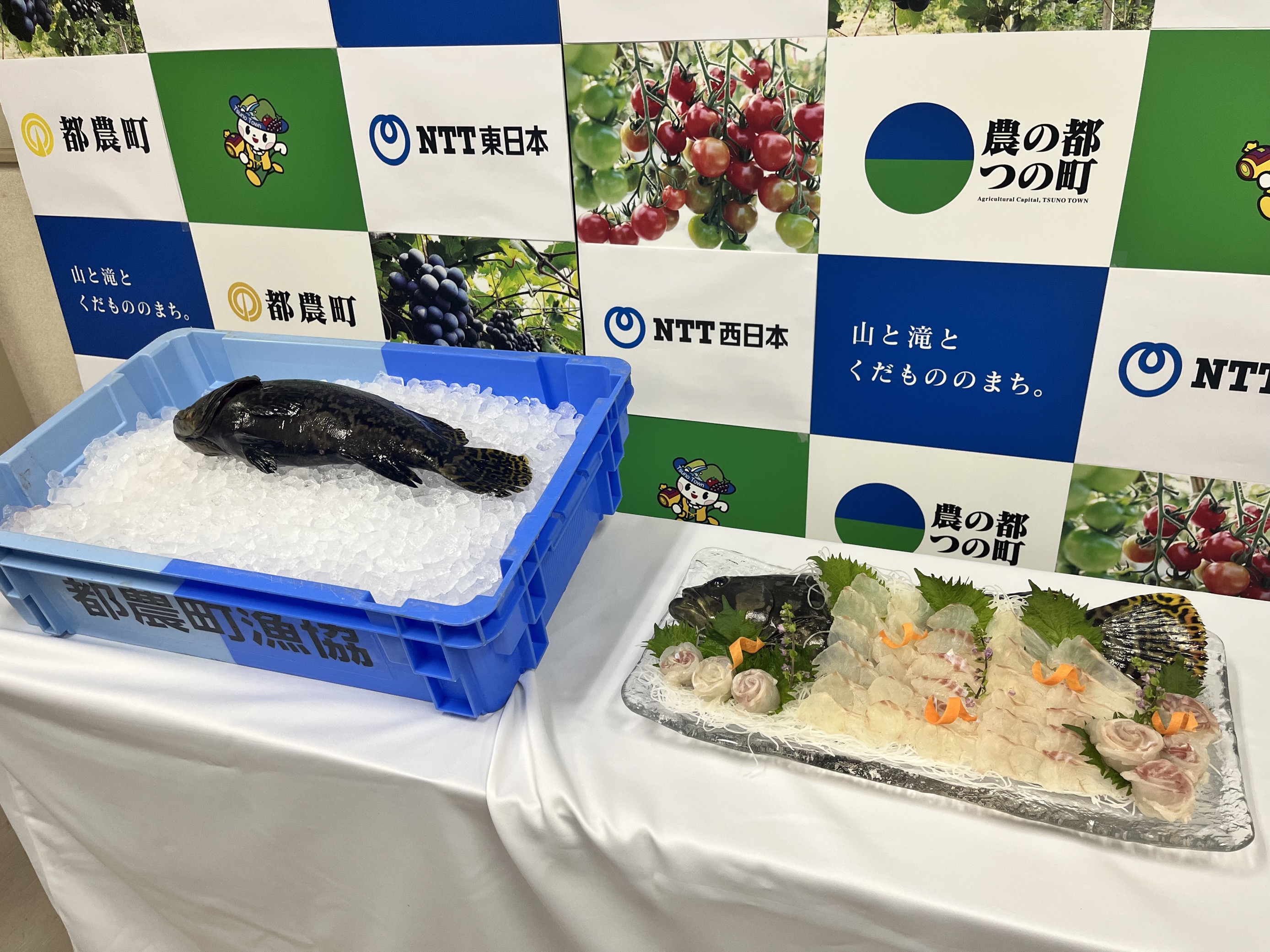 Fish used as Hometown Tax system thank-you gifts for our initiatives with Tsuno
High safety and environmental friendliness of aquaculture fish, and future outlook
Smart land-based aquaculture also offers significant advantages in terms of sustainability. These include its low environmental impact and high level of safety.
"Because our completely closed loop approach generally minimizes water discharge, it is an extremely environmentally friendly system. In addition, by producing fish near an urban area, we reduce transport-related CO2 emissions and food mileage as well. In terms of safety as well, land-based aquaculture enables us to completely control the water quality, so there is no risk of infection by parasites, etc. Our approach offers peace of mind in that we can completely trace fish until they reach adulthood as well."
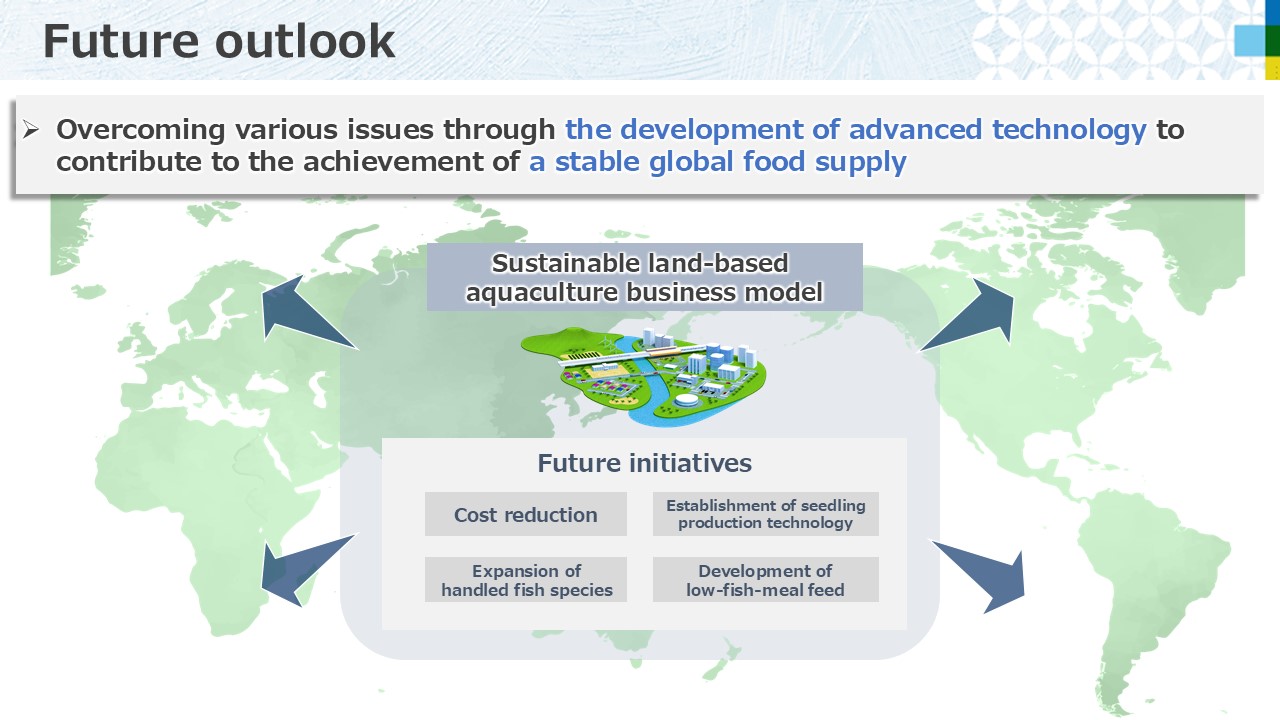
However, there are still issues that must be overcome to spread land-based aquaculture. These include reducing costs and improving consumer awareness.
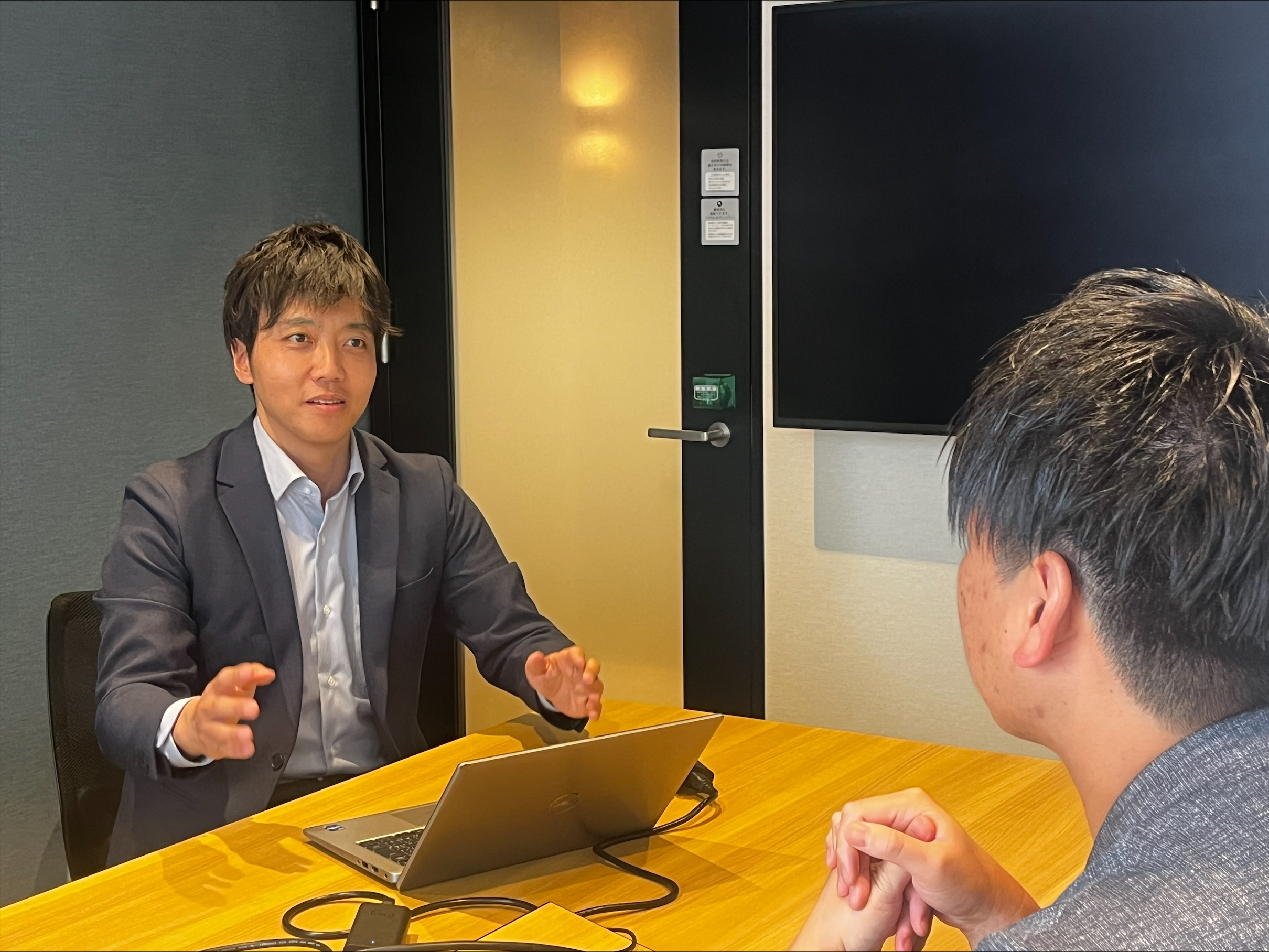
"First, it is necessary to reduce the total cost. In particular, we are focusing on innovation related to water treatment technology. We currently use microorganism-based filtration technology to remove ammonia nitrogen emitted by fish, but we are working on developing new technology to increase the filtration efficiency.
In addition, to increase demand for fish raised via land-based aquaculture, it is essential to encourage improved consumer awareness. In Japan, there is a deeply rooted view that natural fish are better, and aquaculture-raised fish tend to be viewed as having low value. However, the situation differs for beef, pork, and poultry. For example, name-brand beef includes high-value examples of artificially raised meat. I believe that the key to spreading land-based aquaculture is to communicate how safe and delicious aquaculture-raised fish are to change consumer awareness of such fish for the better."
Regarding the outlook in the near future, Mr. Ochi says that he hopes to expand overseas by around 2030.
"As Japan's population decreases, its demand for food will as well, but overseas demand for fish is increasing as overseas populations increase. Many overseas countries lack abundant water resources, and I think that, by exporting systems and associated technology, we can help resolve the crucial social issue of securing protein sources for the increasing global population."
What Self as We means to Mr. Ochi
What Muramatsuri no Sake teaches us about the importance of team diversity
When it comes to project operations, Mr. Ochi emphasizes the fable Muramatsuri no Sake. In this story, all the villagers supposedly bring sake for a village festival, but everyone prioritizes their own interest, so they actually bring water, which they use to fill the sake barrel together.
This fable is intended to explain the importance of every member of a team contributing to society based on a sense of responsibility. According to Mr. Ochi, this is the key to the success of the project.
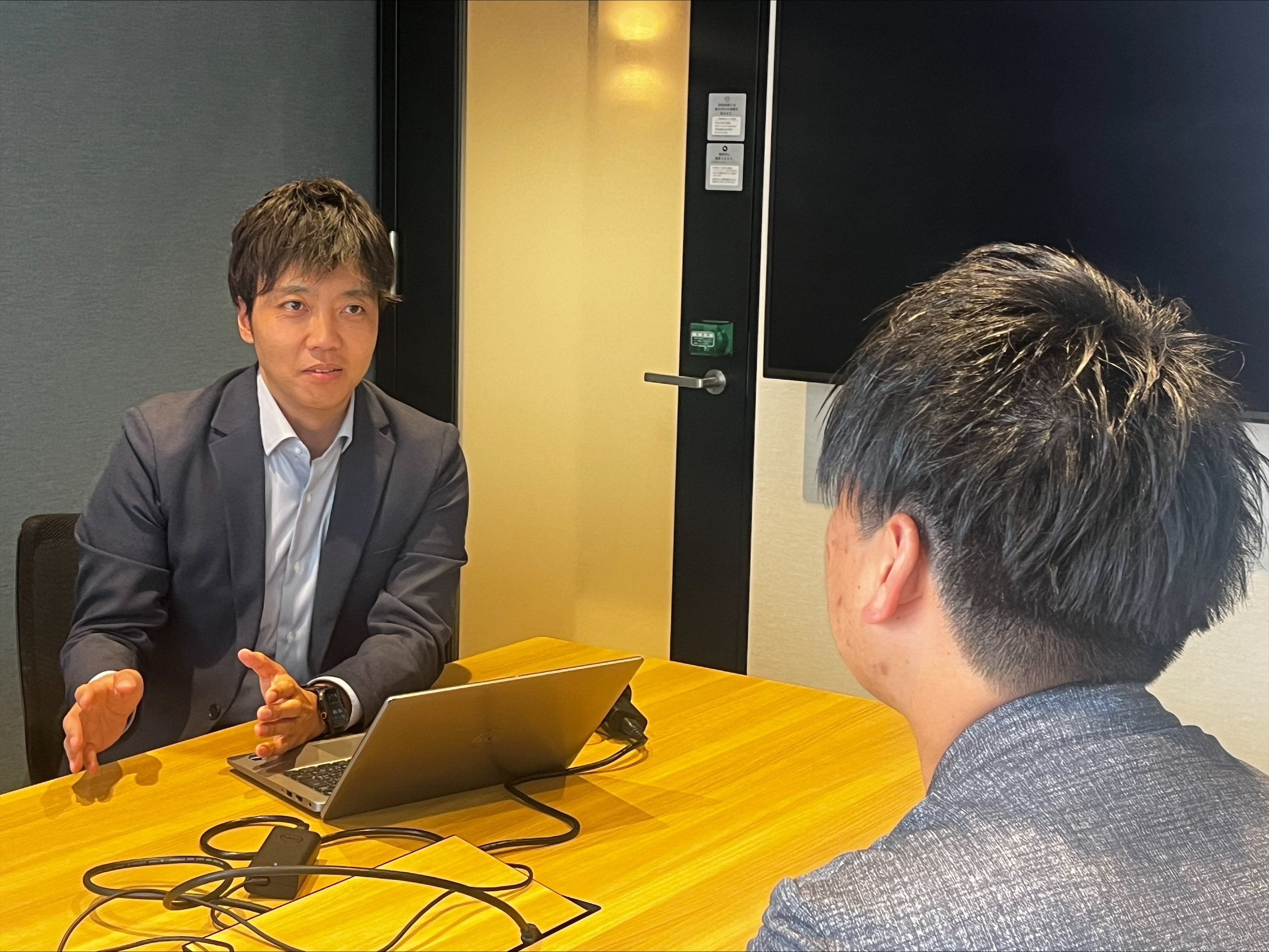
"The start of a new project is like rowing against the current, and, at the moment someone stops rowing, the boat starts getting pushed backwards. Even if a team has a common goal, its members have different approaches, thinking, and motivation. The right attitude is to think not only of yourself but of the entire team and every involved stakeholder as "us" in order to work towards a common goal. This project is the world's first of its kind, and I want every member to experience both the fun and hardships of taking on a new challenge. I think a world in which we have used our technological capabilities to resolve social issues waits for us if we can pull through."
See other stories
-
- Forest
- Environment
Stimulating the Exchange of Carbon Credits with Morikachi A Forest Value Creation Platform That Connects Localities and Companies
-
- DX Farming
- Environment
Sustainable crop protection NTT DATA Argentina's Sistema Integra
-
- Forest
- Environment
Utilizing ICT to visualize forest information Achieving sustainable forestry and creating new value
-
- Recycling
- Environment
Utilizing AI technology to establish an efficient recycling environment
-
- Environment
- Power-Saving
Achieving Our 2040 Net-Zero Commitment Innovative Measures Promoted by NTT Global Data Centers
-
- Society
- AI
Using Advanced Technologies to Protect the Lives of Children Is Work the NTT Group Should Do
-
- Diversity
- Work Style
Creating a society in which people with various disabilities can work naturally
-
- Diversity
- Gender
Moving forward with our colleagues A club encouraging women to take a step forward on their own
-
- Diversity
- Gender
Protecting girls' right to learn and building a sustainable society
-
- Diversity
- Work Style
New regional communities created by "another workplace"
Sustainability
NTT STORY
WEB media that thinks about the future with NTT