Microsoft ends support for Internet Explorer on June 16, 2022.
We recommend using one of the browsers listed below.
- Microsoft Edge(Latest version)
- Mozilla Firefox(Latest version)
- Google Chrome(Latest version)
- Apple Safari(Latest version)
Please contact your browser provider for download and installation instructions.



NTT's Sustainability Efforts
Utilizing AI technology to establish an efficient recycling environment
NTT Ltd Belgium
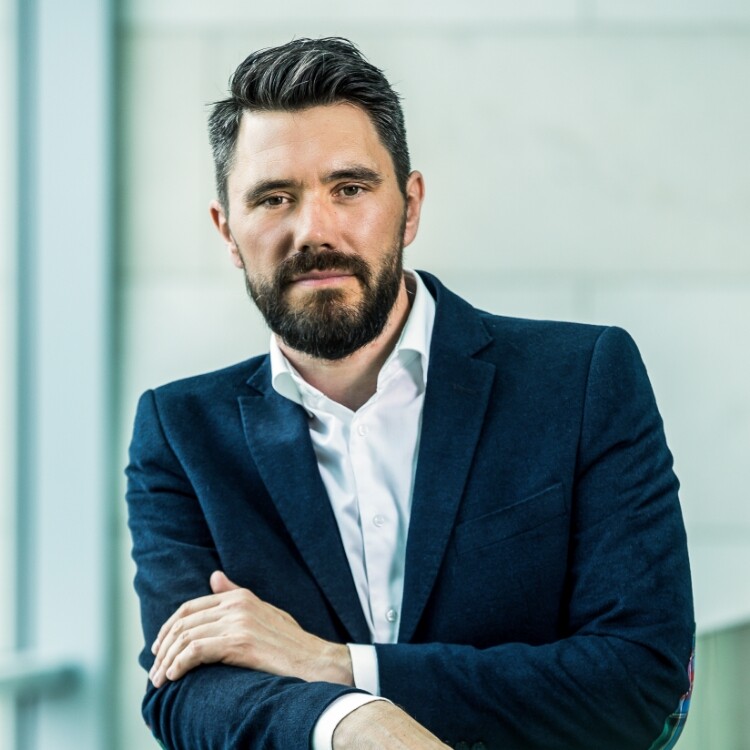
Kristof Schraepen

Aiming to improve recycling-environment issues faced by local communities
In Belgium, recycling is a part of daily life, and there is a strong awareness of the importance of recycling and sustainability. Most cities have recycling parks, and their plazas have large recycling containers, where visitors can bring and dispose of recyclable garbage whenever they wish. These recycling parks are used by many citizens in an attempt to reuse recyclable garbage.
However, the containers in recycling parks frequently fill up, which makes it necessary for people to bring garbage they wanted to discard back home. This has caused the problem of people inappropriately throwing away garbage in parks or city streets.
Kristof Schraepen, New Business Exploration and Innovation Director at NTT Ltd Belgium, is in charge of spearheading efforts to resolve this issue.
"We are basically faced with a situation where individual citizens are hindering sustainability initiatives. To address this situation, it is important to improve the user experience (UX) to ensure that people find it pleasant to use recycling parks. If the UX is poor, there will be less interest in using recycling parks." (Kristof Schraepen, same below)
In addition, when trucks were used to collect recyclable-garbage containers, some of the collected containers were not full, which reduced collection efficiency. To address this problem, NTT Ltd Belgium responded to Cisco's call to participate in the Cisco Innovation Challenge . During this three-day workshop, the company's team identified relevant issues by conducting a SWOT analysis and using an empathy map and then decided to design a solution by using AI-equipped smart cameras.
"If the UX is poor, people will not come to recycling parks. To improve the UX, we felt that it was necessary to provide solutions not only to users but also to people in charge of recycling-park operations. In particular, it was important to find a way to immediately replace full containers and make it possible to predict the container usage situation. The purpose of this project is to digitalize our recycling-park approach by using AI to improve the UX and make it easier for anyone to recycle."
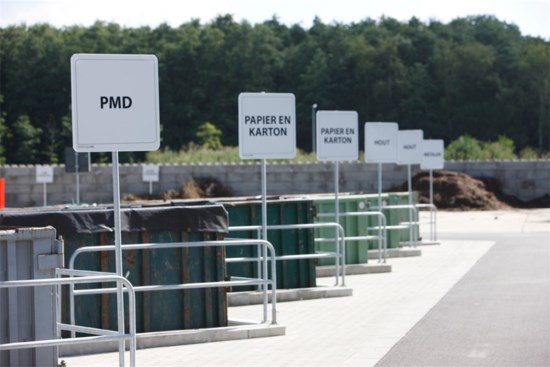 Resource-collection containers at a recycling park in Belgium
Initiatives to resolve issues related to technology and privacy
NTT Ltd Belgium took on the challenge of using smart cameras in recycling parks to develop a solution that improves the UX. More specifically, this solution involved a design that incorporated monitoring-AI technology into cameras to keep track of the amount of garbage in containers. With this technology, AI is used to determine the amount of garbage in each container in real time.
"Because we chose to use cameras for real-time monitoring, there were privacy concerns. To address such concerns, we created a system that does not collect any information that could be used for facial recognition or identification purposes and that encrypts all collected data."
Thanks to this approach, citizens are able to use recycling parks without worry.
"Privacy and security were important issues as we developed this solution. By recognizing only specific situations, encrypting collected data, and ensuring that no data leaks, I feel that we increased the peace of mind of citizens when using recycling parks while effectively promoting the acceptance of the project."
Citizens gained the ability to confirm the usage situation of recycling containers online, which enabled them to avoid driving all the way to a recycling park only to find that they could not discard their recyclable garbage.
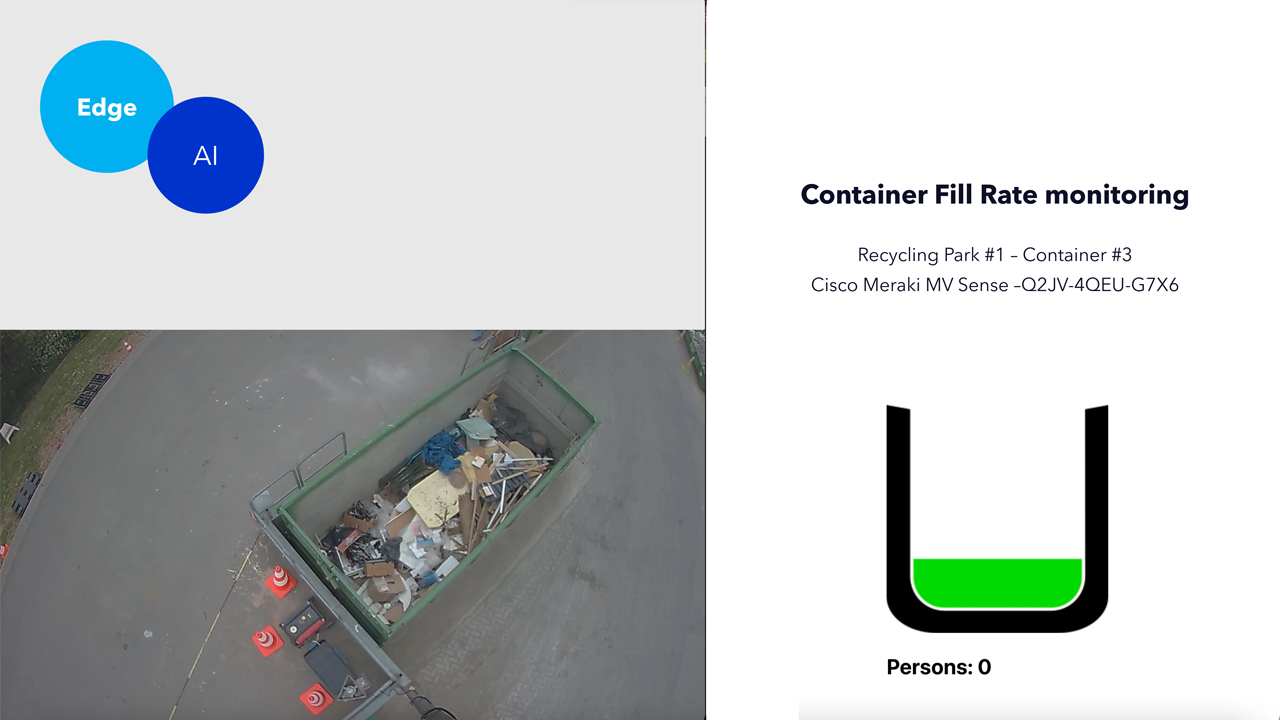
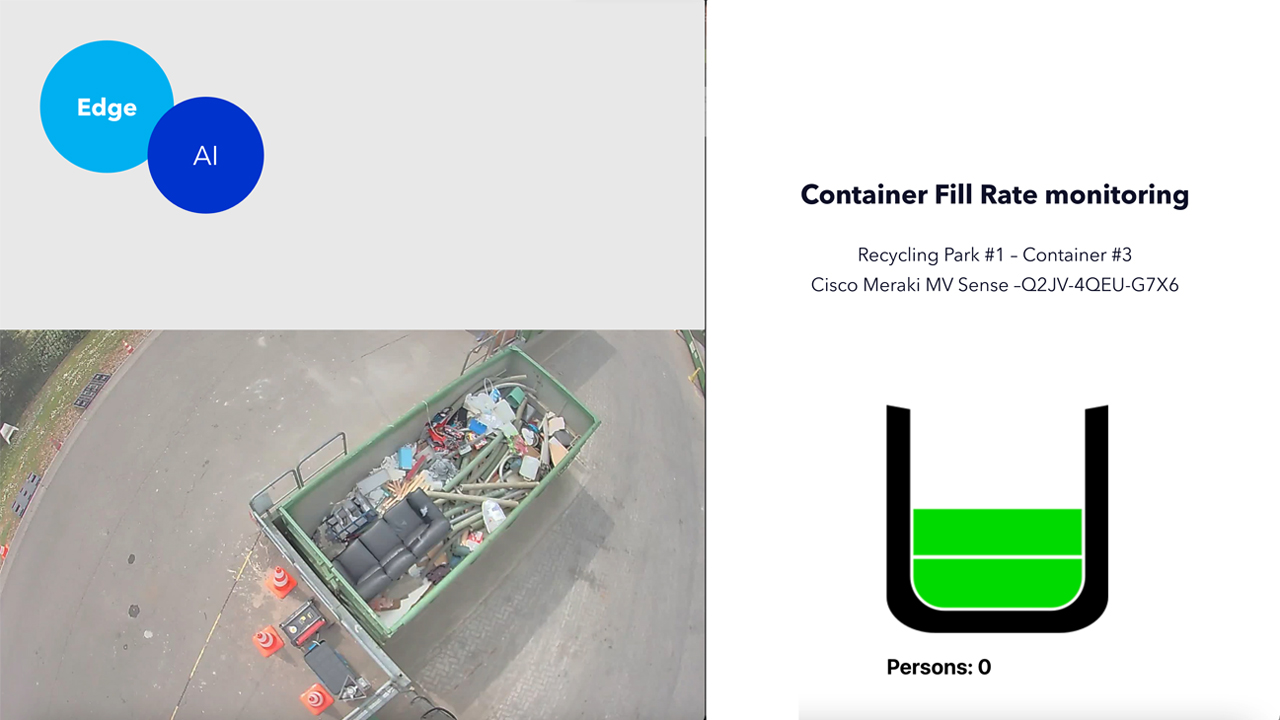
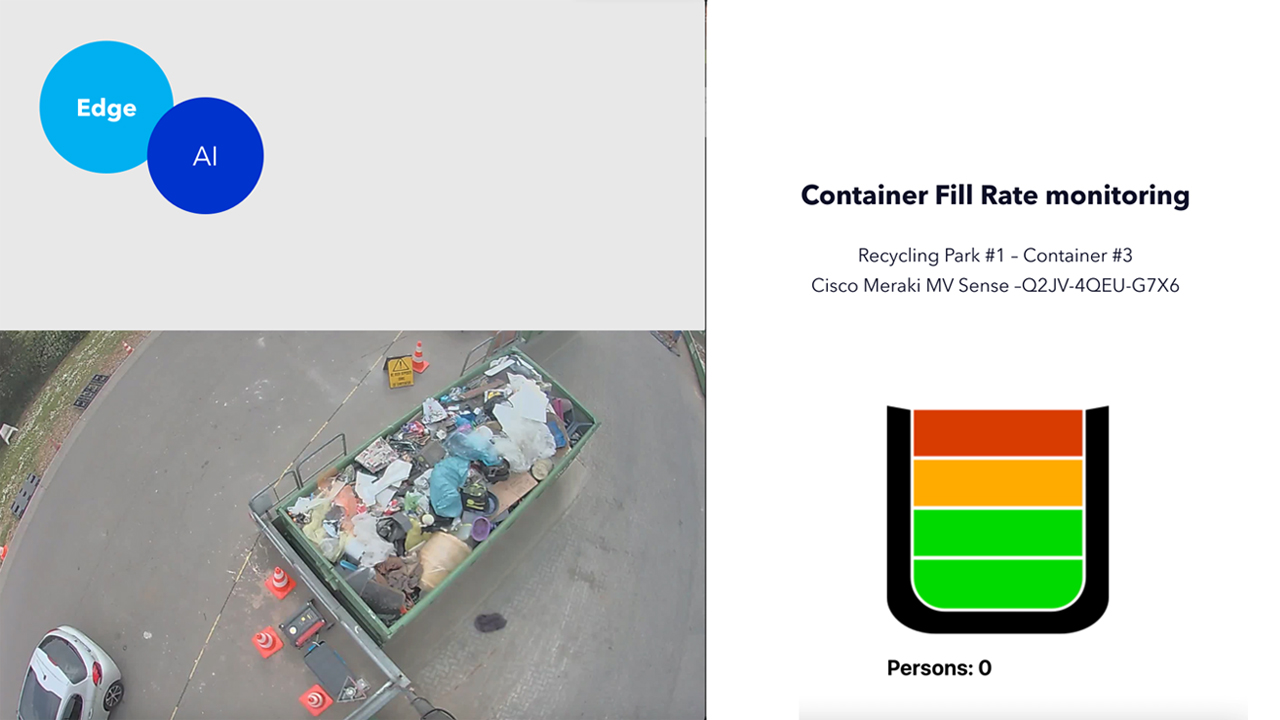
A monitoring video. The container usage situation can be monitored in real time, and red indicates that the container is full
Towards the achievement of a sustainable society that utilizes AI
This project contributes to the achievement of the SDGs (Sustainable Development Goals). In particular, of the 17 SDGs, this project is especially strongly related to 9 Industry, innovation and infrastructure, 11 Sustainable cities and communities, 12 Responsible consumption and production, and 13 Climate action, and we are aiming both to increase the efficiency of recycling and contribute to the sustainability of society.
AI cameras are used to track the amount of garbage in real time, and this information can be used along with past data to analyze the situation and predict the best possible timing for replacing containers. This enables citizens to use recycling parks without stress because they can avoid not being able to discard garbage due to full containers. As a result, we were able to resolve the problem of illegal dumping in parks and on roads, and we also minimized the fuel costs and CO2 emissions related to collection trucks.
This project started with the development of an AI model based on the idea that a human being can tell whether a container is full simply by looking at it. In addition, this project demonstrates the importance of partnerships between companies that possess technical knowledge and skills, such as NTT, and companies that are directly involved in sustainability, such as recycling parks.
"When companies with similar values collaborate, they can achieve a major positive impact on society as demonstrated in our case. For this project, we succeeded as a result of forming a multifaceted team with partners and customers and then building an effective collaborative system."
This project also contributed to increased customer satisfaction and reduced client greenhouse-gas emission, thereby having a considerable effect on society.
"The more AI is used, the more it learns, which scales up its accuracy and potential. We believe that, by further developing the potential of AI, we can apply it to other areas and industries as well, thereby achieving a brighter future."
What Self as We means to Kristof Schraepen

"I think I have a decent understanding of the Self as We concept. If I put it in my own words, it would go something like this: If, as individuals, we find reliable ways to make the world better for both ourselves (Self) and others (We), we can protect our future, and there is no better way to do so.
I also think the Self as We concept captures ten ideas in terms of our day-to-day work: devotion, dedication, commitment, teamwork, respect, empathy, innovation, self-improvement, taking on personal challenges, and continuous learning."
Mr. Schraepen also had the following to say about his attendance of the 10th NTT Group Sustainability Conference award ceremony, which was held at the Palace Hotel Tokyo in Marunouchi last year.
"It was truly a wonderful experience to be able to participate in the award ceremony as a Grand Prize candidate. Of particular note was the way the NTT Group executives so warmly welcomed all the participants, their open attitude, and their politeness. At the actual event, it did not actually feel like our measures were competing with each other. Instead, it felt like we were all proud of our projects and therefore all winners. By the time I was called to the stage to present my measure, it felt like everyone was already an MVP. The event helped me to believe in my value as a member of the NTT Group."
See other stories
-
- Forest
- Environment
Stimulating the Exchange of Carbon Credits with Morikachi A Forest Value Creation Platform That Connects Localities and Companies
-
- Aquaculture
- Environment
Offering new potential to the fisheries industry with smart land-based aquaculture
-
- DX Farming
- Environment
Sustainable crop protection NTT DATA Argentina's Sistema Integra
-
- Forest
- Environment
Utilizing ICT to visualize forest information Achieving sustainable forestry and creating new value
-
- Environment
- Power-Saving
Achieving Our 2040 Net-Zero Commitment Innovative Measures Promoted by NTT Global Data Centers
-
- Society
- AI
Using Advanced Technologies to Protect the Lives of Children Is Work the NTT Group Should Do
-
- Diversity
- Work Style
Creating a society in which people with various disabilities can work naturally
-
- Diversity
- Gender
Moving forward with our colleagues A club encouraging women to take a step forward on their own
-
- Diversity
- Gender
Protecting girls' right to learn and building a sustainable society
-
- Diversity
- Work Style
New regional communities created by "another workplace"
Sustainability
NTT STORY
WEB media that thinks about the future with NTT